Washington turns the screw on Tehran while Beijing quietly closes the helium tap
The Treasury Department rolled out a fresh Iran-related sanctions package on 10 July 2026, hours after Chinese exporters were reported to have suspended helium shipments — a tightening that ties pressure on Tehran to the architecture of advanced-chip manufacturing.
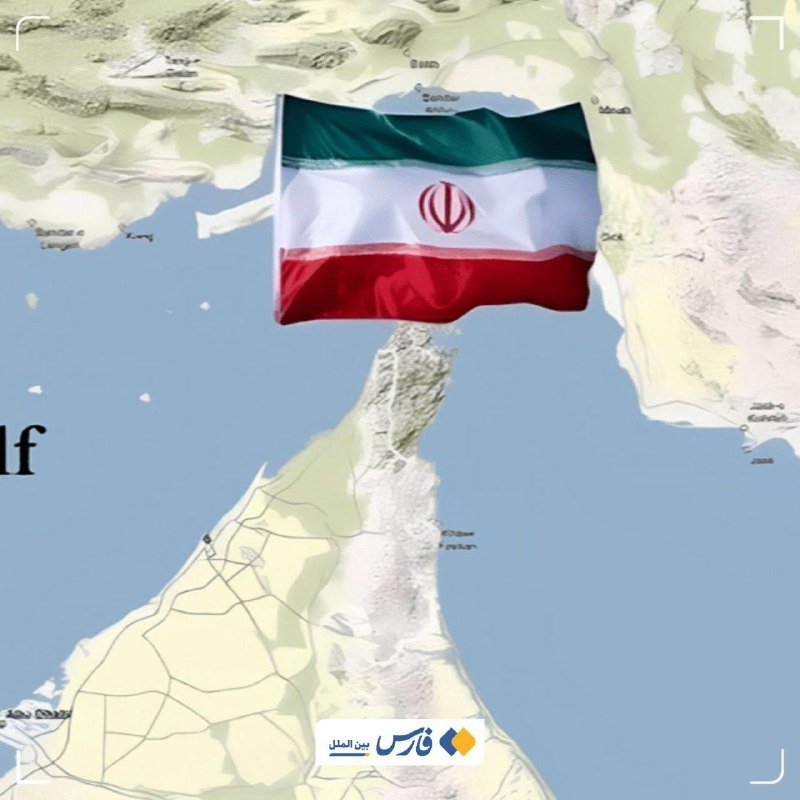
The U.S. Treasury unveiled a fresh package of Iran-related sanctions on 10 July 2026, with the department's own account confirming the designation hours after two separate Arabic- and English-language channels carried the breaking notice. By 20:08 UTC the U.S. Treasury had announced that the new measures had taken effect, according to a wire circulated by the DDGeopolitics channel. The package lands against the backdrop of an unusual and largely unreported supply shock: Chinese exporters have begun temporarily blocking overseas sales of helium, a gas central to advanced chipmaking and to the medical-imaging industry, as the Iran war's escalation disrupts global flows.
The two moves are not, on their face, related. They are. Washington is once again using the dollar-clearing system as its principal lever against the Islamic Republic, while Beijing — explicitly, by its own exporters' account — is preparing to husband a strategic gas for its own fabs and hospitals. The conjunction tells a story about the next phase of the Iran war: it will be fought not only with missiles and sanctions, but with the upstream inputs that keep a modern industrial economy running.
Treasury turns the screw — by the book
The 10 July designations follow the standard architecture. Treasury's Office of Foreign Assets Control (OFAC) acts under Executive Order authorities that have accreted since 1995, layering counter-terrorism, counter-proliferation, and human-rights sanctions regimes onto Iran's economy. Telegram channels carrying the announcement — including the English-language Middle East Spectator at 19:55 UTC and the Beirut-based Al Alam Arabic shortly after — relayed the Treasury line verbatim. The notices did not, in the form circulated, name specific vessels, front companies, or individuals; that granular addendum typically follows within 24 to 72 hours as OFAC publishes updated SDN list entries and country-by-country advisories.
The political logic is familiar. Maximum-pressure advocates inside the U.S. system, including a residual faction around the Foundation for Defense of Democracies and the hawkish end of the Senate Foreign Relations Committee, have spent two years arguing that sanctions enforcement, not negotiation, is the only durable path to constrain Iran's missile, drone, and proxy networks. Sceptics — a wider cross-section of the foreign-policy establishment, including former Iran-negotiation hands — counter that the same architecture has been operating in some form since 2006 and has not visibly rolled back the regime's regional posture. The 10 July package does not resolve that debate; it restates the U.S. position that escalation is a feature, not a bug.
Beijing draws a different line
The other half of the picture comes from a less expected corner. Chinese suppliers, acting through export-control notices issued in recent days, are temporarily suspending helium shipments abroad, citing the need to protect domestic supply as the Iran conflict disrupts global production. Helium is a byproduct of natural-gas processing, and a meaningful share of the world's merchant supply is fractionated in the Gulf — including at facilities tied to Qatar's North Field, where Iranian disruption, real or anticipated, transmits directly into pricing and allocation.
Beijing's move is best read as a quiet assertion of supply-chain sovereignty. China is the world's largest helium consumer by volume; it depends on imported feedgas for the leak-detection, cooling, and lithography processes that keep semiconductor fabs and MRI suites running. The Global Times and the Chinese Ministry of Commerce have, in parallel coverage, framed the suspension as a precautionary, time-limited measure. The structural reading is sterner: a country that has spent fifteen years building chip independence has just been reminded that even the most modern fab is, in places, one shipment of an inert gas away from a line stoppage.
Two choke points, one diplomatic ledger
The U.S. dollar-clearing system and the Gulf helium fractionation train sit on different continents, but they have been converging for a decade. Iran's banking exclusion has pushed its remaining oil exports onto a shrinking set of buyers willing to settle outside SWIFT — China chief among them. China's domestic demand for advanced chips and medical imaging has grown in lockstep. A conflict that closes even part of the Gulf's gas-processing corridor therefore reaches into Chinese fabs via helium, and reaches into Chinese demand for Iranian crude via the sanctions architecture.
This is where the choreography gets delicate. A sanctions package announced on 10 July is a routine event; a helium allocation that privileges Chinese hospitals and fabs over Korean and Japanese customers is not. Beijing has spent the past eighteen months positioning itself as a critical mediator between Tehran and the Gulf monarchies. Cutting off helium to neighbours that buy Iranian oil through Chinese intermediaries would puncture that posture. Suspending outbound sales while the war is unsettled — as the Chinese exporters are reported to be doing — preserves the mediation card without committing to it.
What the next ten days look like
The proximate calendar is dense. OFAC's standard practice is to publish the underlying designations on its online portal within one to three business days, and the State Department's Bureau of Near Eastern Affairs typically issues a roll-up press release. Until those granular listings appear, the 10 July package will read as a political signal rather than a verifiable sanctions event. Treasury also retains the option of secondary sanctions on non-U.S. persons who deal with designated entities — a step the department has grown more willing to take since 2024, particularly against Chinese intermediaries accused of handling Iranian petroleum products.
On the Chinese side, the helium suspension is reported to be temporary; export-licence renewals typically run on a quarterly cycle, and Beijing's Commerce Ministry will face pressure from Korean, Japanese, and European buyers before the next window opens. The conflict's trajectory is the binding constraint: if the Iran war's footprint in the Gulf stays contained, helium allocations will loosen; if it broadens to disrupt Qatar's North Field operations or to draw in Saudi infrastructure, the Chinese suspensions will harden into a structural shortage.
The story still in motion is which of these two levers — U.S. financial exclusion or Chinese material allocation — does more to shape Iran's options. Treasury officials have spent the year arguing that the dollar system is decisive; Chinese exporters are, without quite saying so, reminding the market that the chip-and-gas architecture is decisive in a different and arguably more durable way. Washington can name a ship; Beijing can ration a noble gas. The 10 July announcements are best read as the two systems being run by their respective operators at the same moment, each confident that its lever still bites.
This article situates the U.S. Treasury's 10 July 2026 sanctions package alongside the helium export halt reported on the same day, drawing on Telegram-distributed wire material from DDGeopolitics, Middle East Spectator, the al-Alam Arabic channel, and the our-war-today aggregator. Monexus treats the dollar-clearing sanctions architecture and the Gulf-tied helium supply chain as two distinct but converging levers of pressure on Tehran.
Wire provenance
This editorial synthesis draws on the following public wire/social posts:
- https://t.me/s/DDGeopolitics
- https://t.me/s/Middle_East_Spectator
- https://t.me/s/ourwarstoday
- https://t.me/s/alalamarabic