The quiet defence-pivot in Asia, and the story the West is missing
A uranium pact and a missile-production ramp, signed within hours of each other, point to an Indo-Pacific security order that is being built without waiting for Washington.
On 9 July 2026, two unrelated-looking announcements landed within eleven hours of one another. In the morning, Australian and Indian negotiators confirmed a long-anticipated agreement allowing Australian uranium exporters to ship nuclear fuel to energy-hungry South Asia. By evening, Nikkei Asia reported that Asian allies were quietly accelerating missile production at a moment when the US rocket and missile stockpile had visibly thinned. Read separately, these are two defence wires. Read together, they describe a region building the architecture of its own deterrence while waiting, perhaps less patiently than before, for Washington.
The headline most readers will see is the symbolism: two democracies, neither nuclear-armed itself in one case and a nuclear-armed state in the other, formalising a civil-nuclear trade that has spent more than a decade snagged on Australian domestic politics and Indian non-proliferation diplomacy. The substance runs deeper. Australia holds the world's largest known uranium reserves. India's energy demand is structurally insatiable and its base-load power mix is still dominated by coal. Closing that loop tightens a bilateral alignment that already spans joint naval exercises, logistics-sharing arrangements and a quadrilateral security grouping with Japan and the United States. Energy is the connective tissue the rest of the architecture was missing.
What the uranium deal actually unlocks
Officials describe the pact as a framework that lets Australian exporters clear the regulatory path once and then move consignments under a reliable, predictable rulebook. For Canberra, the deal gives political cover to a politically uncomfortable export: uranium carries a legacy of protest movements from the 1970s and still divides Australian public opinion, even after legislative permission was first granted. For New Delhi, it diversifies a nuclear-fuel supply chain that today leans heavily on a small set of suppliers, each of whom is constrained by its own legislative politics.
The read-through to defence is the more interesting one. Civil nuclear cooperation is rarely just civil. It binds two governments into long-duration technical relationships, regulatory inspections, fuel-accounting procedures and a shared vocabulary of safeguards that spills easily into naval propulsion, safety regimes around research reactors and the slow accumulation of institutional trust between strategic establishments. Treaties of this kind rarely make headlines after the first month. Their weight compounds.
The missile gap nobody wants to name
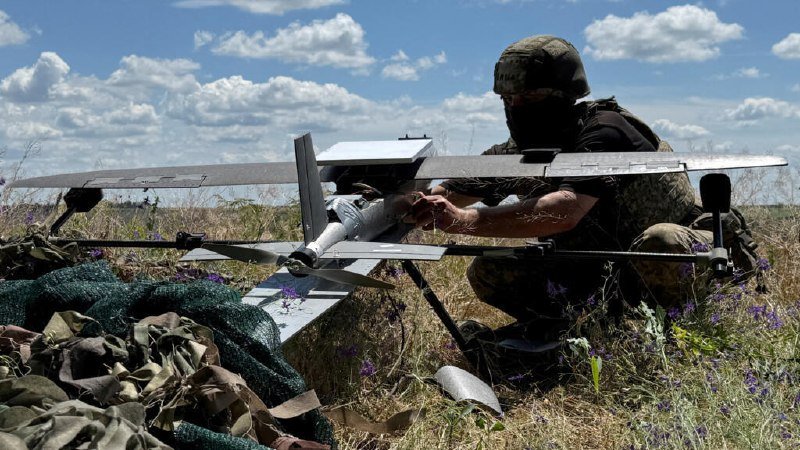
While the diplomats were signing, the industrial side of the alliance was already moving. Nikkei Asia's reporting on 9 July describes a quiet scramble across Asian capitals to scale up domestic missile and rocket production as the United States burns through inventories faster than it can rebuild them. The reference case is Woomera — the vast South Australian range complex from which, the report notes, thousands of rockets and missiles have been launched over the years — but the operational story is happening in factories and propulsion facilities across Japan, South Korea, India and Australia.
The reading is less alarmist than it sounds, which is why it is worth reading carefully. US munitions stocks were not designed for the pace of consumption seen in recent Middle Eastern exchange rates and eastern European attritional warfare. Production lines are being rebuilt, but lead times on solid-rocket motors, advanced seekers and certain propulsion ingredients run into years. Allies that have based force-planning on the assumption of prompt, large-scale US resupply are now writing the alternative assumption into their budgets and industrial-policy schedules.
The story the Western wire is missing
Western defence journalism is framing both moves through a familiar lens: alliance reassurance, burden-sharing, the durability of the American umbrella. That framing is not wrong, but it is incomplete. The structural story is that Indo-Pacific middle powers are beginning to design themselves as a defence ecosystem rather than as a collection of bilateral customers. Civil nuclear supply chains, shared ranges, jointly specified munitions, increasingly harmonised export controls — the machinery of a regional security community is being assembled one practical arrangement at a time, mostly outside the headlines.
That has two consequences worth naming. First, the capacity to act collectively without waiting on Washington is rising faster than the diplomatic language of the alliances has caught up to. Second, the political risk of slow-walking decisions — on uranium shipments, on missile exports, on technology-transfer licences — is now borne not just by the country being asked, but by every other capital waiting on it. The laggards are more visible than they used to be.
Stakes, and what remains uncertain
If the trajectory continues, the Indo-Pacific by the end of the decade looks less like a hub-and-spokes arrangement with Washington at the centre and more like a layered order in which US capability is decisive at the high end while regional allies carry more of the conventional load on their own. Regional actors win optionality. Suppliers of uranium, rocket motors and missile subsystems win new customers. The diplomatic cost is a multi-speed alliance in which some members move faster than others and the slowest become the constraint. The remaining uncertainty is whether the political cover holds — whether publics in producer countries stay persuaded that exports to nuclear-armed or near-nuclear partners are an act of regional stabilisation rather than provocation. The sources do not specify how that domestic question will land; it is the variable that the next round of trade-and-defence diplomacy will turn on.
This article was framed by Monexus around the connection between two near-simultaneous Nikkei Asia wires on regional defence supply chains, rather than as a stand-alone treaty explainer.
Wire provenance
This editorial synthesis draws on the following public wire/social posts:
- https://t.me/NikkeiAsia
- https://t.me/NikkeiAsia
- https://en.wikipedia.org/wiki/Quadrilateral_Security_Dialogue
- https://en.wikipedia.org/wiki/Woomera_Test_and_Range_Structures