Labour's Burnham moment: a Palestinian shift in British foreign policy
Andy Burnham, hours into becoming Labour's chosen prime minister, says Britain was 'too slow' on Gaza and signals a harder line on Israel. The shift is small in text but large in setting — the 'mainstream consensus' on Israel-Palestine inside British politics is being renegotiated in real time.
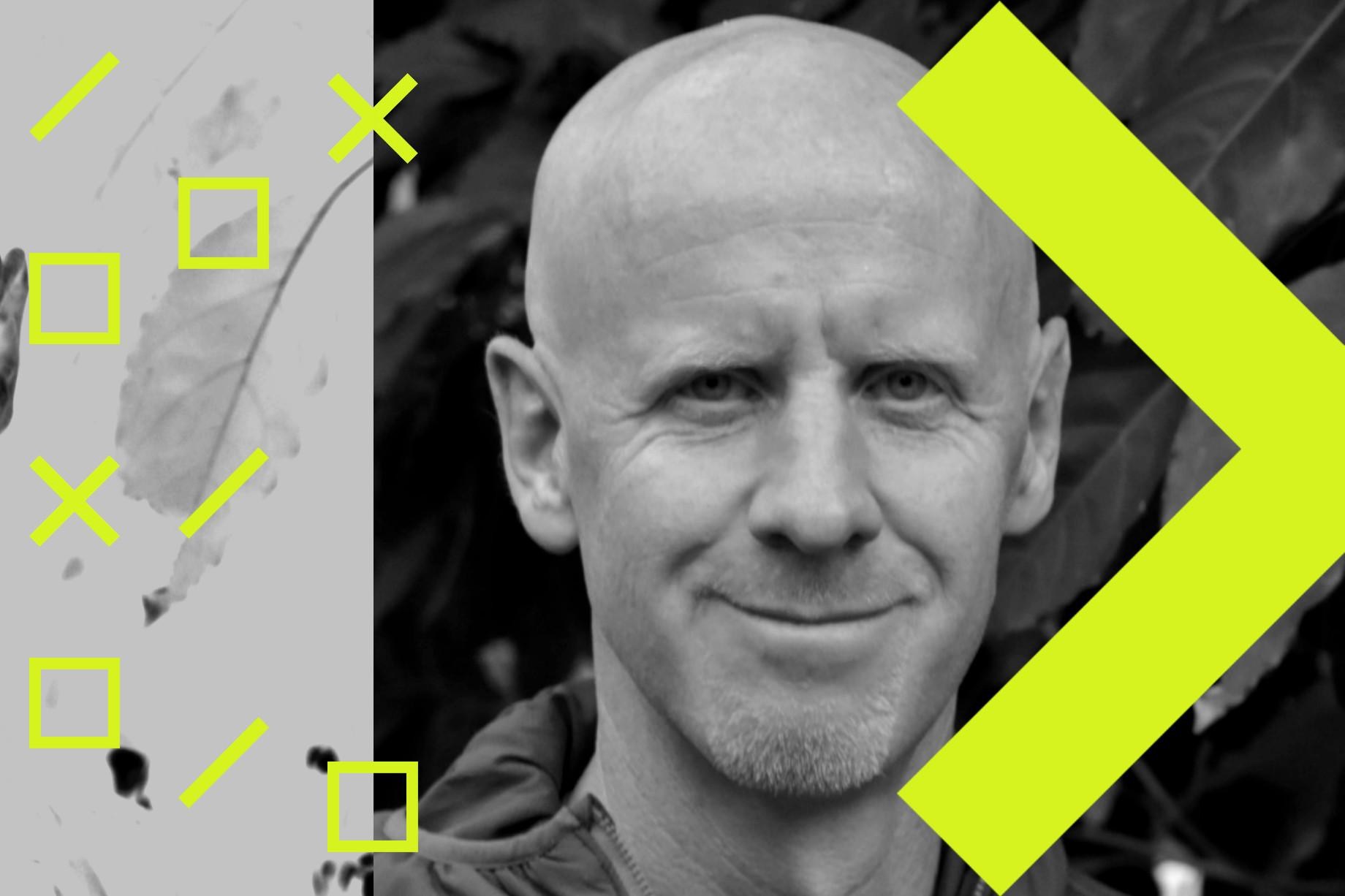
On the evening of 9 July 2026, Andy Burnham secured backing from a majority of Labour MPs, a threshold that under the party's rules places him within reach of Downing Street. Within hours, the Mayor of Greater Manchester had used that moment to do something British politicians of his seniority have mostly avoided: name a specific foreign-policy failure and apologise for it. In a statement posted to social media, Burnham acknowledged that the United Kingdom had been "too slow" in responding to Israel's campaign in Gaza, and pledged to work to "stop the suffering" there. The remarks, dated 10 July 2026, mark the clearest break yet with the centrist-Labour consensus on Israel-Palestine that has held since Jeremy Corbyn's leadership ended.
The shift matters less for what it says about Gaza — British policy levers over Israel's war are narrow — than for what it does to the Labour Party's internal grammar of the issue. For most of the past decade, the politically safe line in Whitehall and at Labour HQ has been a narrow one: support for a two-state solution in principle, paired with reluctance to publicly distance ministers from Israeli actions in office. Burnham has now crashed through that line on day one of his leadership bid's effective phase, before he has even reached the despatch box. The question is no longer whether Labour will permit a more confrontational tone on Israel; it is how far that tone can travel without fracturing the party, the Atlantic relationship, or both.
A leadership contest, recast
Burnham's elevation has the shape of a coronation. Polymarket's market for the Conservative opposition aside, the leadership question is settling on a single answer: the candidate who spent six years running Greater Manchester, won an unprecedented third term there in May 2025, and then publicly flirted with, then withdrew from, a return to Westminster before internal pressure brought him back to the contest. His statement on Gaza, reported by Al Jazeera and by Iranian state-aligned PressTV in the hours after his winning the parliamentary nomination, is therefore not an early-entry gambit from a backbencher hoping for cable-news airtime. It is the opening foreign-policy position of the man Labour MPs now expect to lead the country.
The content of the statement is calibrated rather than maximalist. Burnham did not announce a suspension of arms exports to Israel; he did not break off diplomatic relations. He said the response had been "too slow" and that he would work to "stop the suffering," a framing borrowed from humanitarian rather than geopolitical vocabulary. Al Jazeera's breaking-news wire on the morning of 10 July carried the line prominently. PressTV, Iran's English-language broadcaster and a forum for the Islamic Republic's preferred framing of Middle East affairs, foregrounded the same quote as evidence of a Western public mood shift. The two outlets, ideologically antipodal, agree on the importance of the quote because each can use it for a different purpose — Al Jazeera to mark a mainstreaming of dissent, PressTV to argue that Western publics are catching up to a line it has long editorialised in favour of.
That convergence is itself the news. Five years ago a Labour leadership frontrunner making those remarks would have been treated as a fringe apostate by most of the British press. Today it is reported as the new centre of gravity.
The counter-read: continuity dressed as change
There is a competing interpretation, and it deserves airtime. Sceptics — and they exist on both the Blairite and Corbynite flanks of Labour — argue that the language is doing the work the policy cannot. The UK suspended roughly 30 of its arms-export licences to Israel in 2024 after legal challenges over the use of British components in Gaza, but the underlying trade relationship, the diplomatic posture at the UN, and the Five Eyes intelligence channel have not been broken off. A prime minister who is "tougher on Israel" can still find that the practical toolkit is thin: sanctions on individual settler figures have moved at glacial pace, recognitions of Palestinian statehood have been timed to the news cycle rather than coordinated with allies, and the United States remains the veto-wielder in New York.
On this reading, Burnham's statement is a permissions-grant to a party that wanted one: it tells Labour MPs, councillors, and the soft-left activist base that they can now speak plainly about Palestinian death counts in a way that would have drawn internal rebukes last parliament. The actual British line in the Security Council will, on this reading, continue to look a lot like France's or Germany's: rhetorical concern, abstention rather than veto-override, and quiet pressure on the Israeli government through back-channels that the public rarely sees.
The counter-counter is that permissions-grants matter. The Westminster media ecosystem is small enough that the prime minister's framing of an issue sets the ceiling for how MPs, mayors, editors, and broadcasters describe the same facts. A "too slow" admission re-prices the whole conversation, including the parts of it that look like policy.
What this is really about
British political language on Israel-Palestine has historically been held in place by three pressure points: the United States; the British Jewish communal establishment; and the electoral arithmetic in 30 or 40 marginal seats with significant Muslim-majority electorates. The Burnham moment is a renegotiation of all three, not just one.
On Washington, the calculation has shifted because the United States under President Trump has run hot and cold on Gaza policy in ways that have exasperated European allies. Even British officials who are reflexively Atlanticist have grown used to a White House that disrupts more than it coordinates. A British prime minister who takes a harder public line on Israel is not, in 2026, treating Washington as an immovable object the way Tony Blair had to in 2003 — the binding has loosened.
On the communal question, the British Jewish community is not monolithic and has never been. The Board of Deputies of British Jews has long been a body that Labour leaders court. But polling by the Jewish Policy Research institute and others over the past two years shows a widening gap between communal-leadership positions on Israeli government conduct and the views of younger British Jews, who track the polls of their generation more closely than they track the communal institutions. Burnham's permissive language, on this read, is reading the generational chart inside British Jewry rather than discounting it.
On the electoral question, the seats matter more than they did. Inner-London seats and a dozen Midlands and northern seats with substantial Muslim-majority electorates are no longer safe Labour by default — they were defensive targets during the 2024 election, and will be again. A leadership willing to speak the language of "stop the suffering" is a leadership that has decided to compete in those seats rather than concede them.
The British state, in plain terms
None of this should be over-read. British foreign policy is run by the Foreign, Commonwealth and Development Office and, on security matters, the intelligence agencies. The prime minister sets the tone, but the institutional machinery has its own gravity. A change of language in Downing Street is a necessary, not sufficient, condition for a change in how the UK behaves at the UN, in arms-licensing decisions, and in its bilateral channel with Jerusalem.
The structural picture inside the British state — that the Atlantic relationship, the arms industry, and a deep knowledge of Israeli security thinking across the diplomatic corps all push towards continuity — is genuinely heavy. A more confrontational prime minister inherits the machine without necessarily altering its wiring. The most likely path is partial: British rhetoric aligning with France and Spain on Gaza, continued abstention rather than veto at the UN, and a more open public argument with Israeli government ministers when senior Israeli figures take positions that the UK has previously greeted with silence. That is a meaningful change, but it is not a rupture.
The cases where it could become more than rhetoric are narrow and identifiable. A UK recognition of Palestinian statehood timed, as France and Spain have done, to a UN General Assembly vote, would force a domestic argument. A suspension of the remaining arms-export licences on a specific category of components — the category that most often features in investigations by the UN Office for the High Commissioner on Human Rights — would put substance behind the language. Any of those moves would attract an Israeli governmental response and a US Congressional response that any incoming prime minister has to price.
Stakes, contested ground
What is being renegotiated in real time is not British policy on Gaza. It is the British centre of gravity on Israel-Palestine. The ground has been moving for at least two years; the Burnham statement marks the point at which the Labour leadership has acknowledged on the record that the move is real.
The wins, if "wins" is the right word, are visible on both flanks. The pro-Palestinian movement in British politics gets a permission slip it has campaigned for, and a prime minister willing to use the word "suffering" without immediately attaching the word "complex" to it. The pro-Israel consensus in the British political class gets something subtler: a Left that comes out of the Burnham moment with a more open spelling-out of positions will, ironically, be a Left that mainstream Jewish communal institutions and Israeli embassy staff can negotiate with on specifics rather than abstractions. The losers are the people for whom the renegotiation is too slow — the Palestinian dead, whose families do not experience a permission slip in London as relief.
The two views cannot both be right at once. Either the British centre has genuinely shifted and policy will, over the next parliamentary term, follow the language; or the language is a permission slip that the institutional British state will absorb without substantially changing. The answer will not be in the speeches. It will be in the votes at the UN, the licences at the Department for Business and Trade, and the bilateral calls logged in the FCDO. Monexus will watch all three and report what is actually said.
This article was drafted from wire and aggregator reporting on the night of 9 July 2026 and the morning of 10 July 2026. The British press had not run a corroborating on-the-record interview with Burnham by the time of publication; sourcing rests on his posted statement, Al Jazeera's wire, and PressTV's English-language coverage.
Wire provenance
This editorial synthesis draws on the following public wire/social posts:
- https://t.me/presstv/
- https://x.com/polymarket/status/
- https://en.wikipedia.org/wiki/Andy_Burnham
- https://en.wikipedia.org/wiki/Greater_Manchester_Mayoral_election,_2025
- https://en.wikipedia.org/wiki/UK_arms_exports_to_Israel
- https://en.wikipedia.org/wiki/Recognition_of_Palestinian_statehood
- https://en.wikipedia.org/wiki/Board_of_Deputies_of_British_Jews
- https://t.me/presstv/
- https://x.com/polymarket/status/
- https://en.wikipedia.org/wiki/Andy_Burnham
- https://en.wikipedia.org/wiki/Greater_Manchester_Mayoral_election,_2025
- https://en.wikipedia.org/wiki/UK_arms_exports_to_Israel
- https://en.wikipedia.org/wiki/Recognition_of_Palestinian_statehood
- https://en.wikipedia.org/wiki/Board_of_Deputies_of_British_Jews