After France's win over Morocco, the streets tell a different story
France's 2-0 quarterfinal win over Morocco sent Paris into riot-policing mode and its diaspora suburbs into confrontation, exposing the fault lines a successful tournament cannot paper over.
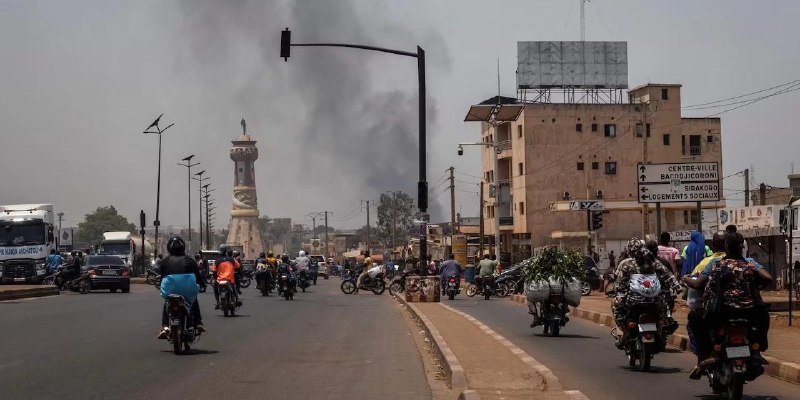
By the time the final whistle blew at the World Cup quarterfinal on 9 July 2026, France had booked its third consecutive semifinal appearance with a 2-0 victory over Morocco — and Paris had become a security operation. Riot police were deployed in the capital after the result, according to a wire circulated on Polymarket-linked accounts at 23:25 UTC on 9 July, hours after authorities had pre-emptively locked down parts of the city and flown surveillance drones ahead of kickoff. Reports from London the following morning, picked up by Al Jazeera at 09:47 UTC on 10 July, described UK police confronting Morocco fans in the wake of the defeat. The pattern is familiar from past tournaments in France: the match is one event, the streets are another.
The lesson of any major tournament held in a country with a large North African diaspora is that the 90 minutes on the pitch and the politics around the pitch rarely stay in separate rooms. France's national team is a regular point of friction — celebrated as a multicultural success story, resented as a cypher for debates about identity, citizenship and postcolonial belonging. A quarterfinal against Morocco sharpens that dynamic. Supporters on both sides see something more than a football match; they see recognition, or its absence.
The police footprint
The French state's reaction to football-linked unrest has become a study in pre-emption. On 9 July, before kickoff at 18:03 UTC, Paris authorities had already deployed security drones and locked down parts of the city, citing fears of unrest, according to reporting circulated on X. The decision to put public order assets in position hours before a football match — not after the result — speaks to how French planners have come to model the risk: a tournament staged in France is a foreseeable flashpoint, and the operational answer is to treat the city centre as a managed airspace.
That posture has critics. Heavy policing of fan zones has historically produced confrontations of its own; the optics of riot shields and surveillance drones in a country still processing the legacy of the 2005 banlieue riots carries its own weight. The wire images out of Paris after the result focused on police formations rather than on pitch-side celebration, which is itself a kind of statement about what the authorities feared most.
The diaspora question
Football, France and Morocco are bound together in ways that go beyond one match. The Moroccan national team has drawn sustained support from French citizens of Moroccan descent, second- and third-generation migrants whose sense of which jersey to wear is a personal and political calculation. A knockout encounter forces a choice that many would rather not have to make — and which French political debate, predictably, will not leave alone.
Al Jazeera's UK-side report on 10 July, describing police confrontations with Morocco fans after the result, is the round's clearest indicator that the friction travelled beyond Paris. London has its own Moroccan and North African diaspora, with its own World Cup viewing sites and its own policing playbook. That the unrest resonated across the Channel suggests the trigger was not local: it was the result, and what the result represented to fans who felt themselves to be on the wrong side of a national symbol.
What the success narrative leaves out
France's third consecutive men's World Cup semifinal — confirmed by Kylian Mbappé's role in the 2-0 win, per a wire dispatched at 04:20 UTC on 10 July — will be told, officially, as a story of sporting continuity and depth. The squad is deep, the production line intact, the model working. That narrative is not false, but it is incomplete. A tournament staged in a country whose celebration is filtered through police cordons and drone footage tells a smaller, less comfortable story about who gets to feel at home in the host nation, and on what terms.
The framing here runs against the official tournament line. The wire coverage of this round emphasised results, line-ups and the Mbappé headline; the streets of Paris and the confrontations in London — both documented above — are the part most readers will not see in highlight reels. Both belong on the page.
Wire provenance
This editorial synthesis draws on the following public wire/social posts:
- https://t.me/LiveMint/
- https://x.com/polymarket/status/
- https://x.com/polymarket/status/