France Through, Cities Burning: What the Morocco Quarter-Final Reveals About European Football's Politics
A 2-0 French win over Morocco in the 2026 World Cup quarter-finals was supposed to be a sporting story. Instead, riots from Paris to London are exposing the fault lines football can no longer contain.
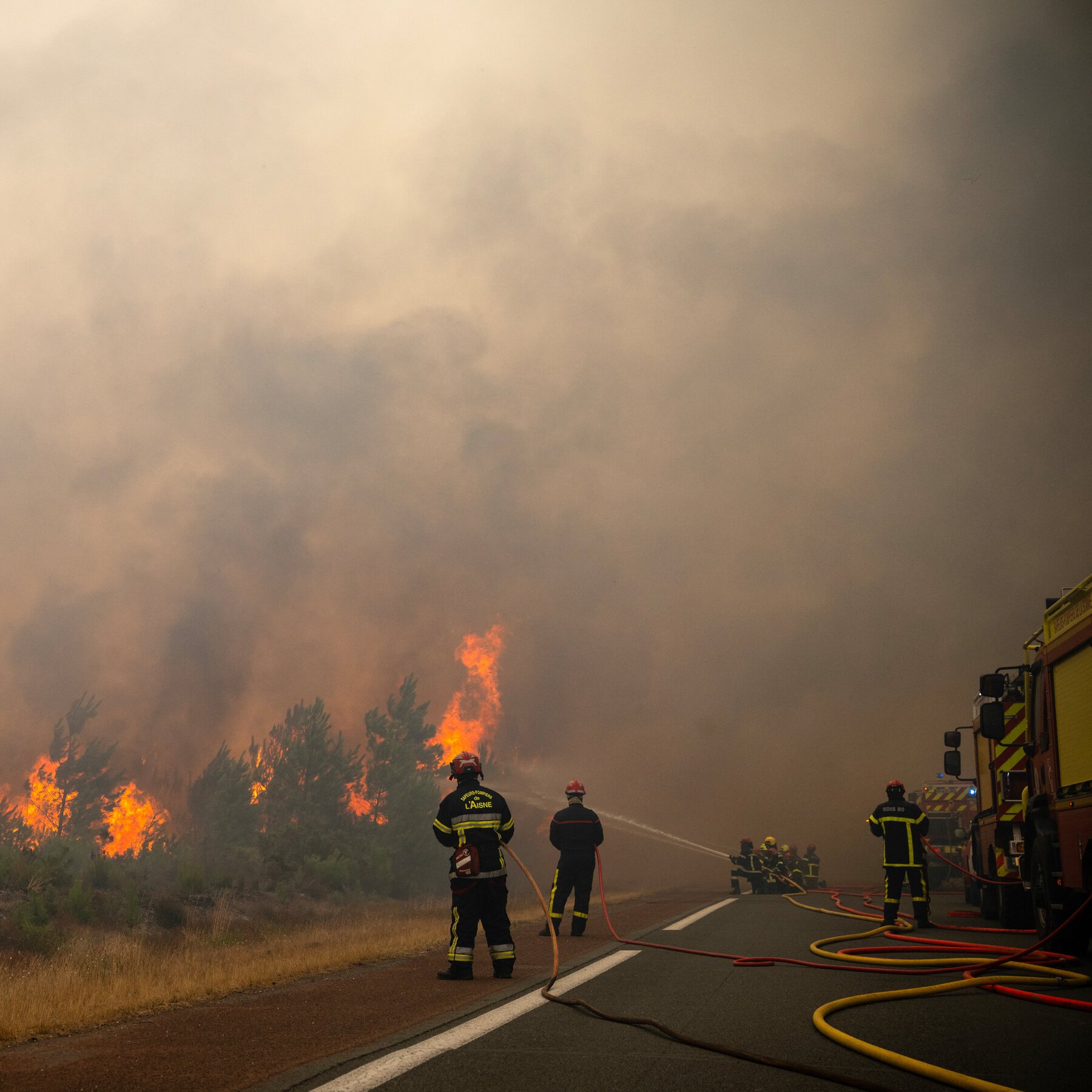
At 22:00 UTC on 9 July 2026, the final whistle blew in a major North American venue and France stood one match from another World Cup final. Two unanswered goals had separated Didier Deschamps's side from a Morocco team that, by every account, had overperformed the script written for it before the tournament. Within hours, the centre of gravity had shifted across the Atlantic. By 23:25 UTC, riot police were deploying in Paris, according to a Polymarket wire-circulated alert citing on-the-ground reporting. By 06:33 UTC on 10 July, the story had already mutated: the worst unrest of the night, Telegram channels reported, was not in Paris but in London, where Moroccan and Moroccan-diaspora supporters gathered after a defeat that, for them, was also something else.
The result itself is unremarkable at this level of the sport — a European heavyweight disposing of an African contender. What is remarkable is the speed with which a quarter-final in a third country detonated on the streets of two European capitals within the same news cycle. That detonation is the story, not the scoreline.
A tournament, and a diaspora, that refuses to stay in its lane
Morocco's run to the last eight of a World Cup hosted across the United States, Canada and Mexico was already the political subplot of the competition. The Atlas Lions carry the aspirations of roughly five million Moroccans at home and a diaspora several times that size spread across France, Belgium, the Netherlands, Italy, Spain, Germany, the United Kingdom and the Gulf. When this team plays, the match is broadcast into living rooms in Casablanca, in the banlieues of Lyon and Marseille, on the streets of Brussels, in the East End of London. The economic logic of the modern European game — broadcasting rights, shirt sales, scouting networks — runs on this diaspora. The political contract of citizenship runs on it too.
The 2026 tournament has been sold, by FIFA and its sponsors, as a borderless event: 48 teams, three host countries, a final in front of a global pay-TV audience. That framing only holds as long as the scoreboard does the work of integration. When the home side — the diaspora's side — loses, the framing falls apart in real time.
Why London, not Paris
It is the British detail that the wire services will catch up with slowly. Telegram reporting from the morning of 10 July placed the heaviest clashes of the night in the United Kingdom rather than in France, where post-match violence after North African footballing results has, since at least the 1998 World Cup, been treated as a recurring political crisis. A London-centred geography of unrest is a different proposition. It puts the policing question onto the desk of a government that has spent the last three years legislating aggressively on protest, public order and online organising — and onto a Metropolitan Police service that has been visibly hollowed out by resignations and budget cuts since 2023.
This is also a multi-directional moment. Algerian, Tunisian, Senegalese and Egyptian communities in British cities have their own World Cup evenings, their own stake in Morocco's results, and their own reasons to be in the streets on a July night. Reporting that frames the violence as Moroccan-versus-police will be incomplete; the actual composition of the crowds on the ground is plural, and the press will take 48 hours to map it.
The structural pattern Europe keeps refusing to learn
European football has been here before, and the pattern is consistent enough to name. A major tournament produces an emotional surge in diaspora communities. The host nation advances, or a rival nation is eliminated, and that surge is metabolised into street politics. The police respond with crowd-control equipment designed for the 1990s. The interior ministers issue statements. A commission is announced. By the next tournament, the underlying conditions — housing segregation, youth unemployment differentials, second- and third-generation citizenship grievances, the policing of religious expression in public space — have been reported into the ground without being addressed.
What the 2026 cycle adds is a media layer that did not exist in 1998, nor fully in 2018. The Telegram channel reporting the London unrest, the Polymarket-correlated alert on Paris deployments, the on-the-ground short video, all of it moves faster than any wire desk. By the time a major broadcaster has confirmed a fact, the fact has been argued over, mocked, and partially discredited on encrypted channels. The European public-order conversation of 2026 is therefore happening in two languages at once: the official one, and the encrypted one.
Stakes
The semi-final itself will be reported as a football match. It will not be one. France will carry the weight of a nation expected to win and the weight of a far-right political ecosystem that has spent two decades weaponising the team's racial composition. Whoever they meet will carry the weight of a Global South that increasingly reads European football not as a sport but as a referendum on European citizenship. The on-pitch outcome will be settled by mid-July. The off-pitch one will run for the rest of the decade, in courtrooms, in policing budgets, in the next electoral cycle in France, in the British conversation about protest and public order, in the Belgian federal coalition talks.
The honest uncertainty here is geographic and demographic: the available reporting identifies the epicentre of the London unrest but does not yet specify the breakdown of the crowds, the injuries sustained, or the arrests made. Paris-side figures are circulating via prediction-market-adjacent channels rather than the Prefecture de Police. Treat the casualty and arrest numbers, when they appear, as preliminary. The political reading, however, is already settled by the morning of 10 July 2026: a football match abroad, and a political argument at home, were the same thing all along.
Desk note: Monexus is reading this as a Europe-and-diaspora story first and a sport story second. The wire cycle will lead with the scoreline; we are leading with the streets.
Wire provenance
This editorial synthesis draws on the following public wire/social posts:
- https://t.me/englishabuali