Hormuz on hold: Washington wants the statement, Tehran wants the cover story
The Trump administration wants Iran to declare the Strait of Hormuz open by Saturday. Tehran says the attacks on three commercial ships were a malfunction. Neither claim is independently verified — and the world's busiest oil chokepoint is still effectively in the dark.
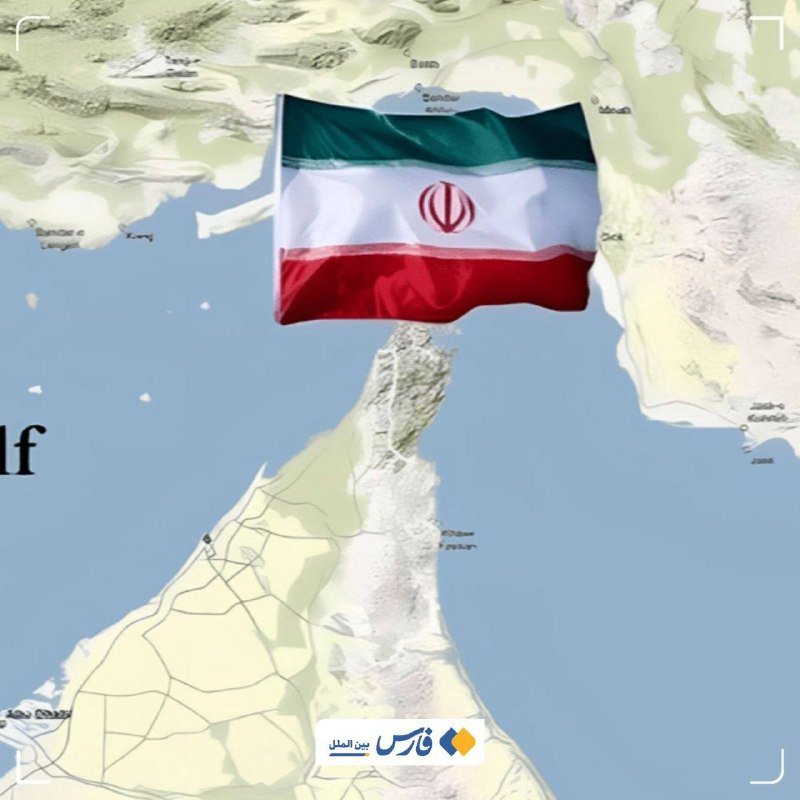
At 21:01 UTC on 10 July 2026, Axios reported that the Trump administration is pressing Iran to issue a public statement on Saturday acknowledging that the Strait of Hormuz is open and committing to halt attacks on commercial shipping. Within the hour, a second Axios-sourced read-out spelled out the mechanics: U.S. officials told reporters the demand was tied to an exchange of messages through back-channels, and that Washington wanted the declaration to be public, not private, so it could be priced into markets and underwriting decisions.
The pressure point is a string of attacks this week on three commercial vessels transiting the strait. By 21:31 UTC on 10 July, Reuters was carrying Iran's explanation to the United States: the strikes were the result of a "technical malfunction." That formulation — malfunction, not missile — is doing diplomatic work on both sides. It gives Tehran room to claim the incidents were not state policy. It gives Washington a sentence it can cite if it chooses to de-escalate. And it leaves the three shipowners, their crews, and their insurers in the middle of a sentence that has not yet finished being written.
A chokepoint with a price tag
The Strait of Hormuz is the narrow corridor between Iran and the Arabian Peninsula through which roughly a fifth of the world's seaborne oil passes on a normal day. Three vessels struck in a single week is not a normal week. Even if Iran's "malfunction" framing is accepted at face value, the insurance market does not price motive — it prices uncertainty. War-risk premiums for Hormuz transits had already been climbing through the spring as the diplomatic track between Washington and Tehran frayed. A confirmed pattern of attacks, paired with a still-unconfirmed Iranian pledge to stop, is the kind of input that moves those premiums another notch higher and pushes tanker operators onto the longer Cape of Good Hope route, which adds days and fuel burn to every voyage.
Washington's decision to demand a public statement rather than a private assurance is a tell. Private assurances can be walked back. A televised or agency-distributed statement, in Farsi and English, with an Iranian official's name on it, becomes a reference price. It is something Lloyd's syndicates, the U.S. Fifth Fleet, and oil traders in Singapore can all point to on Monday morning. The demand is, in effect, a request that Tehran put its credibility behind its own malfunction story.
What Tehran is buying with "malfunction"
The "technical malfunction" line is the cheapest off-ramp available to the Islamic Republic, and that is precisely why it is in use. A deliberate attack forces a choice: escalate toward a wider confrontation that Iran's air defences and economy are not equipped for, or visibly back down in front of a domestic audience that has been fed years of "resistance economy" rhetoric. A malfunction admits nothing about intent and concedes nothing about capability. It is the diplomatic equivalent of a shrug.
That ambiguity has costs of its own. The three vessels struck were commercial ships, not warships. Their operators — and the flag states behind them — have not been offered compensation, an inquiry, or even a confirmed Iranian acknowledgment of who fired and from where. A malfunction explanation, without an accompanying technical investigation, hands Gulf shipping councils and the International Maritime Organization a problem they cannot easily file away. Insurance underwriters in particular do not price Iranian shrugs; they price the probability of a fourth ship.
What Washington is buying with the demand
The Trump administration's framing — a Saturday deadline, a public statement, an on-the-record commitment — is calibrated for two audiences. The first is the domestic political market, where any sign that the strait is functioning normally can be billed as a delivered promise. The second is the bond and equity market, where tanker stocks, oil futures, and war-risk premia all moved on the original Axios reporting and will move again on whatever Iran says next.
There is also a quieter audience: the Gulf states. Saudi Arabia, the UAE, and Oman have been running their own quiet track with Tehran for months, and a U.S.-Iran public handshake over Hormuz would relieve pressure on the alternative export pipelines — the Abu Dhabi crude pipeline, Saudi's East-West Petroline — that Gulf producers have been straining to keep full. A failure to land the statement pushes those pipelines closer to capacity and raises the political cost of any future Iranian pressure on shipping.
What remains in the dark
Neither Iran's malfunction claim nor the U.S. demand for a public statement has, as of this writing, been independently corroborated by a neutral party. No maritime authority has published findings on the weapons used, the platforms involved, or the targeting logic. No insurer has released a casualty report. Iran's state-aligned outlets have not, in the reporting available on 10 July, confirmed or denied the Axios readout. The Reuters wire carries the malfunction line as Iran's message to Washington — that is, as a diplomatic communication, not as an established engineering fact.
That uncertainty is the article. Three ships were hit, somebody fired, somebody is now denying that somebody meant to. A public statement on Saturday would convert that fog into a price; an absence of one would extend it. Until then, the world's busiest oil corridor is being run on trust that has not yet been paid for.
This article sits inside Monexus's Middle East coverage, where the editorial line is to read diplomacy and military signalling together rather than treating them as separate channels. The wire reporting on 10 July — Axios's demand, Reuters's malfunction line — frames the exchange as a procedural handoff. Monexus treats it as the opening move in a pricing dispute over a corridor, not a settlement.
Wire provenance
This editorial synthesis draws on the following public wire/social posts:
- https://t.me/middleeastspectator
- https://t.me/tasnimplus
- https://t.me/middleeastspectator
- https://t.me/wfwitness
- https://en.wikipedia.org/wiki/Strait_of_Hormuz