Iran's foreign minister heads to Muscat as Hormuz diplomacy strains under widening US target list
Iran's top diplomat is heading to Muscat hours after Washington signalled it may widen its target list beyond oil and power infrastructure, leaving Friday's Geneva accord signing on a knife-edge.
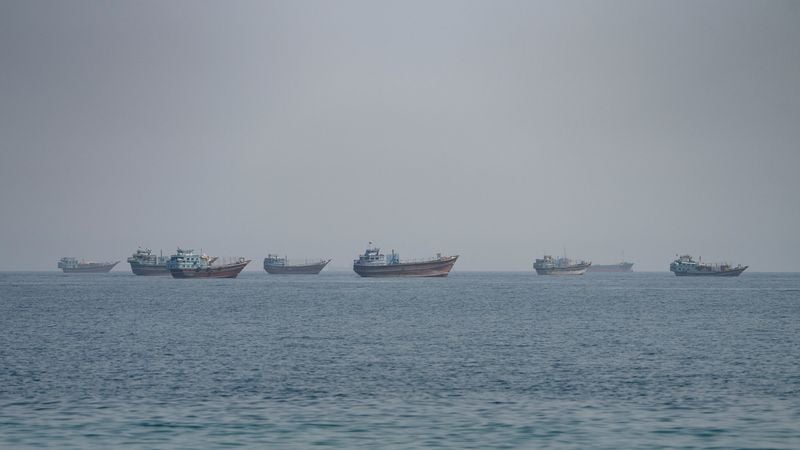
Iranian Foreign Minister Abbas Araghchi is travelling to Muscat on Friday for talks with Omani counterparts focused on the Strait of Hormuz, according to a Middle East Eye live blog updated at 21:44 UTC on 10 July 2026, hours before Washington and Tehran were due to put pen to paper on a peace accord in Geneva.
The Omani stop lands at a brittle moment. The same day, US remarks circulated by Unusual Whales widened the public target list beyond oil and electric infrastructure, keeping the pressure on a corridor that carries a significant share of seaborne crude and LNG. The combination — diplomacy advancing, threats escalating — is the story of the week.
What Araghchi is buying in Muscat
Oman has been the quiet middleman of the US–Iran track for years, hosting back-channel talks that produced the 2023 understandings and remained useful even as the relationship ruptured after October 2023. A Friday visit suggests Tehran wants a back-channel channel of its own: a sovereign that can carry messages to and from Washington without the optics of a bilateral meeting in a third country that would read as a concession.
What is actually on the table in Muscat is not stated in the public thread. The reporting names the file as the Strait of Hormuz — the 21-mile-wide chokepoint between Iran and the Musandam Peninsula — not the wider accord. That distinction matters. The Geneva ceremony, if it happens, formalises a political settlement; the Hormuz file is about de-conflicting a waterway through which roughly a fifth of global oil passes. The two are linked but not identical, and Oman is well-placed to work the latter.
The target list quietly widens
The diplomatic choreography is colliding with a separate, slower-moving escalation. Per Unusual Whales' write-up of US remarks on 10 July 2026, the publicly stated target list now extends past oil facilities and power infrastructure to a third category: desalination plants. That detail matters more than it looks. Striking desalination capacity does not interrupt the export of hydrocarbons; it pressures the civilian water supply of an already water-stressed Gulf coast.
The framing in Washington treats this as escalation in service of leverage. The framing in Tehran — and in regional capitals watching from Riyadh to Doha — reads it as a shift from economic coercion to direct pressure on population-scale infrastructure. Both readings are coherent. The honest assessment is that the truth depends on the orders that follow the rhetoric, and those orders are not in the public record.
Why Hormuz is the real prize
Oil markets have spent the past week pricing the risk. The structural point: roughly 20% of seaborne crude and a meaningful share of LNG transits Hormuz every day. Even a partial closure — Iran has historically disrupted traffic through IRGC naval seizures and proxy limpet-mine operations rather than a declared blockade — moves the price of Brent and benchmarks for shipping insurance overnight. The economic cost is borne by importers from Beijing to Brussels; the political cost is concentrated in Tehran.
That is why a Hormuz-specific diplomatic track, run through Muscat, is in Tehran's interest even as the wider deal holds. A separate understanding on tanker traffic, IRGC boarding protocols, and insurance pools lets Iran claim victory on a sovereign file while leaving the nuclear and sanctions files in the Geneva envelope.
What could still go wrong by Friday evening
The Geneva accord is scheduled to be signed on Friday. The thread reports the signing as confirmed, but the same day brought fresh threats against a new infrastructure category. Two scenarios are plausible. First, the accord signs, the Hormuz file gets its own slow-track diplomacy in Muscat, and the target-list rhetoric quietly de-escalates as the deal absorbs the pressure. Second, the accord slips, the desalination framing hardens into operational planning, and Oman's mediating role becomes emergency rather than routine.
What remains genuinely uncertain is whether the widening target list is a negotiating posture aimed at the Geneva room or a planning document aimed at the Gulf coast. The public sources do not specify. Both readings are consistent with the same words.
Desk note: Where Western wires have tended to frame the track through the lens of nuclear rollback and sanctions relief, this piece centres the chokepoint — because the chokepoint is where the economic cost of any breakdown lands hardest and fastest, and because Oman's quiet role in de-conflicting it is the under-reported part of the week.