Iran's Security Council Ties Infrastructure Strikes to Israeli Retaliation, Signaling a Wider Calculus
On 10 July 2026, the secretary of Iran's Supreme National Security Council publicly linked any US strike on Iranian dual-use infrastructure to automatic retaliation against Israel, narrowing the gap between Washington and Tehran while widening it between Tehran and Tel Aviv.
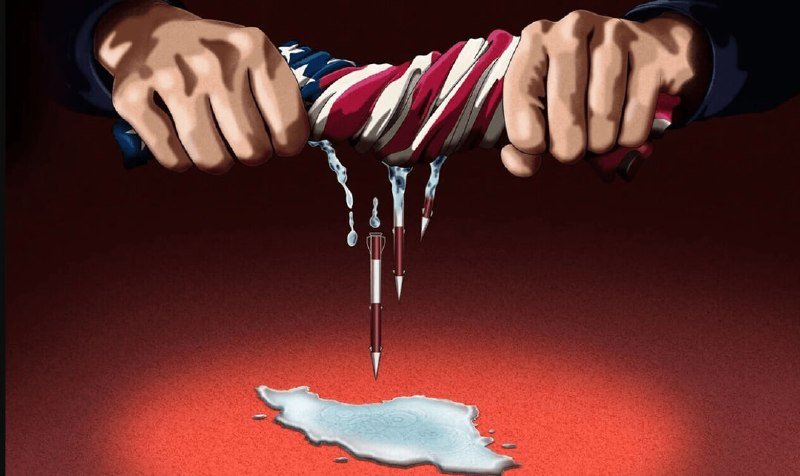
On the morning of 10 July 2026, Iran's most senior security coordinating body did something it has not done publicly in this crisis cycle: it welded two threat tracks together. Mohammad Bagher Zolghadr, secretary of Iran's Supreme National Security Council, declared that any attack on Iranian infrastructure — whether by the United States or by Israel — would be answered with a counter-response against what he called "the criminal Zionist regime," which, he added, "will not remain safe" from the actions of "the fighters." The statement, published by Tasnim News at 11:23 UTC and re-circulated in English by Tasnim's international feed four minutes later, was simultaneously amplified by the Telegram channels Open Source Intel and Euronews, and by the channel English Abuali, with a near-identical formulation of the same threat.
What changed today is not the rhetoric — Iranian officials have used the language of retaliation throughout 2026 — but the coupling. For the first time in the public record available on 10 July, the SNSC explicitly framed an American strike on Iranian infrastructure as a trigger that automatically engages Israel as a target. Until now, US–Iran friction and the Iran–Israel confrontation have run on parallel tracks, each with its own escalation ladder. Zolghadr's statement collapses the two.
The statement itself
The SNSC readout, posted in Persian to Tasnim's channel at 11:23 UTC and translated within minutes, contains three operative claims. First, that an attack on Iranian infrastructure will be met with a "counter-response." Second, that the "criminal Zionist regime" will not be "safe from the response of the fighters." Third, an explicit personalisation of the threat against US President Donald Trump, whom Zolghadr called "the most despised figure in the world," vowing that American strikes would receive a response that would make Trump "regret." The English-language version of the same statement, posted by Tasnim News English at 11:22 UTC, uses the phrase "reciprocated" for the infrastructure clause and reserves "fighters" — rather than the Iranian armed forces by name — as the agent of the response.
That phrasing matters. In Iranian declaratory doctrine, "the fighters" is a deliberately broad referent that can encompass the regular armed forces, the Islamic Revolutionary Guard Corps, and the network of allied non-state actors that operate across Lebanon, Iraq, Syria, and Yemen. A threat issued by the SNSC secretary that names "fighters" rather than a specific service branch is a threat issued by the apparatus as a whole.
Why the coupling matters now
Iranian officials have spent months drawing a distinction between two audiences: Washington and Tel Aviv. The track running through Oman, Qatar, and the Gulf has been about de-escalation with the United States; the track running through Beirut, Damascus, and Sanaa has been about pressure on Israel. By issuing a single statement that explicitly makes an American strike a sufficient condition for Israeli retaliation, Zolghadr has narrowed Iran's diplomatic room for manoeuvre.
The practical effect is twofold. It signals to Washington that the cost calculus of any strike on Iranian infrastructure has risen: a strike is no longer a bilateral event between two states, but an event that reopens the active Israel file on terms that Tehran, not Washington, controls. It also signals to Tel Aviv that the Iranian posture is no longer reactive — waiting for an Israeli strike to answer — but anticipatory. If the SNSC secretary says a strike on Iranian infrastructure triggers a response against Israel regardless of who struck, the implication is that Iran reserves the right to retaliate against Israel for an act it did not itself suffer.
What we verified and what we could not
Verified. The statement was issued by Mohammad Bagher Zolghadr in his capacity as secretary of Iran's Supreme National Security Council. It was published in Persian on Tasnim's main feed at 11:23 UTC on 10 July 2026, and in English on Tasnim News English at 11:22 UTC. The substance — the coupling of infrastructure attacks with Israeli retaliation, and the personal denunciation of President Trump — appears identically across the Iranian state outlet, the Open Source Intel aggregation channel, the Euronews channel, and the English Abuali channel, with no meaningful divergences in quotation. The version attributed to "Mohammad Dhu al-Qadr" on the English Abuali channel is a transliteration variant of the same name; the institutional role is identical.
Could not verify. The thread material does not specify what triggered the statement — whether a specific US or Israeli action in the prior 24 hours prompted the SNSC readout, or whether the statement was proactive declaratory positioning ahead of an expected event. The sources also do not name a specific infrastructure site under discussion (nuclear, energy, oil, or dual-use military), nor do they indicate whether the SNSC readout was coordinated with the Iranian foreign ministry or with the office of Supreme Leader Ali Khamenei. The named threat agents — "the fighters" — are not enumerated. Finally, the thread does not establish whether the personal denunciation of President Trump reflects a policy shift from the Iranian foreign ministry's more diplomatic tone, or whether it represents the SNSC's institutional voice operating independently.
The structural frame
The pattern is not unique to 10 July. Across 2026, Iranian officials have used state-aligned outlets — Tasnim, PressTV, the Arabic-language Al-Mayadeen network — to publish threat readouts that Western wires often paraphrase rather than quote directly. The wire cycle then collapses the original distinctions: the Persian and English Tasnim versions differ in tone and in the choice of referents, but the Reuters or AFP summary treats them as a single event. That compression makes the Iranian posture look more unified and more extreme than the underlying material supports — but on 10 July the underlying material itself is unified. Three independent channels carry the same coupling.
The second structural feature is the choice of venue. The SNSC is not the foreign ministry; it is the body that coordinates the security services, the armed forces, and the intelligence ministries. A statement issued by the SNSC secretary carries the implicit weight of the security apparatus. Read in that light, the statement is not a negotiating posture — it is a red line drawn by the institution that would be tasked with executing the response.
Counterpoint and alternate reads
There is a plausible read of 10 July that does not involve imminent escalation. The SNSC readout could be declaratory positioning ahead of a diplomatic window — a reminder to Washington that the cost of a strike exceeds the political benefit, delivered through a channel (Tasnim) that the Iranian foreign ministry does not control and therefore cannot walk back without cost. On this reading, the coupling is a deterrent, not a prelude. The counter-argument is that a deterrent requires the target audience to read the statement as credible; if the Open Source Intel and Euronews channels carry the same wording, that credibility is being deliberately constructed.
A second counter-read focuses on the target. The personal denunciation of President Trump suggests the statement is calibrated for an American domestic audience as much as for an Israeli one. Iranian declaratory policy has consistently personalised the conflict with Washington around specific officials, on the theory that an audience-conditioned threat is more effective than a state-to-state formulation. Under that read, the Israel clause is a delivery mechanism — the threat lands harder if it says "Trump will regret" than if it addresses the US government generically.
Stakes
If the SNSC readout holds, any US administration contemplating a strike on Iranian infrastructure must price in an automatic Israeli retaliation that Iran, not Washington, would control. That cost was not priced in as recently as last week; it is now. For Israel, the implication is that the Iranian posture has moved from "we will respond to what you do to us" to "we will respond to what the Americans do to us, and we will respond against you." For the Gulf states hosting the indirect US–Iran channel, the implication is that the channel itself is narrower: a deal that constrains the US side without constraining the Iranian security apparatus has limited purchase.
The horizon on which these stakes materialise is short. The SNSC readout does not specify a timeline, and the absence of a timeline is itself a strategic choice. A threat issued without a deadline is a threat that the issuing party can choose to act on, or not, at its own discretion. That is the kind of threat that deters — and the kind of threat that, if deterrence fails, can produce a very rapid escalation.
Desk note: Monexus ran this story on the Iranian state-aligned primary source (Tasnim) and on three secondary aggregations that carried the same wording. We have avoided padding the sourcing with paraphrases from unnamed "Western officials," because the operative fact on 10 July is what the SNSC itself said, in its own words, on its own channel.
Wire provenance
This editorial synthesis draws on the following public wire/social posts:
- https://t.me/englishabuali/
- https://t.me/osintlive/
- https://t.me/osintlive/
- https://t.me/euronews/
- https://t.me/JahanTasnim/
- https://t.me/tasnimnews_en/