Live Wire
07:48ZAFRICAINTEConvoy carrying Russian fighters attacked in Mali, sources sayA convoy carrying Malian soldiers and fighters…07:45ZJAHANTASNIThe resurrection of Najaf Ashraf in the historic funeral of the martyred leader ▪️ Exclusive report of Tasnim…07:45ZHROMADSKEUThe International Volleyball Federation allowed Russian athletes to participate in international competitions…07:44ZNEXTALIVEAn American woman who opposed ICE and supported Palestine moved to Ireland to live with her migrant boyfriend…07:42ZPRESSTVReport: Trump invested in companies profiting from Iran conflict07:42ZALALAMARABUrgent ⭕️ Amnesty International: The Lebanese authorities must act decisively by granting jurisdiction to the…07:41ZOPERATIVNODonate from 200 UAH — a chance to win a certificate for 50,000 UAH Friends, we really ask for a Sunday donati…07:40ZMEHRNEWSAmoli Larijani's gratitude to the nations of Iran, Iraq and the free people of the world, the head of the Exp…
Markets
S&P 500751.71 0.85%Nasdaq26,207 1.30%Nasdaq 10029,727 1.62%Dow524.19 0.27%Nikkei93.52 1.06%China 5033.41 0.09%Europe88.41 0.26%DAX41.54 0.56%BTC$63,901 1.31%ETH$1,771 0.91%BNB$573.81 0.06%XRP$1.1 0.70%SOL$78.74 0.56%TRX$0.3304 0.31%HYPE$68.15 0.34%DOGE$0.0737 1.22%RAIN$0.0144 1.13%LEO$9.62 1.36%QQQ$723.28 1.66%VOO$690.69 0.79%VTI$371.45 0.87%IWM$297.24 1.28%ARKK$81.53 1.71%HYG$79.75 0.11%Gold$378.18 1.00%Silver$54.14 2.48%WTI Crude$109.01 2.85%Brent$42.17 3.21%Nat Gas$10.83 6.64%Copper$37.75 1.83%EUR/USD1.1435 0.00%GBP/USD1.3396 0.00%USD/JPY162.41 0.00%USD/CNY6.7960 0.00%
CLOSEDNYSEopens in 5h 38m
The Monexus
Vol. I · No. 191
Friday, 10 July 2026
Saturday Ed.
Updated 07:51 UTC
  • UTC07:51
  • EDT03:51
  • GMT08:51
  • CET09:51
  • JST16:51
  • HKT15:51
← The MonexusInvestigations

Taganrog strike exposes the thin line between Ukraine's long-range campaign and Russian civilian cost

A pre-dawn drone attack on the southern Russian city of Taganrog on 10 July 2026 reignites debate over how Kyiv's deep-strike campaign intersects with inhabited areas far from the front.
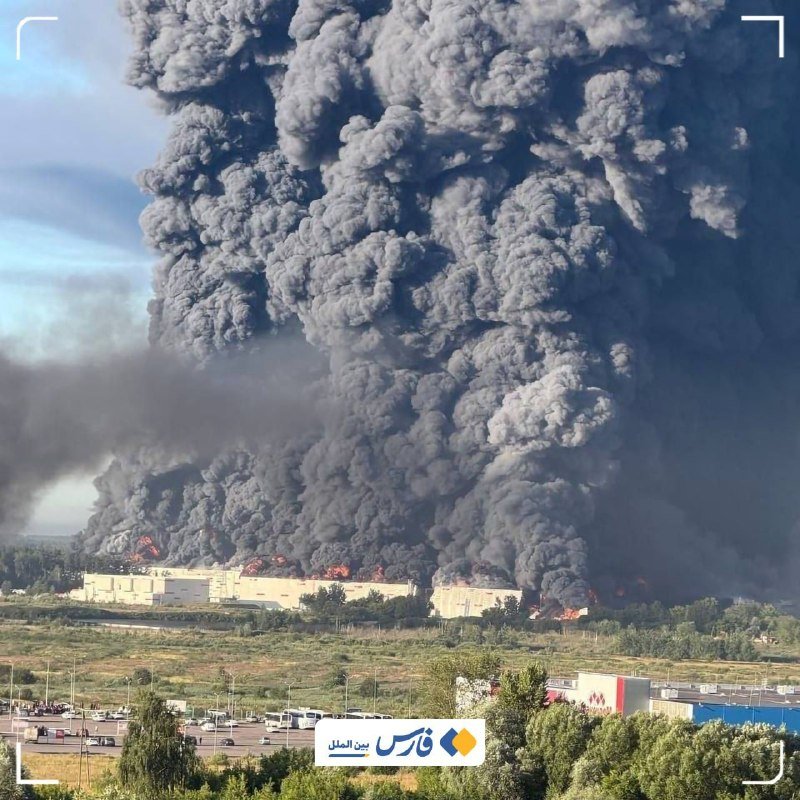
@Kyivpost_official · Telegram

At approximately 02:42 UTC on 10 July 2026, explosions tore through the port area of Taganrog, a city of roughly a quarter-million people on the Sea of Azov in Russia's Rostov Oblast. Ukrainian-made long-range drones reached the terminal; a fire broke out, and Russian emergency services began moving residents from houses adjacent to the strike zone to safer ground, according to posts on X and Telegram from the period between 02:42 and 05:42 UTC. The Telegram channel TSN_ua, citing Ukrainian sources, said the drones hit the port terminal directly. The X account @sprinterpress, which tracks southern Russian emergencies, said evacuation was underway from the emergency zone. The reports converge on a single event but diverge sharply on what it means for the trajectory of the war.

The Taganrog strike matters less for any single night of damage than for what it reveals about the geometry of the conflict in 2026. Kyiv's deep-strike campaign, built around domestically produced long-range drones, has progressively blurred the line between military target and civilian area on Russian soil. That blurring is now the campaign's defining operational and political fact.

What is actually on fire in Taganrog

The two source accounts of the strike agree on the basics. A drone attack hit the port district of Taganrog overnight, starting a fire that drew emergency services. According to @sprinterpress, posted at 05:42 UTC on 10 July 2026, residents from houses near the port were being evacuated to a safe zone. TSN_ua, the Ukrainian news outlet, reported at 05:14 UTC that the drones "reached the port terminal" and showed video of powerful detonations in the city. The X and Telegram reporting does not specify a casualty count, the type of drones used, or whether the port is a dual-use civilian-military facility.

That last omission is consequential. Taganrog's port sits a few kilometres from the Beriev Aircraft Company, a strategic producer of Russia's A-40 amphibious patrol aircraft and other military airframes. The Taganrog-Yuzhny and Taganrog-Central rail nodes feed southward toward the Rostov-on-Don military logistics hub and across the Kerch Strait to occupied Crimea. A strike on the port terminal can therefore be read as an attack on a logistical chokepoint, even if the visible fire is in a shared industrial-civilian zone. Neither source confirms military infrastructure as the target.

The reporting also does not address Russian air-defence performance — whether interceptors were activated, whether debris caused secondary damage, or whether the strike involved a salvo or a single airframe. The Telegram thread cited a video; the X account cited evacuations. No Russian ministry of emergency situations release was in the supplied material.

The political geography of a long-range strike

Strikes on Russian soil during the full-scale invasion have moved from rare to routine. Taganrog sits more than 200 kilometres from the closest Ukrainian-controlled territory and roughly 300 kilometres from the line of contact in Donetsk Oblast. Hitting it requires either a drone with a range in the high hundreds of kilometres or a launch from a platform operating closer to the target. Ukraine's domestic drone industry has scaled to that envelope over the past two years; domestic production of long-range one-way attack drones has reportedly shifted from bespoke workshops to serial output by 2026, with Kyiv publicly claiming strike depths into Russian rear areas as a deliberate operational priority.

That priority has a strategic logic. Inside Russia, the political weight of a strike is not proportional to its military effect. A drone that sets fire to a port terminal in Rostov Oblast forces a calculation in Moscow about how much of Russia's interior is now inside Ukraine's operational envelope, and at what cost to Russian civilians who were told the war was a contained "special military operation." Each successful deep strike shifts that calculation. Each strike that hits residential infrastructure narrows Kyiv's room to frame the campaign as precision-targeted.

What we verified / what we could not

Verified from supplied sources: A drone attack hit the port area of Taganrog on the night of 9–10 July 2026, with a fire reported and evacuations of nearby residents underway. TSN_ua reported direct hits on the port terminal; @sprinterpress reported evacuation of houses near the port to a safe zone. Both reports appeared between 05:14 and 05:42 UTC on 10 July 2026.

Not verifiable from supplied sources: Casualty figures, the specific drone type or launch platform, the proportion of the fire attributable to munitions versus secondary debris, whether Russian air defences engaged, whether the target was a dual-use facility, the official Russian ministry of emergency situations position, and any Ukrainian General Staff briefing identifying the target set. The supplied thread context does not include any Russian ministry, Ukrainian military, or Western wire reporting on this specific strike.

Contested in the wider reporting environment: Russian-aligned Telegram channels have in previous strikes framed similar incidents as attacks on purely civilian infrastructure; Ukrainian and Western outlets have framed equivalent strikes as legitimate attacks on logistics hubs supporting the invasion. The supplied sources for this article do not contain either rebuttal in detail.

The structural frame, in plain prose

Deep strikes are now the central mechanism by which Ukraine exports the cost of the war back into Russian territory. They do three things at once. They degrade the physical infrastructure — rail nodes, fuel depots, airframe plants, port terminals — that sustains Russia's invasion logistics. They impose a domestic political cost on the Russian government for the human consequences inside cities that were promised insulation from the conflict. And they consume Russian air-defence interceptors and radar time, redirecting scarce resources away from the front.

The trade-off is that the campaign runs in densely populated territory, often at night, often against targets that share infrastructure with civilian life. Russian cities are not militarised zones. Strikes on them are not equivalent to Russian strikes on Ukrainian apartment blocks in Kharkiv or Kyiv — the legal and political asymmetry of the invaded versus the invader holds — but the operational pattern still produces civilian risk. The honest reading is that both propositions are true at once: Kyiv has a legitimate right to strike military-logistical targets inside a country waging full-scale war against it, and the way that right is exercised will determine how the wider European public, not just Moscow, reads the war's trajectory.

What this changes, and what it does not

One strike in Taganrog does not alter the strategic balance. It does not shorten the war, degrade Russian air-defence capacity in any measurable way, or shift Western aid calculations on its own. What it does is reinforce the direction of travel. Ukraine's deep-strike envelope has, by 2026, become a permanent operational fact rather than a sequence of one-off escalations. Russian cities inside the operational reach of Ukrainian drones are inside the war, whether the Russian information space frames them that way or not.

The forward question is whether the operational logic and the political logic diverge. Operationally, every additional kilometre of reach gives Kyiv more options. Politically, every additional strike on a recognisably inhabited area inside Russia gives Moscow a domestic audience for the framing that Ukraine is the aggressor. The two dynamics are not opposites — Russia's invasion of Ukraine is the predicate fact and remains the framing anchor — but they are distinct pressures, and Ukraine's Western partners will have to manage both as the campaign continues.

The strike in Taganrog is one data point. Read it with the same precision its operators read their targeting stack: as evidence of what is reachable, what is hit, and what the civilian radius around the target happens to be. The reporting environment around such strikes will remain noisy. The facts of the war, including who invaded whom and who is now firing drones at whose port terminals, are not.

This publication's coverage of strikes on Russian territory proceeds from the established premise that Russia launched and continues to wage a full-scale invasion of Ukraine, and that Ukrainian strikes on Russian military-logistical infrastructure are a legitimate defensive response. Where strikes affect civilian-populated areas, that fact is reported with the same human weight that civilian harm is reported on the Ukrainian side.


Sources

Wire provenance

This editorial synthesis draws on the following public wire/social posts:

  • https://x.com/sprinterpress/status/
  • https://t.me/TSN_ua/
© 2026 Monexus Media · reported from the wire