Funeral crowds and the choreography of martyrdom in the Islamic Republic
Three Tasnim dispatches in a single morning — a deathbed verse, a thanks to the faithful, a Hafez-style lament — sketch the public script the Islamic Republic runs after the loss of a senior figure. The ritual is older than the Republic. Its modern form is not.
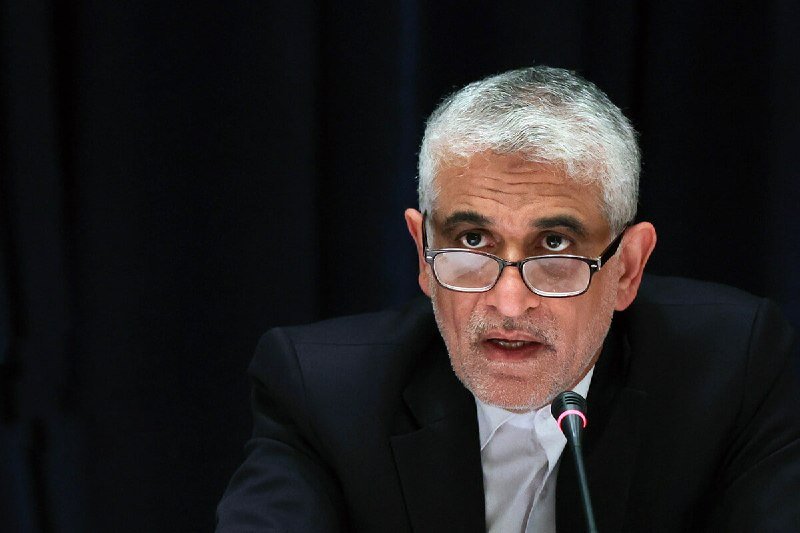
Three short items crossed the wire from Tasnim News between 05:05 and 07:36 UTC on 10 July 2026. Read individually they are devotional scraps — a deathbed line from the Quran, a thank-you from a former IRGC commander, a Persian verse that echoes Hafez. Read together, they describe the script the Islamic Republic runs after losing a senior figure, and they describe it more clearly than any policy memo.
The script is the point. Monexus reads these three dispatches as a single artefact of governance: a state-owned news agency, working in the language of martyrdom and classical poetry, ratifying a death to a domestic audience while speaking past it to a foreign one. The pattern is older than the 1979 revolution; the modern, camera-ready version of it is not.
What Tasnim actually published
The first item, timestamped 05:05 UTC, carries a brief lyric: "I said not to see the parting, I saw it / What I was afraid of came to me." The second, at 06:57 UTC, is a message of thanks from Major General Mohsen Rezaei — a former IRGC commander and longtime secretary of the Expediency Discernment Council — for what Tasnim calls "the magnificent presence of the people at the funeral of the martyred leader." The third, at 07:36 UTC, returns to the personal: a deathbed line, "I will return to you," described as a verse and presented as final words.
The order matters. A private goodbye, a public thanks, a sacred promise. The sequence is the story.
The state agency and the verse
Tasnim is not a neutral wire. It is the outlet most closely identified with the IRGC and the conservative hardline of the Islamic Republic, and it functions as both a newsroom and a propaganda organ in the strict sense — meaning an instrument for reproducing and amplifying the official line, not a debating society. That structural position is what makes three successive English-language posts useful reading: when an outlet with this remit publishes, the framing is the message.
The Hafez-shaped lyric is the giveaway. Persian political culture has a centuries-old habit of reaching for classical poetry at moments of political strain — Hafez, Saadi, and the Quranic verse of return (a recurrent theme in Shia eschatology around the Hidden Imam) all do heavy lifting in Iranian public speech. Deploying them on the state wire is not decoration. It is a way of locating a current event inside a longer sacred narrative, where loss is temporary and the dead are not really gone.
What the script is doing
Two things, simultaneously. Domestically, it converts a death into a martyrdom — a category with theological weight in Twelver Shia Islam and with political weight in the Islamic Republic, where the "martyr" (shaheed) carries state honours, pension benefits for the family, and a guaranteed place in official memory. The Rezaei thank-you note is the load-bearing element: a senior establishment figure publicly validating the framing, and the people who turned out, in real time.
Externally, it tells a different audience that the institution has absorbed the blow and remains operative. The English-language posting — not just Persian, English — is the cue. Iran-watchers across the Gulf, in Western foreign ministries, and in Israeli and American intelligence shops read Tasnim English closely precisely because what the agency chooses to publish in that language is curated for them.
Why the choreography endures
The script works because it solves two problems at once. It gives a grieving public a container — poetry, precedent, the promise of return. And it gives a besieged state a usable past, which is the thing authoritarian and theocratic regimes tend to run shortest on.
This is also where the counter-reading bites. Critics inside and outside Iran will note that the same vocabulary of martyrdom has been used to package military casualties whose deaths were the product of decisions made by the very officials now eulogising them; that "martyred leader" is a category applied selectively; and that the public's "magnificent presence" is also a measurable resource the state spends on stagecraft, from bussing to base-of-show crowds to fixed camera positions along the route. None of that disproves the genuine grief on display. It does complicate the claim that what we are watching is spontaneous.
The unresolved parts
The wire items do not name the deceased, do not give a date of death, and do not state a cause. The sources do not specify whether the funeral referenced is the same event across all three posts or a continuing sequence. There is no independent confirmation in this thread of casualty figures, attendance numbers, or the identity of any "martyred leader" — and this publication will not supply those details by inference. What can be said with confidence is narrower and more useful: on the morning of 10 July 2026, Tasnim's English service ran a coordinated three-part sequence — lyric, official thanks, sacred promise — built around the funeral of an unnamed senior figure, and the sequence itself is the data.
The choreography of martyrdom is the story. The names will arrive in due course. Until they do, watch the form, not just the content.
This piece reads Tasnim as both wire and artefact. Western agencies, including Reuters and AFP, have their own templates for confirming senior Iranian deaths; in their absence, the state outlet's framing is itself the news.
Wire provenance
This editorial synthesis draws on the following public wire/social posts:
- https://t.me/s/tasnimnews_en
- https://t.me/s/tasnimnews_en
- https://t.me/s/tasnimnews_en