Iran's rocket-and-kebab economy: what normalisation looks like in a sanctioned republic
A viral clip of Iranians watching a rocket launch while grilling meat has become an accidental portrait of a sanctioned economy: spectacle above, anxiety below.
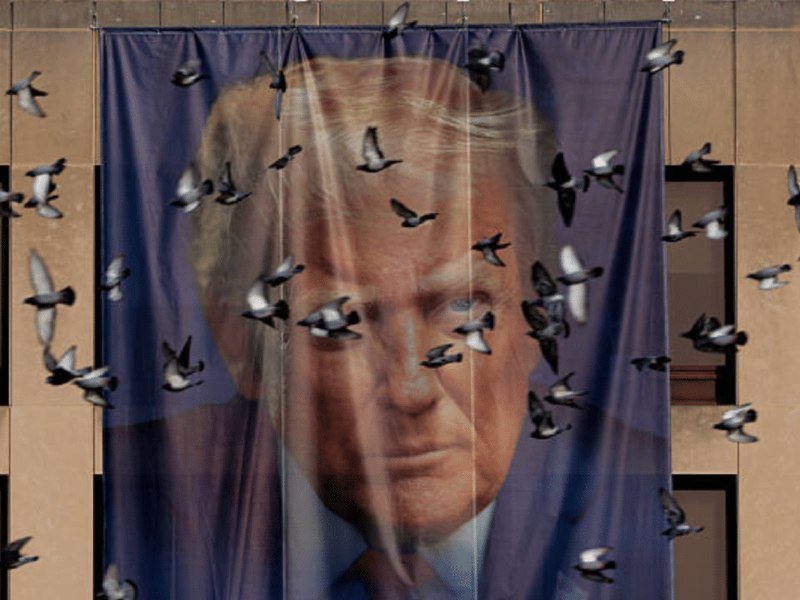
The clip, posted by the @sprinterpress account on 10 July 2026 at 01:42 UTC, runs barely a minute. A rocket climbs into a pale sky over what looks like a holiday gathering; a man turns a skewer on a small grill, his face lit by charcoal glow rather than by the launch. The headline, borrowed from the poster's own summary, lands flat: "Nothing special." That is the point. In a country where state media treats every successful solid-fuel test as proof of strategic autonomy, a domestic audience has decided that the spectacle is no longer remarkable. What is remarkable is the kebab.
The timing matters. The same cluster of social feeds that delivered the launch clip also carried, twelve hours earlier, a snapshot of a different kind of arithmetic: three small bread rolls in a Polish shop window for 125 złoty, the cheapest of which, the poster notes, was already going mouldy. The two posts share no author, no geography, and no ideology. They share something more uncomfortable — a global mood in which bread prices and missile tests are now filed in the same mental folder, alongside the working assumption that the line between the two will not be redrawn any time soon.
The economy that builds the rocket
Sanctions do not, in themselves, prevent a country from launching rockets. They do, however, reshape which industries can be built and at what opportunity cost. Iran's aerospace complex — the IRGC-linked organisations and the Iran Space Organization — has historically commanded a privileged share of foreign-currency allocation and engineering talent precisely because missile and satellite work sits on the sanctioned edge of the import list, where substitution is a national-security requirement rather than a market preference. The result is a sector that can produce functioning solid-fuel boosters while the same country's civil manufacturers struggle to source certain medical-imaging components.
The kebab framing is not a metaphor for collapse. Iran's broader consumer economy continues to function: street markets are stocked, fuel is still cheap by regional standards, and the rial's hyperinflation of 2018–2019 has stabilised into something closer to a chronic, high single-digit erosion. But chronic erosion is its own kind of politics. When a missile test becomes a backdrop to a family barbecue, what is being normalised is not the missile but the trade-off — the quiet acceptance that prestige projects and the cost of a Saturday meal now occupy the same mental shelf, and that complaining about the latter is no longer interesting.
The counter-read: why "ordinary" is the message
A second reading deserves airtime. The clip may not be signalling fatigue so much as confidence. A state that wants its population to internalise aerospace capability as routine is a state that has decided prestige technology no longer needs a propaganda wrapper. The viewer who turns back to the grill is, in that reading, the desired viewer — proof that the project has matured from announcement into infrastructure. The "nothing special" caption is not dissent; it is assimilation. Polling on Iranian public attitudes to the defence budget is sparse and politically fraught, but the visible register of social media in the country over the past eighteen months has trended toward matter-of-fact.
That reading and the first one are not mutually exclusive. A society can absorb a missile programme as ordinary and still resent the opportunity cost of it. The two feelings co-exist, and most of the evidence on offer — a single short video, a poster's caption, a separate post about Polish bread prices — sits too far above the ground to distinguish them.
What the Polish bread rolls have to do with it
On the surface, nothing. Inflation in Poland is a domestic-policy story tied to European energy prices, the złoty's path against the euro, and the political contest between Koalicja Obywatelska and PiS over consumer relief. The 125-złoty figure for three rolls — flagged by the @sknerus_ account on 9 July 2026 at 12:54 UTC, with the on-screen text complaining that the cheapest was mouldy — is a domestic complaint in a domestic conversation.
But the juxtaposition is instructive. Two different polities, two different currencies, two different price regimes, and the same underlying condition: a working-class consumer arithmetic that has tilted, measurably, against the household. The Iranian grilling clip and the Polish bakery clip are the same picture rotated ninety degrees. In one, a state absorbs the cost of an aerospace programme and asks its citizens to watch a launch and then make dinner. In the other, a market absorbs an energy-shock hangover and asks a customer to pay 41 złoty for a single small bread roll. Neither frame is principally about foreign policy. Both are about what "normal" has come to mean.
The structural picture in plain prose
The wider pattern here is not a media frame. It is an economic one. A world in which missile programmes and household grocery bills are both being absorbed as background noise is a world in which the cost of strategic autonomy and the cost of consumer subsistence are converging in the public mind. For Tehran, that convergence is a strategic asset in the short run — no protest cycle, no renewed sanctions debate. It is a strategic liability in the longer run, because the same normalisation that makes a rocket test unremarkable also makes a 30 per cent annual bread-price increase unremarkable. The two trends feed on the same psychological slack.
There is a counter-narrative worth holding onto: the Iranian middle class is not a single bloc, the satellite-economy around the defence sector is itself an employer, and a noticeable share of the visible frustration in Iranian social media is directed at the inefficiency of the sanctions-evasion logistics chain rather than at the existence of the programme it serves. The "kebab indifference" reading is real, but it is not the only reading. The clips, on their own, prove nothing about public opinion. They prove only that the cameras were running.
Stakes, and what the next twelve months test
If the framing in the clip holds, the question for the next year is whether the normalisation is durable. Three things would test it: a renewed sanctions package that closes a workaround currently in use; a bread-and-fuel shock tied to a currency move; and a regional security event that pulls the aerospace sector back onto the front pages and out of the holiday footage. Any one of those would force a separation between the strategic-assets story and the cost-of-living story that Iranians currently appear willing to hold in the same frame.
The other question is more banal and more important. Bread in Warsaw and kebabs in Tehran are both being priced in a global environment where the price of basic energy and the price of basic credit are not, for the moment, moving in the household's favour. The politics of that environment will be written in domestic currencies. The missiles are the spectacle; the rolls are the ballot.
Desk note: Monexus treats both the launch clip and the bakery complaint as primary visual evidence, with the caveat that single viral posts do not constitute a poll. Where wire reporting is not yet available on the underlying price claims, we have left the figures as the posters stated them and flagged the sourcing.
Wire provenance
This editorial synthesis draws on the following public wire/social posts:
- https://x.com/sprinterpress/status/2075395141322383360
- https://x.com/sprinterpress/status/2075393597394780160
- https://x.com/sknerus_/status/2075199832507957248