The pipeline: how a martyrdom frame is broadcast and what it tells us about Iranian state media in 2026
Five short video posts from Tasnim News English in 24 hours reveal the template Iran’s English-language outlets use to wrap grief in political theology — and the limits of treating that output as news.
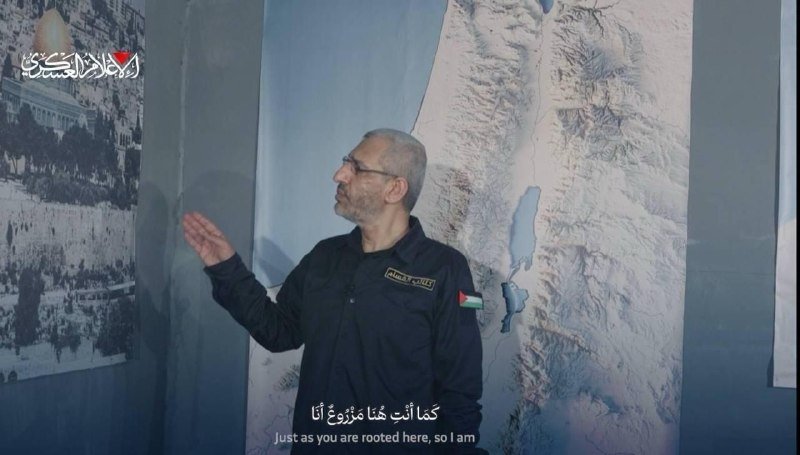
In the space of 24 hours, between 22:04 UTC on 9 July 2026 and 00:54 UTC on 10 July, Tasnim News English published five short video posts on its English-language Telegram channel. The pieces are formally distinct — a tribute, a parting image, a vow of presence, a blessing of a guest, a wish of health — but read together they form a single editorial object. The hashtag is constant: #Badarqa_Aghai_Shahid_Iran. The register is constant. The grammar of address, addressed to a "sir" who is repeatedly the same absent figure, is constant. This is not a news feed. It is a liturgy with a Telegram handle, and it is worth looking at it as one.
What the wire is doing
The five items, in order: at 22:04 UTC on 9 July, a short video captioned "Yes, time is up…"; at 22:16 UTC, a line beginning "Now we and the horror of the world without reason…"; at 00:04 UTC on 10 July, a clip asking how a mountain of sadness turns at the moment of parting; at 00:31 UTC, a statement of fidelity — "We will remain, and sir, you are Haider's guest"; and at 00:54 UTC, the closing benediction, "I just wish you health." Across the five pieces, the only named proper noun is Haider, the historical epithet of Ali ibn Abi Talib, the first Shia Imam, and the implied referent of "sir" is a single deceased or martyred figure whose identity the channel does not specify. The phrase Aghai Shahid — "Mr. Martyr" — is a politeness form that addresses a dead man directly, as if still present.
Tasnim is an Iranian state-affiliated news agency, founded in 2012 and closely linked to the Islamic Revolutionary Guard Corps. Its English-language desk exists to project an Iranian state narrative to foreign readers. What the 9–10 July sequence shows is the specific template that desk uses for a particular kind of event: a death inside the political-religious establishment, almost certainly a senior figure given the repeated direct address, the use of Haider (reserved for the highest register of Shia reverence), and the Badarqa marker that ties the cycle to the battlefield martyrdom tradition.
The frame, translated into plain editorial language
Two things are happening at once in the clips, and they need to be named separately. The first is a grief register: addressed to the dead, addressed to an audience that is presumed to share the loss, and using the diction of a community in mourning. The second is a political register: the addressee is not just mourned, he is invoked. The vow to remain, the framing of the dead as "Haider's guest" — that is, welcomed into the company of the Imam — and the wish of health, which in Shia devotional usage is a request to God for the well-being of the living community, are all moves that convert private grief into a public obligation. The frame is older than the Iranian state: it is the classical martyrdom template of a community that has historically understood political defeat through the language of loss and resurrection.
What the 2026 English desk is doing is taking that template and outputting it as a video wire. Each clip is short, captioned, hashtagged, and ready for re-use. The format is engineered for reposting. A reader who follows the hashtag through Telegram, X, or any of the front-end clients that ingest Tasnim will see five pieces in 24 hours, all in the same key, all addressed to the same absent figure, all building the same atmosphere. That is not a description of devotional life. It is a description of a media product, and it is the product the channel is selling.
What it is not
It is not news. There is no dateline event in any of the five posts. There is no location, no institution, no named casualty beyond the implied figure, no family acknowledgement, no funeral or burial described. The English desk of Tasnim operates a wire that, in moments like this one, sets aside the conventions of newswriting entirely. The five pieces carry no byline, no attributed source, and no event claim. To import them into a news feed as reportage — "Iran's Tasnim News reports…" — is to mistake the genre.
This matters because Tasnim is one of the most-cited Iranian outlets in Western coverage. The English desk is treated, by aggregators and by some wire competitors, as a window on Iranian state intentions. The 9–10 July sequence is a useful corrective. Read in bulk, the material is a devotional product, not a reporting product, and the two genres are doing different work. The reporting product — Tasnim's coverage of IRGC statements, of nuclear talks, of regional security incidents — sits elsewhere on the same channel. The two coexist, and Western coverage that uses Tasnim as a single source is implicitly averaging across them.
What to take from it
Three concrete points. First, the channel exists in two registers at once, and an editor pulling from it should know which register they are reading. A devotional clip, no matter how many times it is reposted, is not a piece of intelligence about a policy decision. Second, the English desk is not the only place this template is run. Iranian state media as a system — Tasnim, IRNA, PressTV, Mehr — uses the martyrdom frame for domestic and foreign audiences in overlapping but distinct ways, and an effective reader has to know which outlet is publishing which frame to which audience. Third, the gap between what the channel publishes and what the channel reports is itself a piece of information. The fact that Tasnim's English desk is, on 9–10 July 2026, devoting its evening cycle to a grief address rather than a news bulletin is a signal about how the channel's editors read the moment — and about the kind of story they consider central. The Western wire should report on the signal, not on its output.
Desk note: Monexus treats Tasnim as a primary source for Iranian state framing and as a counter-claim channel for regional security events. We do not treat its devotional content as a news bulletin. The 9–10 July sequence is published here for the editorial pattern it reveals, not for any factual claim it makes.
Wire provenance
This editorial synthesis draws on the following public wire/social posts:
- https://t.me/tasnimnews_en
- https://t.me/tasnimnews_en/1
- https://t.me/tasnimnews_en/2
- https://t.me/tasnimnews_en/3
- https://t.me/tasnimnews_en/4
- https://t.me/tasnimnews_en/5