Iran's reported assassination plot against Trump lands inside a wider war narrative — and a market
Israeli intelligence shared a 'specific' Iranian plan to kill President Trump with Washington, US media reported on 10 July 2026 — a disclosure that lands alongside claims Trump's brokers bought defence stocks tied to a war on Iran.
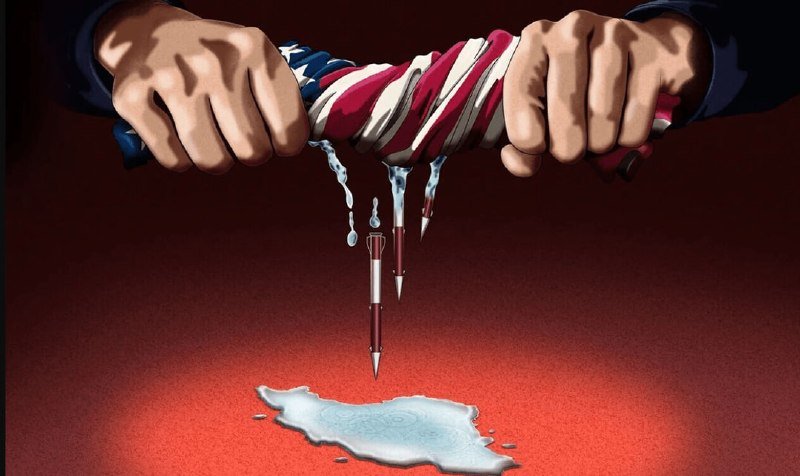
A 'specific' plot, leaked at speed
On 10 July 2026, two sources familiar with the matter told CNN that Israel had shared intelligence with the United States alleging Iran had devised a new plan to assassinate President Donald Trump. Within hours, France 24's English desk had the same line on air: a "specific" Iranian plot, surfaced through Israeli channels, that several US outlets were now reporting in parallel [08:40 UTC, 08:03 UTC]. The story broke faster than verification typically allows, which is itself the first thing worth noticing about it.
The disclosure did not arrive in a vacuum. Earlier the same day, Iran's state broadcaster PressTV carried a separate, parallel claim — that brokers representing Trump had purchased between $9.7 million and $24.3 million in stocks from arms manufacturers in the year prior, investments that would benefit from a war on Iran [07:42 UTC]. Two narratives, two directions, both live before lunch in Washington.
The case for taking the plot seriously
The Western wire line is straightforward and rests on three pillars. First, intelligence-sharing between Israel and the United States on Iranian covert action is a well-established channel; the long-documented Iranian threat picture against senior American officials is not a journalistic invention, and Israeli services have form in surfacing plots through allied press. Second, the framing — "specific plan," unnamed sources, no arrest or indictment — is the standard architecture of a pre-law-enforcement leak, designed to constrain Tehran rather than to trigger a prosecution. Third, the political utility for an Israeli government already at war with Iranian proxies across the region is obvious: a confirmed Iranian assassination attempt against a sitting US president would consolidate American alignment behind any escalation Israel judged necessary.
This publication reads those three pillars as load-bearing. The institutional relationship is real, the disclosure pattern is familiar, and the strategic logic is coherent. None of that requires treating the underlying allegation as proven in a court of law; it requires treating the leak as an act of policy, which it plainly is.
The case for sitting with the second story a little longer
The PressTV report on Trump's alleged defence-sector holdings is the inverse frame and deserves equal airtime, not because PressTV is a neutral source — it is the Iranian state broadcaster — but because the underlying claim is verifiable through US financial disclosures and the question it raises is the right one: who benefits, materially, from the war footing the assassination narrative justifies? The two stories, taken together, sketch a feedback loop. An Iranian plot justifies Israeli-American escalation; escalation rewards defence equities; defence equities are held, allegedly, in the orbit of the man making the escalation decision. Each element of that loop has been reported separately. The loop itself is what the public is asked to swallow on trust.
What the framing does, and what it leaves out
The coverage so far privileges the language of intelligence officials — "specific," "plot," "assassination" — while declining, at least in the first cycle of reporting, to interrogate the timing, the sourcing chain, or the downstream policy consequence. That is the standard editorial deference to security services that any honest newsroom has to perform when a credible allied agency puts a story on the wire. It is also the standard deference that, applied without friction, hands the foreign-policy agenda to the agencies that feed it.
The structural pattern is older than this week. When a hostile power is accused of planning violence against a Western head of state, the editorial reflex is to treat the accusation as fact-on-arrival and the counter-narrative — motive-mongering, war profiteering, selective disclosure — as the conspiracy theory. The two are not equivalent categories. One is an unverified intelligence claim; the other is a question about who profits from the policy response to that claim.
Stakes, and what remains genuinely uncertain
If the Israeli intelligence holds up — and there is no present reason to doubt the channel, though every reason to demand specifics — then Iran has crossed a line that the United States has, historically, answered with force rather than sanctions. The escalatory runway is short. Conversely, if the financial-disclosure reporting holds up, the domestic political cost in Washington is non-trivial, and the question of recusal from war-and-peace decisions moves from the editorial page into the courtroom. Both stories cannot be true in their strong forms without producing a constitutional crisis; both can be partially true and still produce a war.
What the sources do not yet establish is the operational detail of the alleged plot — what means, what timing, what Iranian entity, what confidence level Israeli services assigned to the assessment. None of the reporting on the wire as of 10 July 2026 08:40 UTC carries those particulars. The story is a frame before it is a fact, and the public is being asked to inhabit the frame.
Desk note: Monexus runs the Israeli-intelligence disclosure and the Iranian-state-media financial claim at parallel weight, then asks the structural question the wires are declining to ask in the first cycle — who, materially, benefits from the policy response to a leak of this kind.
Wire provenance
This editorial synthesis draws on the following public wire/social posts:
- https://t.me/france24_en
- https://t.me/presstv