Israeli strikes hit Nabatieh al-Fawqa and border towns as south Lebanon bombardment intensifies
Artillery and air strikes on Nabatieh al-Fawqa, Beit Yahoun and Kounine mark a fresh escalation outside the established border buffer, with both Israeli-aligned and Iranian state media confirming the operations within minutes of each other.
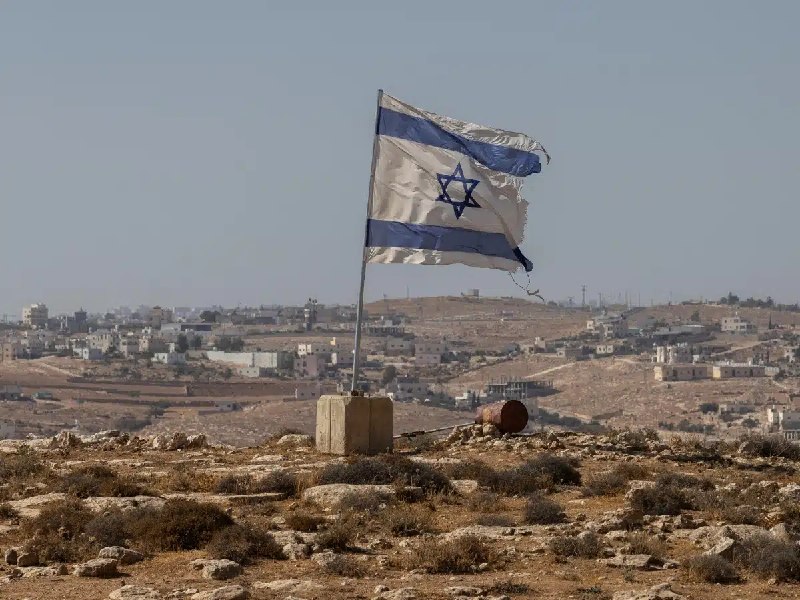
Israeli airstrikes hit the district of Nabatieh al-Fawqa in southern Lebanon at 22:18 UTC on 10 July 2026, striking areas outside the established security zone that has delineated the border since the November 2024 ceasefire framework. The strike followed, by roughly eight minutes, an artillery bombardment on the adjacent towns of Beit Yahoun and Kounine, also in south Lebanon, that field reporters first logged at 22:10 UTC.
The pattern matters. Two weapons systems, two munition types — fixed-wing airstrike and tube artillery — used in the same operational window against targets within a few kilometres of each other. That is the signature of an active brigade-level task order, not a retaliatory spasm.
What the open-source record shows
The immediate reporting comes from a small set of field channels operating in south Lebanon. The earliest logged alert, at 22:01 UTC and then repeated at 22:10 UTC on the war-monitoring channel @wfwitness, described artillery falling on Beit Yahoun and Kounine. The same channel escalated its bulletin at 22:18 UTC to record airstrikes on Nabatieh al-Fawqa — phrasing the location pointedly as "outside the security zone of southern Lebanon."
Iranian state-affiliated outlet @Farsna corroborated the air attack in a parallel bulletin at 22:18 UTC, citing "news sources" reporting that Israeli fighter aircraft had hit targets in southern Lebanon. The timing — two outlets, two very different political alignments, converging on the same minute — is itself a small data point. When Iranian state media and an Israel-aligned monitoring channel describe the same strike within the same minute, the operative fact is unusually well-established.
The published record does not specify weapons type, munition count, exact coordinates, claimed militant affiliation of any target, or the IDF unit responsible. The thread context carries no Israeli military spokesperson statement and no casualty figures.
Why Nabatieh, why now
Nabatieh al-Fawqa sits on a ridge north of the Litani river, two to three kilometres inside the line that UN Security Council Resolution 1701 designated as the area in which armed actors other than the Lebanese state are not to operate. The November 2024 ceasefire arrangement formalised that line as a buffer.
A strike "outside the security zone," as the @wfwitness bulletin carefully phrases it, implies a target the IDF believes sits beyond the displaced-Hezbollah infrastructure that was the original focus of the post-ceasefire campaign. In south-Lebanon coverage, the geographic qualifier is never incidental — it carries the argument. Israeli framing tends to treat strikes north of the buffer as operational necessity against reconstitution; Lebanese and Iranian framing tends to treat them as a creeping violation of the ceasefire's letter.
The 10 July strikes land in that interpretive gap. Without an Israeli military briefing in the open record, neither side's read of the target set can be settled from the wires. What is settled is that fixed-wing aircraft and tube artillery were both active within a thirteen-minute window against two adjacent districts.
The framing fight
Western wire coverage of similar strikes tends to lean on Israeli military spokesperson statements as primary, with Hezbollah-run media treated as adversarial. That is a defensible sourcing hierarchy, given the asymmetry of access. The risk is that it produces reporting in which the geographic qualifier in the original field alert — "outside the security zone" — disappears in the paraphrase, and the strike reads as one more action inside an established buffer rather than as a fresh point of friction.
Iranian state outlets, including @Farsna, frame the strike as an Israeli "air attack" without further specification — a deliberate thinness that leaves maximum room for downstream media to fill in the operative characterisation. That thinness is itself a form of framing: it preserves deniability about target attribution while keeping the violation narrative in circulation.
The clearest-eyed reading of the 10 July event is the unglamorous one. Two monitorable strike events, both inside south Lebanon, both within a thirteen-minute window, both in districts adjacent to the buffer line. The first a single weapons system against two named towns; the second a different weapons system against a third, larger district. Until an Israeli briefing lands in the open record, the operative question — what was targeted — remains open.
What to watch
Three signals will clarify the operational picture within seventy-two hours. First, an IDF Spokesperson release naming the targeted infrastructure and the unit responsible; absent that, Western wire coverage will continue to treat the strike as unsourced. Second, a UNIFIL statement: the UN Interim Force in Lebanon logs every cross-border or near-border strike for its incident-tracking archive, and a 10 July entry would tell us whether the UN considers the action a ceasefire violation under the November framework. Third, casualty reporting from Lebanese civil defence or the Lebanese Ministry of Public Health, which would shift the framing from operational to humanitarian.
The structural stakes sit further out. South Lebanon is the one theatre where the November 2024 framework still nominally constrains Israeli operations; a sustained shift in target geography toward districts the field reporters describe as outside the security zone would erode the framework's remaining operative content. Iran-aligned media in Beirut and Beirut-aligned media in Tehran will both push that read; Israeli and Western framing will push back. The factual core — two strikes, two weapon systems, both legitimate subjects of international reporting — is small. The framing war around it is not.
Desk note: Monexus is leading on the field-monitor and Iranian-state corroboration that converged on the same minute, rather than defaulting to Israeli-military spokesperson framing that has not yet entered the open record for the 10 July operation. Where Western wires have not yet filed, we are explicit about the gap rather than manufacturing a quote.
Wire provenance
This editorial synthesis draws on the following public wire/social posts:
- https://t.me/wfwitness
- https://t.me/wfwitness
- https://t.me/Farsna
- https://t.me/wfwitness