A funeral in Mashhad, a robot hand in California, and the oil markets that bind them
The IEA warned on 10 July 2026 that a renewed US-Iran war would tip global oil markets into fresh shortage. That warning arrived hours after Iran reportedly buried Ayatollah Ali Khamenei in Mashhad and a US-headquartered humanoid-robotics firm unveiled a 25-DoF hand it calls an 'API to the physical world.'
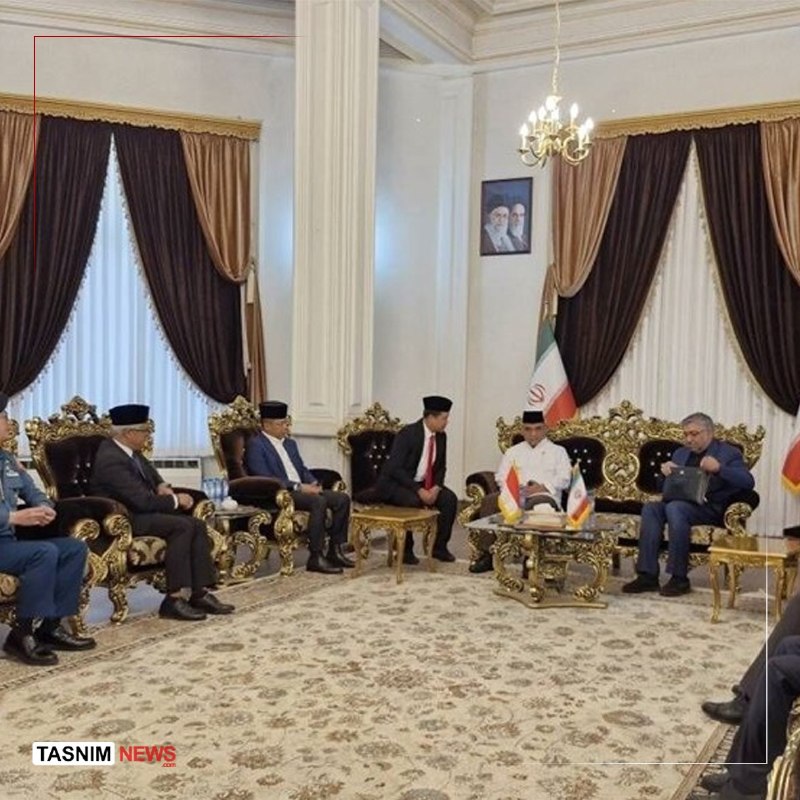
Three wires landed inside the same 24-hour window this week, and read together they sketch the texture of the summer of 2026 more clearly than any one of them does alone. The International Energy Agency told markets on the morning of 10 July 2026 that a renewed war between the United States and Iran would push the world into another oil shortage. Hours earlier, Iranian state-aligned channels had reported that Ayatollah Ali Khamenei was being buried in Mashhad as a ceasefire the region had been clinging to visibly unravelled. And in California, the humanoid-robotics firm 1X unveiled a tendon-driven hand for its NEO platform — twenty-five degrees of freedom, marketed, in the company's own framing, as an "API to the physical world."
The point is not that these three stories are secretly connected. The point is that the same global audience is being asked, on the same day, to price a war that may restart in the Persian Gulf, to absorb the symbolic closing of a political era in Tehran, and to evaluate whether a Norwegian-American robotics company has just shipped a meaningful interface between software and matter. Each of these bets is being placed on top of the same thin layer of assumptions about how 2026 is going to go.
The oil story: IEA's quiet alarm
The IEA's warning, carried on 10 July 2026 by BRICS News, is the kind of line markets read twice. The agency did not say a war is coming; it said that if one restarts, the marginal barrel is no longer there to be turned on. That distinction matters. The spare-capacity cushion that defined the 2010s has been drawn down by years of underinvestment in upstream projects, by sanctions that have frozen Iranian and Venezuelan crude out of legitimate channels, and by a refining system that has shed capacity on both sides of the Atlantic. A disruption that would have been absorbable in 2018 is no longer absorbable in 2026, and the IEA is now saying so on the record rather than leaving the inference to traders.
The political substrate for the warning is the second wire. On 9 July 2026, channels monitoring the Iranian succession reported that Ayatollah Khamenei was to be buried that day in Mashhad, his father's city and a site of enormous symbolic weight inside the Islamic Republic. The reported burial came as the ceasefire that had paused open kinetic fighting between Iran and the US–Israeli axis was, in the language of the wire, "unravelling." The two facts do not have to be causally linked to sit in the same frame: a leadership transition inside Iran is precisely the kind of moment in which miscalculation is cheapest and restraint is most expensive, because neither Tehran's new decision-making circle nor Washington's Iran hawks have an incentive to be the first to blink.
The counter-narrative is the one Western oil watchers tend to reach for first: that the IEA is engaged in moral suasion, talking up shortage risk to deter escalation it cannot prevent. That reading has historical support. The agency has, on past occasions, framed tight markets in language calibrated to influence OPEC+ behaviour. But the structural facts on the supply side are not rhetorical: Saudi Arabia is producing close to capacity, UAE spare capacity is finite, Brazilian and Guyanese growth has been priced in for years, and there is no longer a meaningful Iranian barrel that can be switched on at short notice without a political decision in Washington and Brussels. The IEA's warning is sharper than its usual hedging because the underlying cushion is thinner than its usual hedging allows for.
The robot hand: 1X and the politics of the physical layer
The third wire, dated 9 July 2026, looks at first glance like it belongs on a different page. 1X, the Norwegian-American humanoid-robotics firm now headquartered in the San Francisco Bay Area, unveiled tendon-driven hands for its NEO platform with twenty-five degrees of freedom, and called them an "API to the physical world." The phrasing is the news. The hardware is impressive — tendon-driven actuation has been the design choice humanoid labs converged on for good biomechanical reasons — but the deliberate borrowing of a software-engineering metaphor is what tells you where the company thinks it sits in the value chain.
"API to the physical world" is a claim that 1X intends NEO to be a platform, not a product. The economic logic is familiar from a decade of platform governance fights: the firm that defines the interface captures the rents on top of it. If 1X succeeds in persuading third-party developers to write to its hand the way they write to a payment API, the company becomes a toll collector on physical labour the way Apple became a toll collector on mobile software. That is a much larger ambition than selling robots, and it is being telegraphed, not concealed. The wire, originally surfaced on the Polymarket-affiliated X account, is the kind of detail that travels fast because it is also a signal to capital markets about how to value the next round.
The honest caveat is that the metaphor is doing work the hardware has not yet earned. Twenty-five degrees of freedom is competitive with the best research hands in the field, and tendon-driven actuation is genuinely more compliant than the rigid electric alternatives. But an interface is only an API once an ecosystem writes to it, and 1X has not yet shipped that ecosystem at any scale. The company is selling a promise dressed in a noun, and the more interesting question is which competitors — Figure, Apptronik, Tesla's Optimus team, the Chinese humanoid cohort out of Unitree, Fourier, and UBTech — accept the framing and which reject it.
What the three wires together actually show
The temptation, on a day with three wires like this, is to invent the through-line. There isn't one, and inventing it would be dishonest. What there is, is a shared condition: each of the three stories is being priced by a global system that has less margin for error in 2026 than it had two years ago. Oil markets are running on a thinner cushion of spare capacity than the IEA is comfortable with. The Iranian succession is being played out under a ceasefire that is visibly thinning. And the leading humanoid-robotics firms are asking investors to underwrite not a product but a platform bet, on the assumption that the physical world is about to become programmable in the way mobile phones became programmable in 2008.
Each of those bets could pay off. The IEA's warning could deter the escalation it implicitly fears. The Iranian transition could produce a more predictable, less ideological negotiating partner. 1X's hands could become the standard interface for general-purpose robotics the way USB became the standard interface for peripherals. None of those outcomes is foreordained, and pretending otherwise is the kind of confident framing the moment does not deserve.
The stakes, in plain terms
If the IEA is right, a US-Iran flare-up in 2026 lands differently than the same flare-up would have landed in 2018 or even 2022. Higher prices, longer duration, fewer policy levers to pull, and a much harder time for the emerging-market importers that have been the marginal buyers of the last two years. If 1X is right, the labour market implications are not a 2030 problem; they are a 2027-2028 problem, and the policy infrastructure for managing that displacement is not being built at the pace the technology is being shipped. And if neither is right, the more uncomfortable possibility is that both are right at once, and that the world is about to learn, in the same news cycle, what an oil shock and a labour shock feel like in combination.
Desk note: Monexus ran the three wires — IEA shortage warning, the reported Mashhad burial, and the 1X hand unveiling — as a single frame on the assumption that the same audience is pricing all three bets this week. Wire services tend to file them on three different desks; we think the desk boundaries are part of the story.
Wire provenance
This editorial synthesis draws on the following public wire/social posts:
- https://t.me/s/bricsnews