Lebanon walks the tightrope: US delegation heads to Beirut as Aoun-Haykal framework with Israel moves from words to wire
A US military delegation is due in Beirut on 11 July to meet army chief Rodolphe Haykal, the first operational follow-through to a Lebanon-Israel framework Beirut says it chose to shorten southerners' suffering.
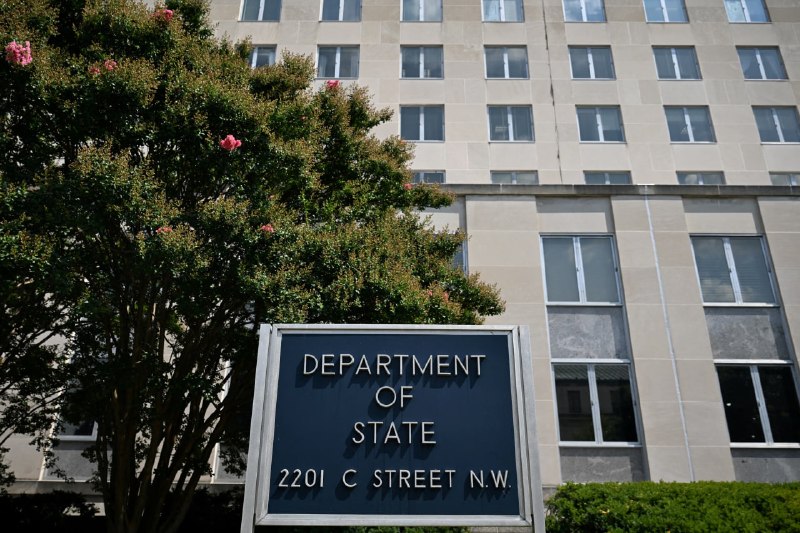
A US military delegation is scheduled to arrive in Beirut on Friday 11 July 2026 for talks with Lebanese Army Commander General Rodolphe Haykal on the operational mechanics of the Lebanon–Israel framework agreement, The Cradle Media reported on 10 July. The visit — the first known US-military technical follow-up since the framework was announced — narrows a long, public dispute over south Lebanon into a set of measurable tasks: who disarms, who verifies, who patrols, and on whose timetable.
What is unfolding in Beirut is not a peace deal in the conventional sense. It is the unglamorous, often invisible phase that determines whether signed paper becomes lived reality: the wiring diagram. Lebanon's President Joseph Aoun and General Haykal have, in the words of the Beirut-based Al-Akhbar newspaper, been coordinating security and implementation "as Israel" continues strikes the sources describe as enforcement. President Aoun, in comments carried by Asharq Al-Awsat, framed Beirut's choice of direct negotiations with Israel as a deliberate move to shorten what he called "the occupation" and the suffering of southern residents — a striking line from a head of state whose army has historically avoided direct contact with its southern neighbour.
The immediate story, then, is a US military delegation touching down in a capital where the host government is publicly arguing that talking to Israel — not freezing it out — is the path out of occupation. The deeper story is structural: a small Mediterranean state with a weak currency, a fractured sectarian system, and a non-state armed competitor on its southern border is being asked to perform the function of an arm of an external security architecture, in real time, in public, and under bombardment.
From framework to wiring diagram
The 10 July reporting fixes the sequence. According to The Cradle Media, the US military delegation is scheduled to meet Haykal on Friday to discuss "the implementation mechanisms for military measures in the designated trial areas in south[ern] Lebanon." Two hours earlier, the eyewitness channel wfwitness relayed an Al-Akhbar read-out of a meeting between President Aoun and General Haykal in which the two coordinated security and the implementation of the framework as Israeli action continued. The trial-area language is the operative phrase: it signals that the framework is not being treated as a single national commitment but as a staged rollout, with discrete geography, discrete forces, and a discrete verification chain.
That is a meaningful shift from the public posture of previous Lebanese governments, which preferred to keep the file at the level of denunciation and UN-adjacent complaint. The Asharq Al-Awsat line carried by wfwitness — Aoun saying Beirut "chose direct negotiations with Israel to shorten the 'occupation' and the suffering of southerners" — is the first time a sitting Lebanese president has publicly argued, in those terms, that bilateral engagement is the lesser evil. The qualifier matters: Aoun did not call the framework good. He called it shorter.
A Lebanese political source familiar with the framework's drafting, speaking to The Cradle Media in earlier reporting referenced by the 10 July thread, said the trial areas were deliberately selected to test the mechanics before any national extension. The trial logic also gives Beirut a face-saving exit: if the Israeli enforcement posture in the trial zones does not soften, Lebanon can argue that the experiment failed on the other side's terms.
The counter-read: framework as cover
The dominant critical reading — voiced in the same Beirut press that covers the negotiations — is that the framework is not a step toward the end of occupation but a managerial upgrade of it. Under this view, the trial areas are a legalisation mechanism: they convert what would otherwise be described as Israeli incursions into Lebanese territory into scheduled, US-mediated patrols with a Lebanese sign-off. The political effect is to move the file from the international-law register (sovereignty, occupation, UN resolution 1701) to the security-management register (coordination cells, deconfliction lines, enforcement protocols).
The Hezbollah-aligned press, including Al-Akhbar, has framed the Aoun-Haykal meeting in this light without quite saying so. The newspaper's emphasis on implementation suggests that, for its readership, the question is no longer whether direct talks will happen but how to make sure they are not a one-sided arrangement. Al-Akhbar's own political base has historically been hostile to any framework that legitimises Israeli security operations on Lebanese soil, and the choice to cover the Aoun-Haykal meeting as a coordination milestone — rather than a betrayal — indicates an internal Lebanese debate about whether the framework can be steered.
A second counter-read, common in Western analytical writing on the file, is the opposite: that the framework is a tactical Israeli win, bought with a modest softening of strikes inside the trial zones, in exchange for a Lebanese commitment that Hezbollah's military presence south of the Litani River will be progressively dismantled. Under that reading, the US delegation's role is to ensure the Lebanese army — institutionally distinct from Hezbollah but politically constrained by it — has the equipment, the political cover, and the international backing to do the dismantling without itself fracturing.
The two reads are not mutually exclusive. The framework can be both a managed occupation and a tactical Israeli win; the interesting question is which side's instruments move first.
The architecture behind the meeting
What the 10 July reporting makes visible is a three-tier architecture, and most of the friction is in the joints. The top tier is the political framework Aoun has publicly described — a direct-negotiation track with Israel, justified by the shorter-suffering argument. The middle tier is the military-to-military track now surfacing in the form of the Haykal meeting with the US delegation. The bottom tier is the operational layer on the ground: patrols, checkpoints, weapons-control points, deconfliction hotlines — the things that, if they work, no one hears about, and if they fail, make the morning news.
The US military's role in the middle tier is the unusual element. Washington is not a signatory to the Lebanese-Israeli framework in any formal sense, and the United States is not a direct party to UN Security Council resolution 1701, the 2006 instrument that still defines the legal baseline for the south. The US is functioning, in this architecture, as the technical-implementation guarantor: the actor that can move materiel, training teams, and intelligence faster than either Beirut or Tel Aviv can, and that has a working relationship with both armies. The arrangement recalls — without invoking any particular theoretical template — the way external guarantors have underwritten security arrangements in other divided polities, from the Sinai to the Balkans. The economic asymmetry is the giveaway. Lebanon's army is under-equipped, its currency has lost most of its value, and its political class is consumed by a presidential and governmental transition that has run well past its constitutional timetable. Israel, by contrast, is a defence exporter with a tested inter-service coordination culture. The US delegation, in effect, is bringing the missing capital — material, financial, and procedural — to a table the Lebanese side cannot fully equip on its own.
The political capital works the other way. By sending a delegation rather than a junior attaché, Washington is signalling that the framework is not a side project. The visit also creates a paper trail the Lebanese government can use domestically: the US, not Israel, is the face of the implementation pressure, which lets Aoun argue to his domestic audience that he is being squeezed by Washington rather than by Tel Aviv. That is not an inconsiderable concession in a political culture where being seen to do Israel's bidding carries real cost.
Stakes, by actor
For Lebanon, the stakes are concentrated in two variables: the speed of any southern reconstruction, and the political survival of a presidency that has bet its early legitimacy on a file the previous order refused to touch. If the trial areas produce visible relief — fewer strikes, fewer displaced families, working crossings — Aoun's framework argument becomes self-reinforcing. If the trial areas produce the same level of strike-and-counter-strike activity as before, the framework is read as cover and the political bill comes due in Beirut's streets, not in its press.
For Israel, the calculus is the inverse. The trial areas are a low-cost test of whether the Lebanese armed forces, as currently constituted, can hold the line in the south without active Israeli ground presence. A successful test is a strategic dividend: it pulls a substantial Hezbollah surveillance-and-rocket threat inside a perimeter Israel does not have to man. An unsuccessful test is a justification for a deeper, longer Israeli security operation in the south, with the political costs that implies for a government already under domestic pressure on multiple files.
For the United States, the calculation is reputational as much as strategic. A US military delegation that visibly underwrites a working framework is a useful signal in a region where Washington's mediation credibility has been questioned on multiple files. A US delegation that arrives in Beirut while strikes continue in the south, and departs with no operational change, is a different signal: that Washington's leverage on Tel Aviv is narrower than its leverage on Beirut.
For the wider region, the framework is being watched in Damascus, in Amman, and in the Gulf. A working southern-Lebanon arrangement that does not require an Israeli ground presence is a model that several of those capitals would prefer to keep contained to one Mediterranean border. A failing one, by contrast, becomes an argument against future bilateral frameworks and for older security paradigms.
What remains contested
The 10 July reporting does not specify the size or composition of the US delegation, the precise geography of the trial areas, or the timetable for any phase of implementation. The Cradle Media's wire refers to "designated trial areas in south[ern] Lebanon" and to "military measures" without further detail, and Al-Akhbar's read-out of the Aoun-Haykal meeting, as relayed by wfwitness, does not enumerate the security items under coordination. The Israeli side, in the 10 July thread, is referenced only obliquely — the framework is described as continuing against a backdrop of Israeli action, but the wire items do not quote an Israeli official by name in this exchange.
What is therefore still contested is not the existence of the framework — Aoun has, in effect, confirmed it — but its operational content. The Friday meeting is the first known venue in which that content moves from announced principle to scheduled paper. Until the read-out of that meeting is public, and until the trial areas are named and mapped, the framework is best read as an architecture under construction: the wiring diagram is being drawn, the components are being ordered, and the building is not yet lit. In Lebanon, as the past two decades have repeatedly shown, the gap between the drawing and the light is where the politics actually lives.
— Monexus framed this as a structural story about a small state's leverage under asymmetry, not as a wire recap of an announced deal. The wire cycle on 10 July leaned on the meeting itself; this piece traces what the meeting implies for the architecture underneath it.
Wire provenance
This editorial synthesis draws on the following public wire/social posts:
- https://t.me/TheCradleMedia
- https://t.me/thecradlemedia
- https://t.me/wfwitness
- https://t.me/wfwitness