When the diaspora riots: Moroccan fans, European streets, and the politics of football's after-game
After France eliminated Morocco from the 2026 World Cup, the loudest disturbances broke out not in Paris or Rabat but in London and Düsseldorf — a reminder that the contest now being played out on European pitches is also a contest over European streets.
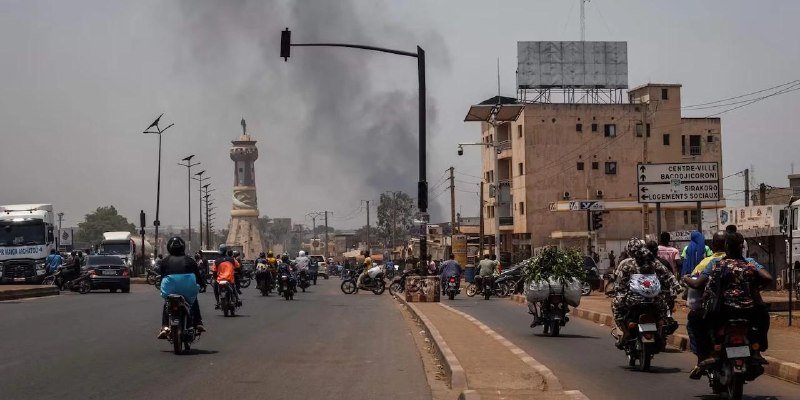
France beat Morocco 2-0 in the 2026 World Cup quarter-finals late on Thursday, 9 July 2026, ending the north African side's deepest run at a men's World Cup. By the small hours of Friday morning UTC, the most visible disorder had migrated nearly a thousand miles from the pitch in question — appearing instead on the streets of London and Düsseldorf, where Moroccan-heritage fans clashed with European police forces. The geography of those disturbances tells a story the scoreline cannot.
The contest on the field was clean. The contest around it was not — and the pattern is no longer new. What is striking this cycle is the inversion: European capitals absorbed the loudest aftershock, while Moroccan cities, where state security and social pressure usually manage post-match crowds with notable discipline, stayed comparatively quiet.
A diaspora in the frame, not a country
Reports circulated from around 06:33 UTC on 10 July that London, not Paris, was the principal epicentre of the night. Open-source footage posted to X from an account tracking the disturbances showed running confrontations between supporters and officers in central London; a separate video clip from the same network captured Moroccan fans throwing objects at police in Düsseldorf. Both posts were timestamped inside the same two-hour window, suggesting a coordinated, transnational reaction rather than a series of local flare-ups.
That geography matters. France has the largest Moroccan diaspora in Europe — roughly 1.5 million people by the most frequently cited estimates from French statistical agencies — and Parisian unrest after Morocco–France fixtures is a familiar template. The Moroccan press and diaspora associations have spent the better part of a decade rehearsing post-match crowd management after the 2022 Qatar run, when clashes in Brussels and Paris led to several French departments deploying tear gas. Yet on this night, footage and on-the-ground reports point to London and Düsseldorf as the headline venues, with Paris conspicuous by its relative absence in the open-source record.
Read narrowly, this is a question of which European police press corps happened to be filming. Read more honestly, it is a reminder that the relevant unit of analysis is not a national team but a diaspora that has migrated across several host countries at once — and that a single defeat is processed in several languages, several jurisdictions, and several relations with the local state.
The structural frame: football as the only game the diaspora is allowed to lose loudly
There is a temptation to treat post-match rioting as the irrational residue of an emotional sport. That framing is convenient and largely wrong. Football is, for a diaspora that is otherwise structurally cautious in its public behaviour, one of the few sanctioned outlets for the assertion of collective identity. Wedding halls, mosques and community centres carry their own constraints — gender, generation, religious propriety. A street outside a stadium, on a night when a national team has been eliminated, carries almost none.
This does not justify the violence. It explains why the violence tends to cluster in cities where the diaspora is large, young, male-skewed at the demographic moment, and concentrated enough to produce a critical mass on short notice — conditions that map closely onto the arrondissements of Paris, the boroughs of Brussels, the immigrant-dense quarters of Düsseldorf, and the neighbourhoods of west and north-west London.
A second structural driver is policing. European forces are still calibrating their posture toward post-match diaspora crowds after a decade of missteps that ranged from heavy-handed kettling in 2016 Paris to the much-criticised handling of the 2022 Brussels disturbances, where Belgian prosecutors eventually dropped charges against most of those arrested. London in particular has a long post-mortem literature on the policing of sporting crowds, and the Metropolitan Police's response on Thursday night — visible in the open-source footage — will be the subject of that city's own reckoning by the end of the week.
Counterpoint: most Moroccan fans did not riot
The dominant frame risks a familiar distortion. The footage is selective. Across Europe, tens of thousands of Moroccan-heritage fans watched the match in private settings, in cafes, in community halls, in living rooms. Many travelled to North America to attend in person; others organised viewing parties that broke up quietly well before midnight. The riot footage is news because it is riot footage. The quiet millions are not.
A second counterpoint: the Moroccan state, which has invested heavily in the symbolic politics of the national team since the 2022 run, was careful this cycle to dampen rather than inflame expectations. Public messaging in the run-up to the quarter-final emphasised that reaching the last eight was itself a historic achievement. That messaging appears to have worked at home. Whether it worked, or was even aimed at, the diaspora is a separate question.
Stakes and forward view
The France–Morocco tie will not be the last politically loaded match of this tournament. If Spain or Portugal eliminate another north African side in the coming days, expect a similar template: diasporas in Barcelona, Madrid, Lisbon and the French Riviera processing a defeat in public, while the consulates and cultural associations scramble to denounce the violence without disowning the fans. European interior ministries will meet, communiqués will be drafted, and the underlying conditions — housing segregation, youth unemployment among second-generation North Africans, the slow-burning resentment that football periodically ignites — will remain unaddressed.
The honest read is that this is less a football story than a recurring stress test of European integration. The match simply tells you which diaspora has been compressed enough to pop. On the night of 9 July 2026, the answer was Moroccan, and the streets that popped were not the ones the script usually names.
This article drew exclusively on open-source footage circulating on X on the morning of 10 July 2026; Monexus did not have access to official police tallies, casualty figures or arrest counts at the time of publication, and the picture above may shift materially once those figures are released.
Wire provenance
This editorial synthesis draws on the following public wire/social posts:
- https://twitter.com/Osint613/status/2075497460030444031/video/1
- https://twitter.com/Osint613/status/2075495164043280878/video/1