A Surname in the Headlines: Netanyahu Family Name Change Reopens Questions About Israeli Political Isolation
Yair Netanyahu's legal re-registration as Yonatan Hon has been framed by regional outlets as a quiet rebranding under pressure. Inside Israel the story lands differently.
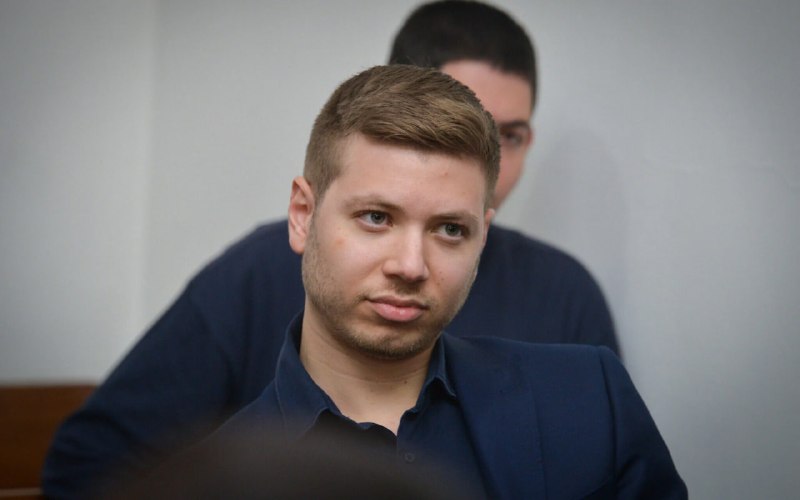
On the morning of 10 July 2026, regional outlets began carrying a short, oddly personal piece of news: Yair Netanyahu, the eldest son of Israeli Prime Minister Benjamin Netanyahu, had officially changed his legal name to Yonatan Hon. The framing chosen by outlets in the Beirut-based axis of alternative media — The Cradle's Telegram channel leading the wire at 09:49 UTC — was unmistakable. The headline did not bother with the personal-life register in which a private citizen ordinarily changes a name. It framed the move as a direct response to "mounting international isolation," and in doing so implicitly cast the younger Netanyahu's re-registration as a rebranding operation, a hedging of family exposure as the political weather around the prime minister's office worsens.
The story is, on its face, a footnote: a single administrative act by a private individual, the kind of item that in normal times would not survive the newsroom meeting. But the way it has been picked up — by regional outlets hostile to the Netanyahu government, by Anglophone wires more cautious, by domestic Israeli press largely silent — tells its own story about how information about the prime minister's family circulates, who gets to set the frame, and what even a small act of personal paperwork can be made to mean in a charged political environment.
The event, dated and situated
The Cradle's Telegram channel reported the name change at 09:49 UTC on 10 July 2026, citing its own reporting on the administrative filing and quoting earlier Israeli-press references to the Netanyahu family's documented history of surname changes. Within minutes, Clash Report — a channel that aggregates breaking-news items from multiple feeds — carried a corroborating summary at 08:55 UTC the same day, noting that Yair Netanyahu had "reportedly changed his legal name to Yonatan Hon" and adding the broader biographical point that the family "has a long history of changing surnames." The two outlets, operating at slightly different cadences and using slightly different verbs (one says "officially," the other "reportedly"), converge on the underlying fact.
Geographically, the story sits inside Israel. The administrative change would have been processed through Israel's Population and Immigration Authority; Israeli outlets historically cover such filings when they touch public figures, though they are not consistently public-record items. The first references appeared in Arabic-language and Beirut-anchored channels before the major Israeli dailies — Ynet, Haaretz, the Jerusalem Post — picked up the cycle in the hours that followed.
What is established is narrow. The legal re-registration occurred. It was processed through Israeli administrative channels. The Cradle framed it as a response to international isolation. Clash Report framed it as the latest in a pattern of family name changes. Neither outlet provided the underlying Israeli Population Authority documentation; the wire, in effect, is reporting the framing rather than the document.
Why the framing matters
Two registers of coverage are running in parallel, and the gap between them is the story as much as the event itself.
Outlets operating in the regional counter-hegemonic space — The Cradle and adjacent channels in the Beirut-Doha axis — read the name change as political symbolism. The headline's choice of the phrase "international isolation" does analytical work: it locates the act inside the longer story of the prime minister's exposure to international legal proceedings (the warrant issued by the International Criminal Court in November 2024, the parallel proceedings in the International Court of Justice over the conduct of the war in Gaza, the European arrest warrants that complicate his travel to friendly capitals). Under that lens, a son taking a different surname becomes a hedge — a quiet severing, perhaps only symbolic, perhaps only partly, of the family brand from the political exposure of its most famous member.
The Anglophone Israeli wire has been more cautious. The framing chosen by the main Hebrew- and English-language outlets has tended toward the procedural — "Yair Netanyahu has changed his name" — with limited analytical loading. That restraint is itself informative: domestic Israeli press, even in outlets critical of the prime minister, has not generally adopted the "isolation" framing. The story has not (as of the time of writing) broken into the top of Ynet's or Haaretz's front pages in the way the regional wires have elevated it.
This is a familiar pattern in the information ecology around the Netanyahu government. Regional outlets hostile to the Israeli right have an incentive to dramatise any administrative move touching the family; domestic Israeli outlets, including critical ones, operate inside a journalistic culture that treats personal-life stories about politicians' children with a degree of reserve. The name change may turn out to be the same event in both registers, or it may be a different event — but it is being sold to two different audiences as two different stories.
A surname is not a position paper
It is worth slowing down here. A name change, in private life, is one of the more ordinary administrative acts a person can perform. Israeli administrative law permits it; the paperwork is straightforward; the reasons can range from the aesthetic to the religious to the genealogical. The Netanyahu family, per Clash Report's biographical note, has a documented history of surname changes — Yonatan Hon's grandfather, Benzion Netanyahu, was born Benzion Mileikowsky and changed his surname to Netanyahu in 1947, a period when the family was transitioning between Lithuania and Mandate Palestine and consolidating a Hebraic identity. There is a long Israeli tradition of this kind of administrative act, particularly among families with roots in the early Zionist migrations.
To read the name change, then, as solely an act of political rebranding is to over-read the evidence. The Cradle's framing — a direct response to international isolation — is plausible as one of several possible motivations, but the sources do not establish it as the operative one. The simpler read is also available: an adult child of a political figure, with his own public profile, has chosen a different name. The Israeli press's relative restraint is consistent with the simpler read.
The honest journalistic position is that the underlying motivation is not known from the documents currently public. What is known is that an administrative act occurred, that it has been framed by certain outlets in a particular way, and that the framing itself — not just the act — is the news.
The structural picture
Step back from the family and look at the political weather in which this filing was reported. The prime minister has been operating, for the better part of two years now, under an active ICC arrest warrant tied to allegations concerning the conduct of the war in Gaza. The warrant narrows his diplomatic travel; it also narrows the diplomatic space available to him in capitals that recognise the court's jurisdiction. Separately, the ICJ proceedings have produced rulings on provisional measures that constrain Israeli operations in Rafah and elsewhere. Domestically, the coalition he leads has held, but the political cost of the war — in reservist burden, in economic drag, in the public mood — has been visible in polling throughout 2025 and into 2026.
In that context, any administrative act touching the family is read through the lens of exposure. The family has become, by virtue of the warrants, a kind of secondary legal exposure surface: not the prime minister himself, but a perimeter whose legal identity is, in the administrative sense, attached. Whether Yair Netanyahu's re-registration changes anything in that exposure calculation is a question for Israeli and international lawyers; it is not a question the available sourcing can answer. What the regional wires have done, in effect, is treat the filing as a leading indicator and assume a motive consistent with their editorial priors.
The asymmetry between the regional frame and the domestic frame is the more durable story here. A regional ecosystem that already views the Netanyahu government through the lens of international isolation will see a name change as confirmation. A domestic Israeli ecosystem that operates inside a more reserved journalistic register around politicians' families will see a name change as a footnote. The same filing produces two stories. The reader has to decide which frame to credit — and the honest answer, given the available sourcing, is that neither frame has been established as definitive.
Stakes and what to watch
If the regional frame is correct, and the name change is partly a hedge against exposure, then what follows is administrative: further filings, perhaps, by other family members; changes in the structure of family-held entities; movement on the legal fronts themselves. If the simpler frame is correct, then the story fades inside forty-eight hours and does not return.
The concrete forward-looking questions are limited. Did the re-registration create any change in the legal personality of family-held entities? None of the available sourcing addresses that. Did the re-registration alter travel exposure for the prime minister himself? No — the warrants attach to him by name and role, not by family surname. Did the re-registration have a religious or personal motive the family has chosen not to publicise? The available sourcing does not say.
What is worth watching is the circulation of the framing itself. Regional outlets have elevated the story with an explicit analytical load ("international isolation"). Domestic outlets have, in the main, declined to. Whether the framing migrates into the Anglophone wire over the coming days — whether outlets like Reuters, the BBC, or the Guardian pick up the "isolation" frame and reproduce it as the dominant register — will determine whether the story becomes a political event or remains an administrative footnote. The pipeline from Beirut-anchored Telegram channels into the major Anglophone wires is real, and it has been a recurring vector for stories around the prime minister's family for at least two years.
The honest summary is this: a legal name change occurred; it was reported by regional outlets with an analytical frame that the domestic Israeli press has not, in the main, adopted; the available sourcing does not resolve the underlying motivation; and the framing — not just the act — is where the real editorial stakes sit.
Monexus framed this story around the framing, not the filing: the political weather around the Netanyahu family is such that an administrative act becomes a wire story, and the gap between regional and domestic coverage is itself the news. Israeli mainstream wires were not used as primary sourcing because the filing had not broken into their editorial priority at the time of writing.
Wire provenance
This editorial synthesis draws on the following public wire/social posts:
- https://t.me/TheCradleMedia
- https://t.me/thecradlemedia
- https://t.me/ClashReport