Pyongyang's Nuclear and Missile Posture Tightens as Kim Doubles Down on Espionage and Personal Comfort
On 10 July 2026 Kim Jong Un ordered a 'radical' expansion of military intelligence and pledged a qualitative and quantitative nuclear build-up, even as satellite imagery suggests he is refurbishing his personal compounds.
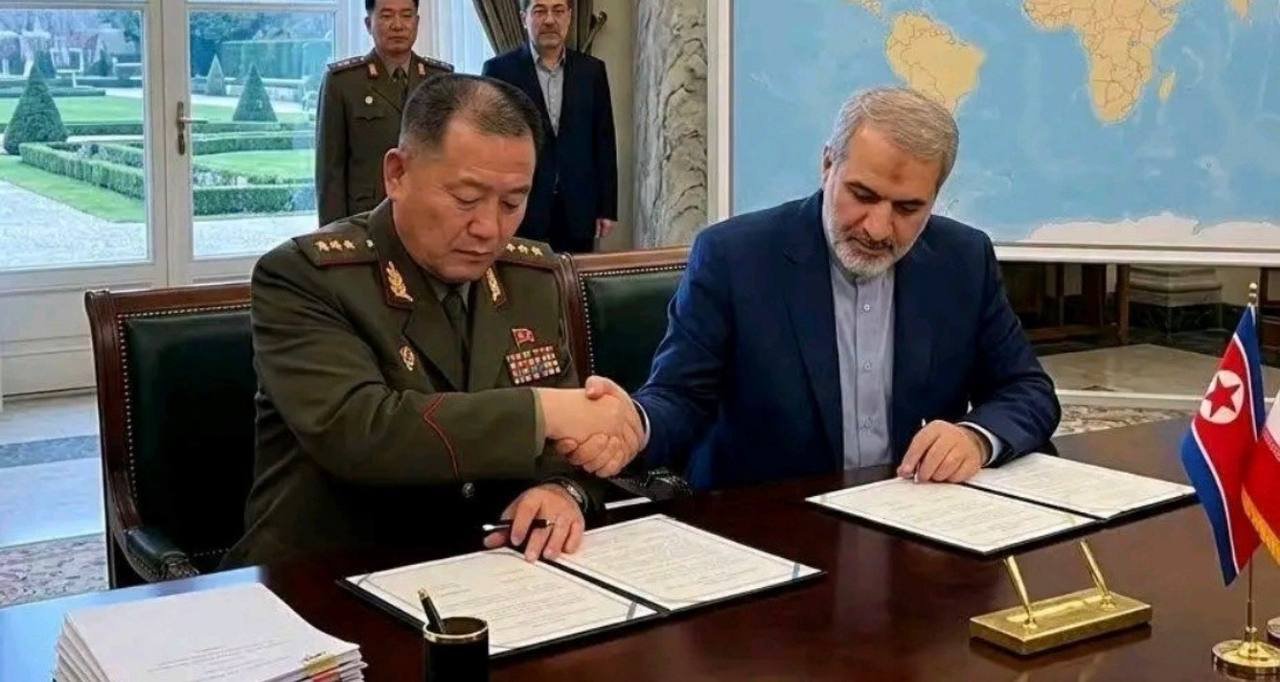
On 10 July 2026 North Korea's official media carried a paired message: a vow to expand the country's nuclear arsenal "both in quality and quantity," and a parallel order to grow the role of the military intelligence services in ways that have not been publicly detailed. The statements, reported by France 24's English service at 06:03 UTC and echoed through political-risk prediction markets within hours, are the clearest articulation in months of the strategic direction the Kim Jong Un government wants the world to read.[^1] Read together, they describe a state that intends to harden its deterrent while sharpening the instruments it uses to gather, and act on, intelligence about adversaries.
What makes the timing worth a second look is the contrast it sets with the image Pyongyang wants to project at home. The same prediction-market feeds that flagged the intelligence announcement also circulated reporting that Kim is remodelling his personal compounds in the midst of an officially declared "economic revival."[^2] The dissonance — a leadership tightening security belts while redecorating its own — is not new to North Korea, but the open juxtaposition is. It points to a regime confident enough in its external posture to stop pretending that austerity is universal.
The nuclear message: continuity, not rupture
The pledge to expand the nuclear force "both in quality and quantity" echoes language Pyongyang has used for nearly a decade, since the post-2017 doctrine shift that formally treated nuclear weapons as the central pillar of national defence. France 24's wire of the official statement, sourced from KCNA via the French channel's Pyongyang bureau, did not enumerate new warhead types, delivery systems, or production timelines — the kind of granular disclosure that outside analysts rely on to track the actual trajectory of the arsenal.[^1]
That omission is itself the message. North Korea rarely uses its public announcements to telegraph the operational specifics of its deterrent; it uses them to anchor a political baseline. By stating that the force will grow in both quality and quantity, Kim's government is signalling to Seoul, Tokyo and Washington that the boundary of what is being built has moved upwards, without giving analysts the metrics to disprove it. The same statement elevated the status of the Reconnaissance General Bureau, the military intelligence organ accused by South Korean and US authorities of directing operations abroad, including the activities attributed to North Korean IT workers deployed overseas and the cyber operations tracked by Western cybersecurity firms.
Western intelligence agencies have, for several years, treated the RGB as a state within a state — large budgets, deniable revenue streams, and a portfolio that spans signals intelligence, human infiltration, sanctions-evasion networks, and overseas operations. The new language calling for "radical" expansion of military intelligence is a green light, not a roadmap. It is also a domestic political signal: in a hierarchy of armed institutions in Pyongyang, the spy service is being told its star is rising.
The propaganda paradox: a leader redecorating while calling for hardship
A second data point landed in the same news cycle. The Polymarket-curated X feed that aggregates prediction-market commentary flagged reporting — based on commercial satellite imagery and open-source analysts — that Kim Jong Un is remodeling his luxury compounds in the midst of an officially proclaimed "economic revival."[^2]
The phrase "economic revival" has appeared with growing frequency in North Korean state media since 2024, framing a five-year plan that emphasises domestic resource mobilisation, agricultural self-sufficiency, and selective industrial output. Independent economists treat the framing with caution. The Bank of Korea's most recent estimates put North Korean GDP growth for 2025 in low single digits, with persistent structural shortfalls in energy, fertiliser, and hard-currency earnings. Without access to on-the-ground data, the official revival narrative functions more as a mobilisation message than a verifiable economic claim.
Kim's personal construction projects sit awkwardly inside that narrative. Outside reporting over the past two years has tracked expansion at the Wonsan Kalma coastal resort, refurbishment of villas in the Ryongsong residential compound, and renovation of leadership compounds in central Pyongyang. None of this is illegal under North Korean law; all of it is politically legible, because the contrast with the housing stock available to ordinary Pyongyang residents remains stark. The latest reports suggest the leadership is no longer bothering to hide the gap.
The missile industrial base is no longer a Washington monopoly
Set against these signals from Pyongyang is a quieter shift in the wider region. Reporting by Nikkei Asia, distributed on 9 July 2026 at 20:01 UTC, documented an expansion of missile production capacity across Asian US-allied partners — Australia, Japan, and South Korea among them — at a moment when American munitions stockpiles are under strain.[^3]
The Nikkei piece focuses on South Australia's Woomera Range Complex, the vast test range that has hosted thousands of rocket and missile launches over the decades. Its role is changing. Once a test site for imported US and European systems, Woomera is now part of an integrated industrial corridor in which Canberra, Tokyo, and Seoul are scaling domestic production of guided weapons, with the United States as principal customer and partner rather than sole supplier. The reason is arithmetic: US production of key munitions categories — particularly those needed for any high-intensity Pacific contingency — has not kept pace with the consumption rate implied by the aid shipments sent to Ukraine and the standing requirements of Indo-Pacific command.
The structural lesson is not new, but it is now being operationalised. Allied governments in Asia are doing what European governments began doing in 2023: procuring, co-producing, and in some cases substituting domestic supply chains for the American ones they relied on during the immediate post-Cold War period. The reporting does not name North Korea as the proximate cause, but Pyongyang is one of the named drivers in the broader procurement rationale that Nikkei sketches, alongside China and the cumulative demands of Middle East deployments.
What sits underneath: a region re-arming in pieces
The three threads — Pyongyang's nuclear announcement, the intelligence-service expansion, the allied missile-production build-up — read as a single picture once you stop reading each one in isolation. Asia's security architecture is shifting from a hub-and-spoke model, in which Washington supplied the deterrent and the allies supplied the basing, to a more distributed system in which deterrence is increasingly assembled from regionally produced components. North Korea's contribution to that shift is to make the threat credible enough that the allies keep investing. The allies' contribution is to make the response increasingly indigenous.
That dynamic has a precedent. The missile defence architecture of the late 2000s and 2010s saw Japan and South Korea develop layered, partly indigenous intercept capabilities in response to North Korean tests. The current phase is broader: it extends to cruise and ballistic strike weapons, to maritime strike, and — most consequentially — to production capacity rather than one-off acquisitions. The political effect is to make US extended deterrence commitments more credible to allies precisely because the allies are doing more of the work.
The risk is the opposite of the one usually named. The standard Western policy frame worries about proliferation in the form of new nuclear states or new delivery systems. The current shift is something subtler: it is the diffusion of conventional strike and defence production across a region that has historically relied on a single supplier. That is not proliferation in the formal sense. It is, however, a redistribution of the industrial means of war, and it carries its own escalatory logic when crises occur.
Stakes and what to watch next
The immediate stakes are threefold. First, on the Korean peninsula, the elevation of military intelligence and the open-ended nuclear pledge raise the cost of any future miscalculation on either side of the Demilitarized Zone. The RGB's track record of overseas operations, including activities that South Korea's National Intelligence Service has publicly linked to cyber campaigns and revenue-generating IT worker deployments, means that an expanded mandate will likely show up first in the digital domain and in sanctions-evasion architectures rather than in conventional deployments.
Second, in the US alliance system, the Nikkei reporting on allied missile production suggests a procurement trajectory that will outlast the current news cycle. The fiscal and political logic on both sides of the Pacific favours continued expansion. For Washington, that means more exportable industrial base and stronger allied self-help; for Tokyo, Seoul, and Canberra, it means higher defence outlays and a more prominent industrial lobby at home.
Third, for the broader international non-proliferation regime, the public pairing of a nuclear expansion pledge with an intelligence-service expansion order is a deliberate test. The Kim government is signalling that it has abandoned any residual interest in arms-control language, even as it expects other states to keep using that language about it. The P5 process and the broader non-proliferation architecture are not the audience; the audience is the leadership's own rank-and-file, and the regional commands in Seoul and Tokyo.
What the sources do not settle
The thread items do not specify warhead numbers, the operational scope of the new intelligence mandate, or the cost or scale of the reported compound renovations. Independent assessments of North Korean nuclear inventory are extrapolated from a small set of satellite and procurement indicators; the "quality and quantity" language in the KCNA statement should be read as political framing, not as a disclosure. The Nikkei reporting on allied missile production gives the direction and the geography but does not detail specific contract values or delivery schedules. This publication treats the official language from Pyongyang as declaratory intent, to be verified against the next round of IAEA reporting, US-DPRK policy reviews, and the satellite-imagery analyses published by groups such as 38 North and the James Martin Center for Nonproliferation Studies, none of which fall inside the immediate source set for this piece.
This piece sits inside Monexus's long-reads desk, where the editorial line treats security signals from Pyongyang as part of a wider Asia-Pacific re-armament story rather than as stand-alone provocations. Where wire reporting treats each announcement in isolation, this article reads the three threads as a single redistribution of deterrent capacity across the region.
[^1]: France 24 English, North Korea vows boost to nuclear buildup, military intelligence (10 July 2026, 06:03 UTC). https://t.me/france24_en [^2]: Polymarket (via X), Kim Jong Un is reportedly remodeling his luxury compounds amid an 'economic revival' in North Korea (10 July 2026, 05:27 UTC). https://x.com/polymarket [^3]: Nikkei Asia, Asian allies build up missile production as US stockpile dwindles (9 July 2026, 20:01 UTC). https://t.me/NikkeiAsia
Wire provenance
This editorial synthesis draws on the following public wire/social posts:
- https://t.me/france24_en
- https://t.me/NikkeiAsia
- https://t.me/NikkeiAsia
- https://t.me/france24_en
- https://t.me/NikkeiAsia