The publisher revolt lands at the wrong moment for OpenAI
OpenAI rolled out GPT-5.6 and a unified desktop app on 9 July 2026. Hours later, 17 publishers asked a federal court to sanction the lab for allegedly withheld evidence in the copyright fight over training data. The two stories sit on top of each other, and that is the point.
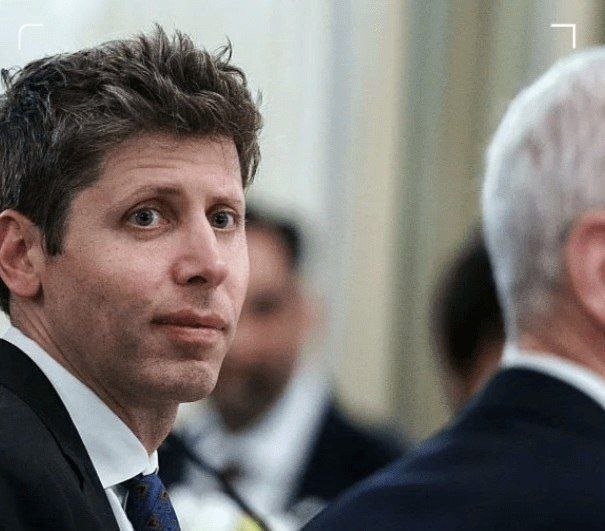
OpenAI on 9 July 2026 launched what it is calling the GPT-5.6 model family, with a new flagship called Sol, and folded its Codex coding tool into a single desktop application branded ChatGPT Work (per CryptoBriefing, 19:30 UTC and 21:59 UTC, 9 July 2026). The launch event, run on the same day as a coordinated push by seventeen publishers to sanction OpenAI in federal court, is more than a marketing coincidence. It is the contradiction the generative-AI industry has been trying to schedule around for two years.
The pitch and the courtroom are now sitting in the same news cycle. That is the story.
A product announcement built atop a contested foundation
The new family bundles a flagship model, code-generation tooling, and an Office-style workspace into one client. For paying business customers the pitch is straightforward: fewer logins, lower switching costs, a single vendor's stamp on the daily drafting surface. CryptoBriefing's two Telegram items — one at 19:30 UTC for the model line, the other at 21:59 UTC for the desktop merge — frame the release as a productivity play aimed at enterprise buyers who already pay for an OpenAI subscription.
For a normal software vendor that would be the whole story. OpenAI's product decisions, however, are no longer separable from its legal exposure over training data. The publishers' coalition filing, flagged by the Polymarket account on X at 16:43 UTC the same day, alleges that the lab withheld key evidence in the copyright litigation around ChatGPT's training corpus. The request for sanctions is a procedural step, but its timing matters: it lands the day a consumer-facing product lands.
What the publishers are actually asking for
A sanctions motion is not a verdict. It is a request that a court punish the opposing party for misconduct during discovery — the pre-trial evidence-exchange phase where each side must turn over documents the other is entitled to see. When a judge grants sanctions they can strike pleadings, exclude witnesses, instruct juries to draw adverse inferences, or in extreme cases enter default judgement. The remedy flows from the conduct, not the underlying copyright question.
The coalition's argument, as summarised in the Polymarket post, is narrower than "OpenAI infringed"; it is "OpenAI failed to hand over what it was supposed to hand over." That distinction is why the framing carries weight. The merits question — whether using copyrighted news, books, and periodicals to train a frontier model is a fair use — is unsettled across several circuits. Discovery abuse is a question the court can resolve on its own ledger, with immediate consequences for OpenAI's litigation posture across the consolidated cases.
Why the company has reason to keep shipping
Counter-read: OpenAI has every commercial reason to push product on the same day the news cycle sharpens against it. A successful enterprise launch shifts the centre of gravity from "who owns the training data" to "who owns the daily workflow" — and once a workflow is owned, the training question becomes a cost-of-goods problem rather than a brand-safety problem. A consumer who lives inside ChatGPT Work is a consumer whose next lawsuit or regulator must somehow pry them out.
This is also why the publishers chose today rather than next week. Sanctions motions are tactical. The filings arrive at the moment OpenAI wants attention on the product; the publishers want attention on the courtroom. Neither side is behaving innocently about timing.
Stakes
If the court grants the motion, the consequences ripple beyond the named parties. Discovery is where the underlying training-data question gets tested: which sources were used, in what quantity, under which opt-out regime, with what internal documentation. A finding that OpenAI withheld evidence would push every adjacent case — the New York Times suit, the authors' class actions, the international regulatory complaints — closer to a settlement posture. The implied liability is large enough to reprice the entire sector.
If the motion is denied, the publishers lose a lever but keep the underlying merits fight. Either way, the litigation stops being abstract. It starts producing paper that procurement officers, model-license negotiators, and AI-policy desks have to read.
The GPT-5.6 launch will sell on its benchmarks regardless of how the court rules. That is the design. The question is whether the contract market — the banks, consultancies, and publishers being asked to commit workflows to a vendor whose training corpus is under judicial scrutiny — will keep buying while the docket stays open.
Monexus framed this against the dominant product-launch line. The product and the courtroom are not separate stories; they are the same dispute about who gets to set the rules of the substrate.
Wire provenance
This editorial synthesis draws on the following public wire/social posts:
- https://t.me/CryptoBriefing
- https://t.me/CryptoBriefing