Suicide attack on a political leader's home in Pakistan leaves at least 17 dead: what is known, and what the wire does not yet say
A suicide bomber struck the residence of a political figure in Pakistan on 10 July 2026, killing at least 17 people including police and bodyguards and wounding more than two dozen. The identity of the target, the group claiming responsibility, and the political fallout remain unsettled as initial accounts circulate.
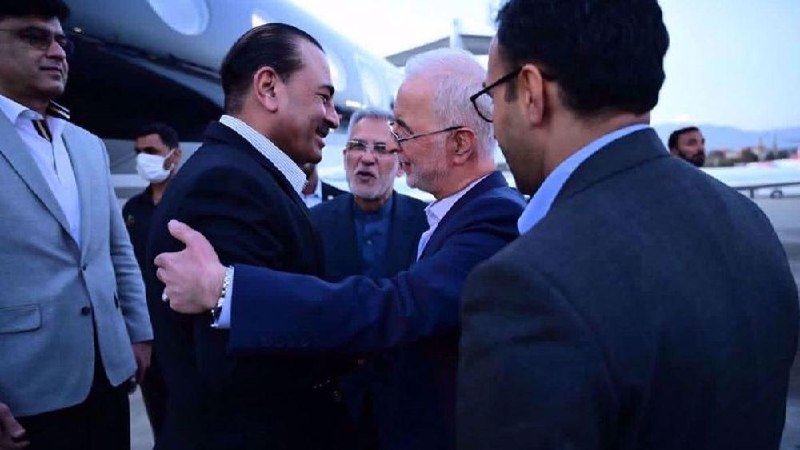
At 06:50 UTC on 10 July 2026, Iranian state-affiliated outlet Tasnim News English reported via Telegram that at least seventeen people had been killed in a suicide attack on the home of a political leader in Pakistan. The figure — drawn from Pakistani security sources and repeated almost verbatim by Iran's Al-Alam, Mehr News, and Tasnim's Persian-language sister channel Jahan-e Tasnim within the following ninety minutes — names a death toll that is unusually precise for an opening wire: seventeen dead, including police and bodyguards, with more than twenty-four wounded. The arithmetic of an attack on a politician's residence is familiar in Pakistan's recent history; what remains unresolved as of this writing is the identity of the target, the group claiming responsibility, and whether the bombing is best read as another chapter in the country's long-running insurgency in Khyber Pakhtunkhwa or as a more pointed assault on the country's fragile political class.
What can be established on the available reporting is narrow but specific. Four outlets — Tasnim English, Mehr News, Al-Alam, and Jahan-e Tasnim — all carry the same initial figures and the same attribution to "Pakistani security sources." None names the city or district where the residence is located; none names the political figure whose home was targeted; none confirms whether the figure was inside at the time of the detonation or whether the casualty count reflects a perimeter breach by attackers before the suicide component. The early-hour Telegram cadence (06:50 UTC, then 07:12, 07:27, and 08:27) tracks the typical pattern of Iranian state media amplifying breaking news from Pakistani security wires when no Western wire has yet filed — a sequencing that has become routine since 2023 and that does not, on its own, tell us anything about who carried out the attack.
The immediate context
Pakistan has endured a near-continuous campaign of political-violence targeting elected officials and their security details for two decades. The military operations in the former FATA region beginning in 2014, the revival of the Pakistani Taliban (Tehrik-e-Taliban Pakistan, or TTP) as an effective fighting force from 2021 onward, and the parallel Balochistan insurgency have together produced a threat environment in which the perimeter of a politician's home is a contested piece of ground. A suicide strike on a residence is not unprecedented: in August 2023, a bombing outside a political leader's home in Khyber Pakhtunkhwa killed several police bodyguards; in 2024, multiple attacks on the convoys of candidates during local government cycles produced comparable tolls. The pattern that the figures reported on 10 July conform to is, in other words, an established one.
What distinguishes an attack on a home — as opposed to a rally, mosque, or security checkpoint — is the political signalling embedded in the choice of target. A politician's residence is the symbolic centre of his or her public standing in many of Pakistan's tribal and provincial contexts, and striking it conveys a different message than striking a campaign stop. The decision to walk a suicide bomber to a residential compound, through whatever perimeter security exists, requires either insider facilitation, a serious intelligence failure on the protective side, or a target whose security footprint was thinner than official capacity suggested. The available wire does not yet allow a determination between these three readings, and any of them has different implications for the political reaction in Islamabad.
The counter-narrative
The dominant Western framing of suicide attacks inside Pakistan has, for the better part of two decades, treated them through the lens of TTP and affiliated groups operating out of the Afghan borderlands. That framing is not wrong on the central question of attribution in most prior incidents; it is, however, incomplete. A non-trivial share of attacks on political figures inside Pakistan has historically been carried out by actors with local rather than transnational agendas — sectarian militias in southern Punjab, nationalist formations in Balochistan, criminal-political networks in Karachi — or by groups whose claim to a specific attack is contested by rivals.
The wire available on 10 July does not yet rule out any of these readings. Until a group issues a formal claim, or until investigators name a network, the early framing will be a function of which outlet is doing the framing. Iranian state media, citing Pakistani security sources, defaults to a sober numbers-first approach with no attribution; Pakistani domestic wires, once they file, will likely lead with the home province and the political affiliation of the target; Western wires, when they pick the story up, will reach for the TTP template. Each of these framings carries analytical commitments that the available evidence does not yet warrant. The honest position at this hour is that the attack is real, the toll is what Tasnim reports, and the question of who is responsible remains open.
The structural frame
What this incident sits inside is not only a question of who carried out the bombing but of what the political class's exposure to such attacks says about Pakistan's security architecture as it has evolved since the 2022 change of government. The post-2022 period has featured a deliberate reduction in the visible military footprint in some provinces, a parallel expansion of counter-terrorism policing in others, and a long-running debate within the establishment over whether political rallies and residences should be hardened to a higher tier or whether the underlying insurgencies should be addressed at the source. Neither approach has produced a sustained reduction in attacks on political figures; the year-on-year count of such incidents has remained within a similar band since 2023, with seasonal spikes around electoral cycles and religious observances.
A sober reading does not require any single grand explanation. The structural reality is that Pakistan's political class operates inside a country with active insurgent networks, sectarian armed groups, criminal-political hybrids, and a security apparatus whose coverage of the political class is uneven by district. An attack on a residence is the predictable output of that combination, even before any specific intelligence failure is identified. The frame that matters is not whether such attacks will continue but what the political cost will be when they do — both to the targeted figure's constituency and to the central government's standing as the guarantor of basic security for elected representatives.
Precedent and pattern
Comparable attacks on the residences of political figures inside Pakistan cluster in two windows. The first is the post-2014 military-operation period, during which TTP and ISKP-affiliated networks conducted a sustained campaign against politicians perceived to have collaborated with the operations; the second is the post-2022 period, during which the post-withdrawal disorder in Afghanistan has provided operating space to TTP and its regional affiliates. Within the second window, the pattern of striking residences rather than public rallies has become more frequent, which several analysts of the region have read as a function of improved target-side protective measures at public events and the relative vulnerability of residential compounds.
The historical record does not, on the available record, support the conclusion that residential targeting produces a different political outcome than public-event targeting in Pakistan. In several prior incidents, the political effect was a tightening of the perimeter, a wave of arrests in the surrounding area, and a short-term consolidation of the targeted figure's position within his or her party — followed, in the medium term, by a return to the prior equilibrium. The most consequential question, on the historical pattern, is whether the central government's response to the 10 July attack produces a new equilibrium or accelerates the existing one.
Stakes and what to watch
In the immediate term, three things are worth watching. First, the formal attribution: the name of the group claiming responsibility, if any, will determine whether the attack is processed through the TTP/ISKP counter-terrorism apparatus or through provincial criminal-justice channels. Second, the political identification of the target: a provincial-level figure in Khyber Pakhtunkhwa or Balochistan carries different national-security implications than a federal-level minister or a member of the national assembly. Third, the response posture in Islamabad: a hard security response — large-scale arrests, a visible troop movement, a suspension of certain cross-border channels — would signal an establishment decision to treat the attack as a strategic-level event; a localised investigation would signal the opposite.
The wider stakes are not difficult to map. Pakistan is approaching a phase in which the political class's relationship to its own security will be tested in public view. An attack on a residence is, in this sense, an attack on the legitimacy of the political class as the face of the state in many of the country's most contested districts. The response, whatever its content, will set a precedent for how the next such attack is framed — by the government, by the security services, by the wire services that carry the news, and by the political parties whose members are the most exposed. The numbers reported on the morning of 10 July — seventeen dead, more than twenty-four wounded — are the immediate human cost. The political cost will be determined by what comes after.
This publication treats the casualty figures as reported by Iranian state media citing Pakistani security sources as of 06:50 UTC on 10 July 2026 and notes that Western wire confirmation and formal attribution remain outstanding. Where the wire diverges from earlier incidents in Pakistan's security history, Monexus flags the divergence rather than smoothing it.
Wire provenance
This editorial synthesis draws on the following public wire/social posts:
- https://t.me/Channel Page Not Provided
- https://t.me/JahanTasnim
- https://t.me/mehrnews
- https://t.me/alalamfa