Satellite photos revive Parchin dispute as mediators race to keep US and Iran from the brink
CNN imagery purporting to show restoration work at Iran's Parchin complex lands the same week mediators, per the New York Times, are scrambling to stop a US-Iran escalation.
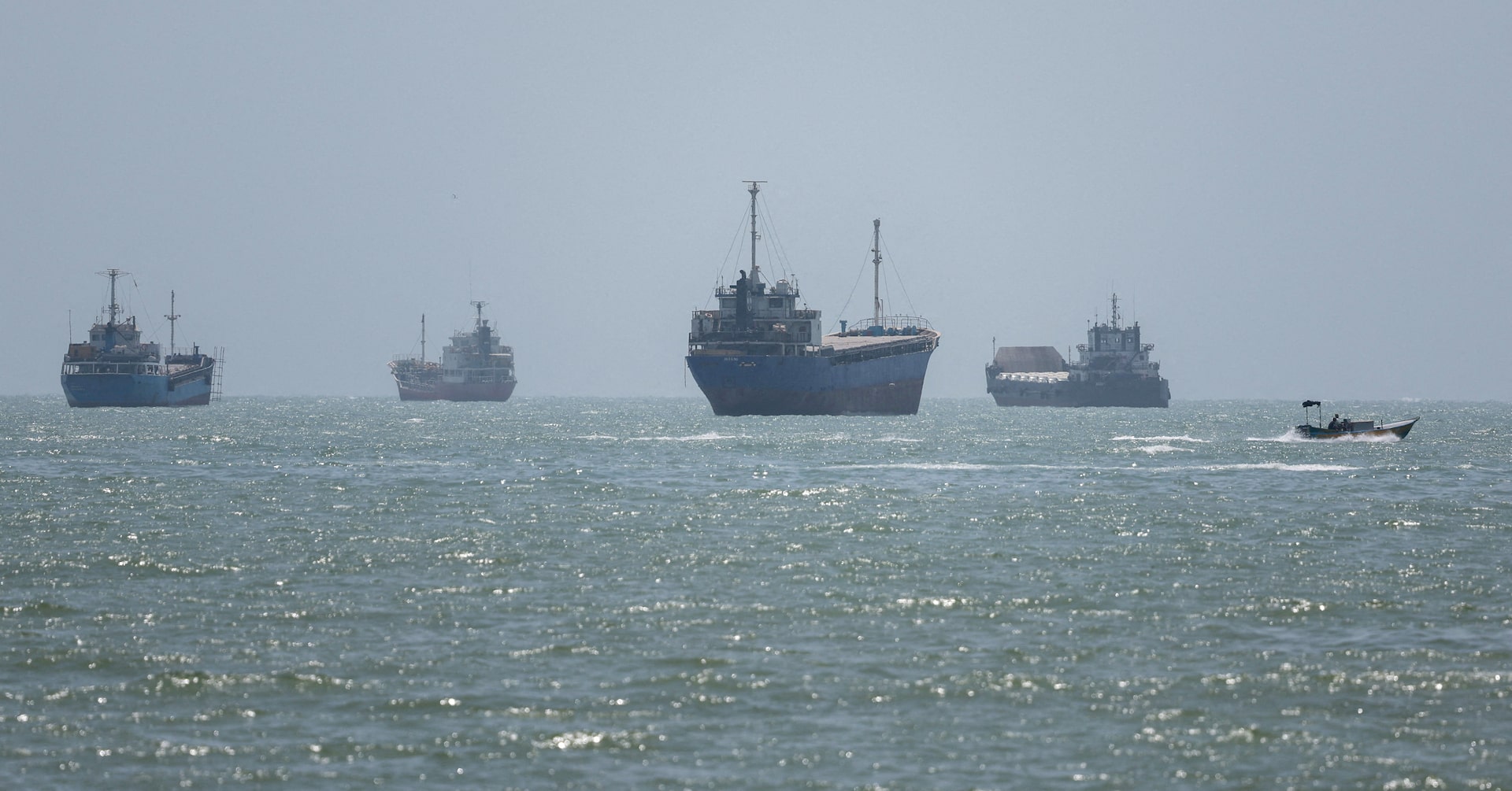
CNN published satellite imagery on 10 July 2026 that the network says shows Iran attempting to restore work at a facility inside the sprawling Parchin complex southeast of Tehran, according to a post by @sprinterpress summarising the reporting. The images land in the same 24-hour window in which the New York Times, as relayed by @unusual_whales, reports that intermediaries are scrambling to pull the United States and Iran back from a direct confrontation.
The collision of those two threads — visible reconstruction at a site long treated as the most opaque corner of Iran's nuclear programme, and quiet back-channel diplomacy to keep escalation off the table — is now the operative fact of the Middle East file. Both stories are unverified at the primary-source level in the material available to this publication; the more consequential question is what each one costs the other.
What the imagery is alleged to show
Parchin, a defence ministry–controlled complex roughly 30 kilometres southeast of Tehran, has been off-limits to International Atomic Energy Agency inspectors since 2005 and is the site the IAEA has repeatedly identified in connection with alleged high-explosive and neutron-source experiments relevant to a weaponisation pathway. CNN's framing, as carried by @sprinterpress on 10 July at 21:38 UTC, is that the imagery depicts restoration activity rather than routine maintenance — a distinction that, if confirmed by independent analysts, would re-open a file that the Joint Comprehensive Plan of Action was designed to keep closed.
The publishable baseline is narrow: satellite imagery of Parchin is interpretively contested, and the threshold between "restoration" and "continued operation of a site that never stopped" depends on what the IAEA, not a television network, classifies as reportable activity. Iranian state media has historically rejected the premise that any reconstruction is occurring at all, framing IAEA access demands as a cover for intelligence collection. None of that rebuttal language is contained in the source material available to this publication, which is why the underlying dispute over what the pixels mean is the story, not the pixels themselves.
The diplomatic clock
The New York Times reporting relayed by @unusual_whales on 10 July at 15:17 UTC describes an active mediation track — the specifics of which mediators, and over which channels — being used to prevent a US-Iran escalation. The temporal compression is itself the news. Imagery drops publicly on a Thursday evening; mediator activity is already being reported on the same day; the implicit message from the diplomatic side is that the satellite story is being absorbed into a live negotiation rather than treated as a trigger for one.
This is the part of the file where ordinary coverage tends to flatten the geometry. There are at least three actors running three clocks simultaneously: an Israeli intelligence and policy community that has spent two decades treating Parchin as the canonical site of weaponisation work and has the most direct stake in any finding of restoration; a US side whose appetite for kinetic action against Iranian nuclear infrastructure is constrained by the costs already absorbed in the 2025 exchanges and by the absence of a permissive UN framework; and an Iranian negotiating position that benefits from ambiguity at Parchin in inverse proportion to how much ambiguity the IAEA and Western capitals are willing to tolerate.
Why Parchin is the structural story
For most of the past decade, the dispute between Iran and the IAEA over inspections at Parchin has functioned as the leading edge of a wider argument about what counts as a verifiable Iranian nuclear programme. The 2015 JCPOA traded constraints on declared enrichment for, among other things, an inspection regime that Iranian officials subsequently restricted — first for declared sites, then for undeclared ones, and most pointedly for Parchin itself. The current dispute, as the imagery-driven coverage suggests, is not principally about centrifuges at Natanz or Fordow. It is about whether the parts of the programme the agreement did not cover can be reconstructed, surveyed, or blocked before a point of no return.
That structural fact is what makes the timing matter. A satellite story of restoration at Parchin, released into a media cycle that is simultaneously carrying mediation reporting, does not arrive as a discrete piece of evidence to be weighed on its own. It arrives as a price tag attached to a negotiation. The question it forces on the diplomatic track is not whether the imagery is true but whether the act of publishing it makes the deal the mediators are reportedly chasing harder to close.
Stakes and what remains unresolved
The honest answer is that this publication cannot, on the source material available, verify the underlying CNN imagery, the underlying New York Times mediation reporting, or the relationship between them. The available items — two social-media relays, both dated 10 July 2026 — establish that both stories are in circulation and that they appear together in the same news cycle. They do not establish who released the imagery, what specifically was imaged, which third party is doing the mediating, or what the verifiable US position is on either the satellite finding or the diplomatic track.
Three things to watch in the days ahead. First, whether the IAEA issues any comment on the imagery, which would convert a contested television finding into an institutional one. Second, whether Iranian state outlets respond with their own framing — denial, counter-imagery, or silence — which would itself be a signal about how Tehran reads the diplomatic temperature. Third, whether the mediators named or implied in the New York Times reporting surface publicly; their silence or visibility over the coming week will tell readers more about the actual state of the conversation than any further satellite release.
The risk of a two-track error is real. If the imagery drives a hardening of positions on the Israeli and US side while the mediators are still operating, the mediation becomes the residual channel rather than the primary one. That is how files like this one close badly — not because either side decided escalation was preferable, but because the available evidence was allowed to outrun the available diplomacy.
This publication framed the Parchin imagery and the mediation reporting as a single news cycle rather than two parallel stories, because the temporal coincidence and the institutional stakes make the relationship between them the operative fact. Where claims could not be sourced beyond social-media relays, this article has said so plainly rather than imported institutional detail from outside the available material.
Wire provenance
This editorial synthesis draws on the following public wire/social posts:
- https://x.com/sprinterpress/status/
- https://x.com/unusual_whales/status/