Pulisic's home World Cup ends in a fracture — and a question about how the USMNT uses its stars
Christian Pulisic suffered a microfracture and bone bruise in the United States' 4-1 defeat by Belgium in the World Cup last 16, ending his tournament and reigniting a familiar debate about workload and squad management.
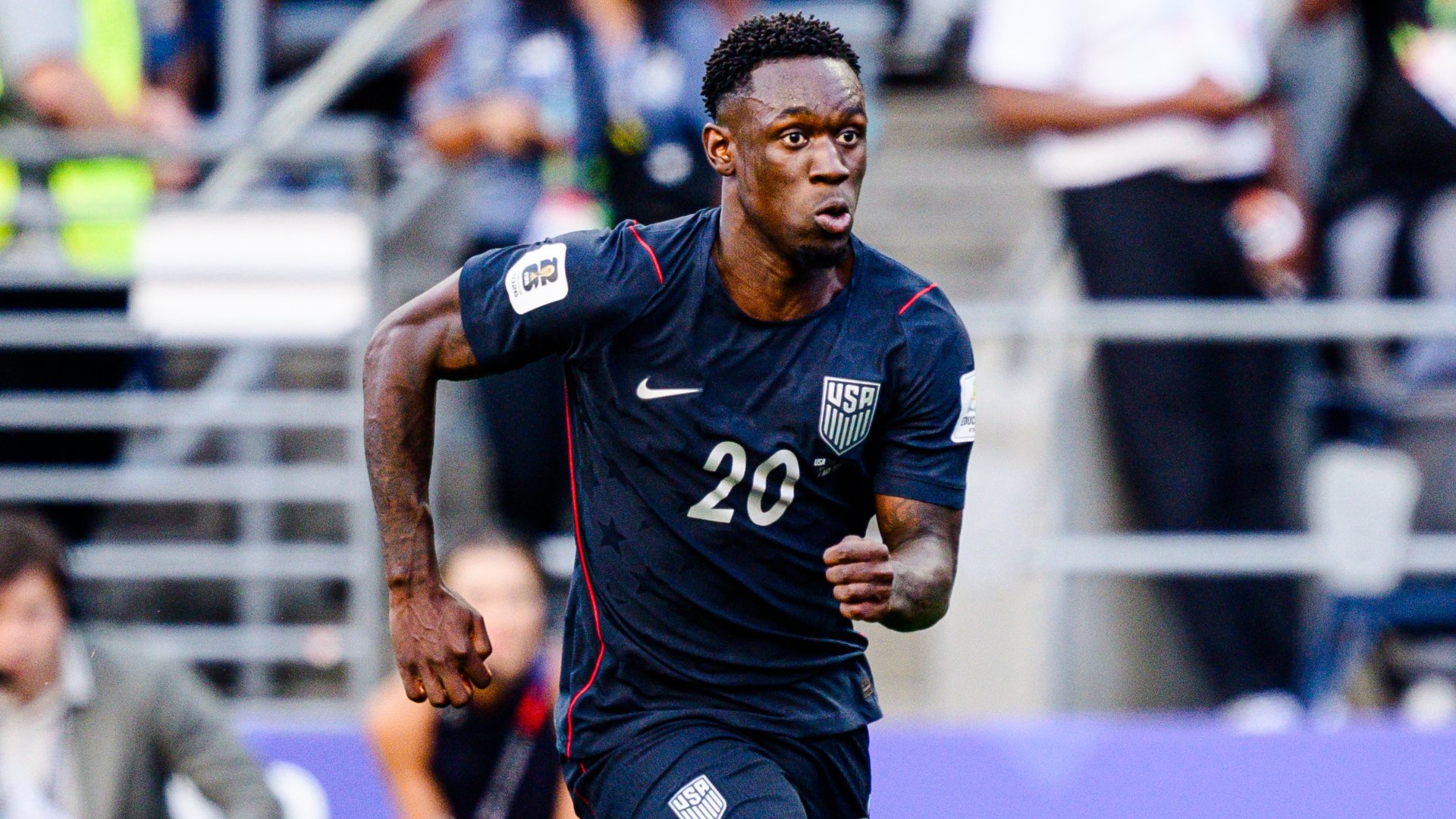
Christian Pulisic's World Cup ended in the 39th minute of a last-16 tie he should not have been allowed to finish. The United States confirmed on Thursday 9 July 2026 that the 27-year-old forward, on loan from Chelsea at AC Milan, had suffered a microfracture and bone bruise in his lower leg during the 4-1 defeat by Belgium, ruling him out of the tournament and sidelining him for "several weeks" at club level. He was substituted before the interval of a match the USMNT never recovered. (BBC Sport, 2026-07-09 19:28 UTC)
The injury is the headline, but the framing is the story. Pulisic had been the centre of a quiet pre-tournament argument about availability and workload; he arrived at this World Cup as the United States' most experienced attacker and as the face of a federation that had staked its case for hosting partly on the charisma of its best player. The microfracture turns a sporting disappointment into a question about how a generation of USMNT talent is being used — by club employers and by the federation itself.
What happened in Charlotte
The USMNT met Belgium in the last 16 at Bank of America Stadium in Charlotte, North Carolina, on 9 July 2026. Pulisic started, took a knock in the first half, and did not return. Sources briefed ESPN that the damage was a bone bruise plus a microfracture, and that the forward would miss several weeks. (ESPN, 2026-07-09 16:27 UTC) The federation confirmed the diagnosis the same evening, with multiple outlets reporting the timeframe at "several weeks" rather than months, leaving open the possibility of a return to Milan before the end of the calendar year. (ESPN, 2026-07-10 12:14 UTC)
The match itself, played in front of a heavily pro-US crowd, ended 4-1 to Belgium. The result eliminates the co-hosts in the round of 16 — a sobering outcome for a tournament the federation had spent a decade preparing to host.
The availability argument, restated
The injury is the physical event, but the story leading into the tournament was a quieter one. Pulisic had been criticised, in the pages of US outlets and on US airwaves, for what some observers described as a pattern of absences — minor muscular problems, rotation choices at Milan, the long-standing tension between a top European club's minutes management and a national-team's desire to use its best player whenever fit. (ESPN, 2026-07-10 12:14 UTC)
That critique has, on the evidence, two readings. The charitable one: Pulisic has been the United States' most consistently available elite attacker for half a decade, playing through fatigue and fixture congestion, and the criticism is the kind reserved for players whose presence is taken for granted. The less charitable one: an elite attacker who is repeatedly unavailable for stretches is, by definition, an availability problem, and the federation's job is to build a squad that can absorb the absence rather than plan around it.
The microfracture is a piece of evidence for the second reading — not because Pulisic was injured on international duty rather than at Milan, but because the tournament in which he was supposed to be the difference-maker is now the tournament in which he is, at most, a touchline presence for the remaining US matches (should the US progress; on this evidence, they will not).
The structural frame
The USMNT's problem is not unique, but it is unusually acute. The federation has, for the last cycle, produced its largest-ever cohort of players contracted to top-five European leagues: Pulisic at Milan, Tyler Adams and Weston McKennie in Serie A and the Premier League, Folarin Balogun in Ligue 1, Yunus Musah at a Champions League club. That depth is a competitive advantage in qualifying, where the squad can absorb absences, and a vulnerability in knockout football, where one player's leg bone matters more than the depth chart behind him.
Hosting compounds the pressure. The federation's pitch to FIFA in 2018 and again for this tournament rested on the commercial proposition that the US men's team would field a generation recognisable to a domestic audience that consumes the Premier League but rarely watches MLS. Pulisic, more than any other player, was the bridge between those two audiences. His absence from the knockout stage is not only a sporting loss; it is a hole in the tournament's commercial architecture on the very night that architecture was supposed to do its work.
Stakes, and what remains contested
If Pulisic returns inside the "several weeks" window reported on 9 July, the Milan medical staff will manage his return; if the recovery stretches, the narrative will harden into one of a generation that peaked one tournament too early. Either way, the USMNT now faces a 2030 World Cup cycle without the cushion of home advantage and with the open question of who, in a squad of talented attackers, becomes the player opponents must plan around.
The reports do not yet agree on everything. ESPN and the BBC describe the injury in the same terms (microfracture plus bone bruise, several weeks), but neither has, in the public reporting reviewed here, specified exactly which bone, the mechanism of the knock, or whether the substitution at the 39th minute reflected a medical assessment at the time. The federation has not, in the source material available, named a return-to-play target beyond the broad "several weeks" window. (ESPN, 2026-07-09 16:27 UTC; BBC Sport, 2026-07-09 19:28 UTC)
That is the honest ledger. A microfracture, a 4-1 defeat, and a federation that must now decide whether to treat this as a one-off injury to an irreplaceable player or as the predictable cost of over-reliance on a small core. Both readings are defensible. The evidence, on this Thursday evening, leans toward the second.
Desk note: Monexus has framed Pulisic's injury as a squad-management and structural question, not as a personal failing. The wire coverage, by contrast, leans on individual-availability framing; that frame is familiar to Premier League discourse but obscures the federation-level choices that put one attacker in this position in the first place.