Araghchi points to US 'violations' as Iran deal clock keeps ticking
Tehran's foreign minister says Iran has kept its side of the Islamabad Memorandum; the Treasury, he argues, has not.
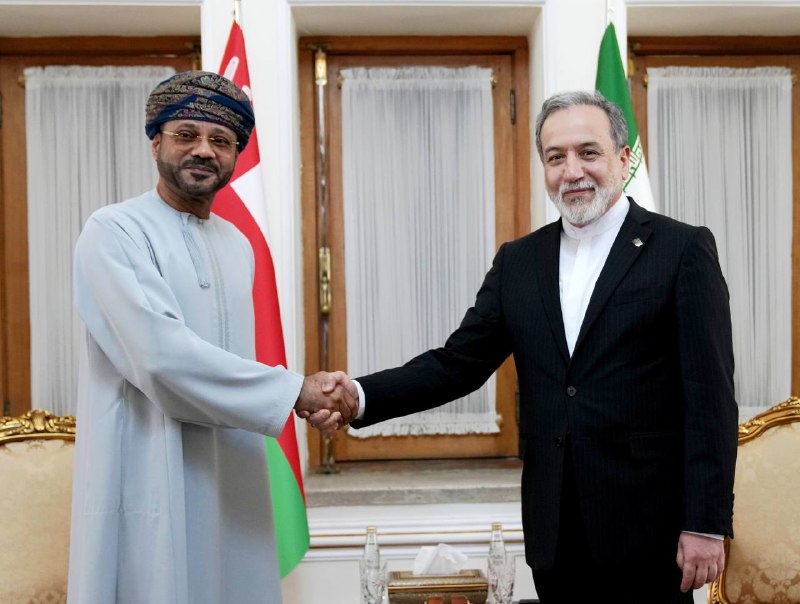
At 02:19 UTC on 11 July 2026, Iranian Foreign Minister Abbas Araghchi sat in front of cameras and put the diplomatic framing in plain terms: Iran, he said, has adhered to its commitments; the only path forward is for both parties to do likewise under the Islamabad Memorandum of Understanding. The remarks, carried by Iranian outlets including Tasnim, landed roughly an hour after Al-Alam Arabic reported a sharper formulation — that "the US Treasury Secretary's violations come in the wake of other violations and lapses committed by the United States."
The exchange is the latest rhetorical step in a slow-motion test of whether the 2026 understandings between Tehran and Washington can hold while the underlying dispute over sanctions architecture remains unresolved. Araghchi's posture is calibrated: profess Iranian compliance, name a specific US breach, and keep the door open to a continued negotiating track. The framing matters because it tells the outside world which side, in Tehran's telling, is responsible for any collapse.
The Islamabad Memorandum, named
The instrument Araghchi invoked — the Islamabad Memorandum of Understanding — has become Tehran's shorthand for the unwritten rule book of the current détente. Iranian messaging routinely cites it when explaining both Iranian restraint and any expectation of reciprocal movement from Washington. In Araghchi's telling, the Memorandum is bilateral, obligations run in both directions, and lapses on either side threaten the whole.
The choice of that phrase is also a piece of diplomatic geography. By anchoring the agreement to the Pakistani capital — site of mediated talks earlier in the year — Tehran signals that a third-party host remains relevant, and that any walkback would have regional witnesses. The harder-edged Al-Alam line, naming the US Treasury Secretary directly, narrows the breach from "the United States" to a specific cabinet officer with sanctions authority.
Where the Treasury sits
The Treasury Department, through the Office of Foreign Assets Control, controls the practical on-off switch for most Iranian access to the dollar-based financial system. Any gesture from Treasury — a license, a general license, a designation, a delisting — moves money in ways that speeches do not. Iranian officials read those moves as the truest measure of US intent, since they translate policy into operational reality.
That is why Araghchi's reference to the Treasury Secretary lands harder than a general swipe at "Washington." Naming the agency that administers the sanctions regime transforms the complaint from atmospheric ("the Americans are hostile") into a forensic one ("a specific official with a specific toolset has moved in a specific direction we don't accept"). It also gives negotiators in Islamabad, Muscat, or Doha a concrete agenda item for the next round.
The compliance argument
Araghchi's core claim is symmetric: Iran has done what it was asked to do; the United States has not. This is a contest of records. Iranian state media will be expected to keep producing evidence of Iranian compliance — IAEA access, enrichment caps, detained-national releases, restraint in proxy operations — while cataloguing US actions that Tehran characterizes as violations.
The Al-Alam Arabic report sharpens the sequence: Treasury's "violations" are described not as a stand-alone breach but as the latest in a series of "other violations and lapses committed by the United States." The plural matters. Tehran is building a file, not filing a single complaint, and the file is being assembled in public through state-aligned outlets. The diplomatic utility of that file is that it can be opened in any future negotiating room as evidence that, whatever else may be true, Iran negotiated in good faith.
What this leaves open
Two things remain genuinely unsettled. First, the substance of the alleged Treasury "violations" is not specified in the available reporting — the Iranian outlets frame a posture, not a transaction. The sources do not name a specific license, designation, or wind-down that crossed Tehran's red line. Until that detail surfaces in either an official US notice or in independent reporting, the dispute is rhetorical rather than technical.
Second, the Iranian framing leaves no room for the possibility that US sanctions tightening is itself a negotiating instrument — pressure to extract more at the table rather than a unilateral breach. Both readings can be true simultaneously. Araghchi's choice to call them "violations" forecloses that ambiguity on the record, which is exactly the point of saying it in public. The next datable marker to watch is any new Treasury action, or any Iranian response that converts rhetoric into a concrete counter-step. Until one of those moves, the détente survives in name; whether it survives in practice is a question the Memorandum alone cannot answer.
Wire provenance
This editorial synthesis draws on the following public wire/social posts:
- https://t.me/s/JahanTasnim
- https://t.me/s/alalamarabic
- https://t.me/s/JahanTasnim
- https://t.me/s/alalamarabic