Cuba's grid goes dark again, and the blockade framing meets a fuel arithmetic problem
The Cuban Electricity Company says the island has lost power nationwide for the fourth time in 2026, with fuel shortages compounded by the US embargo. The grid math, not the politics, explains why.
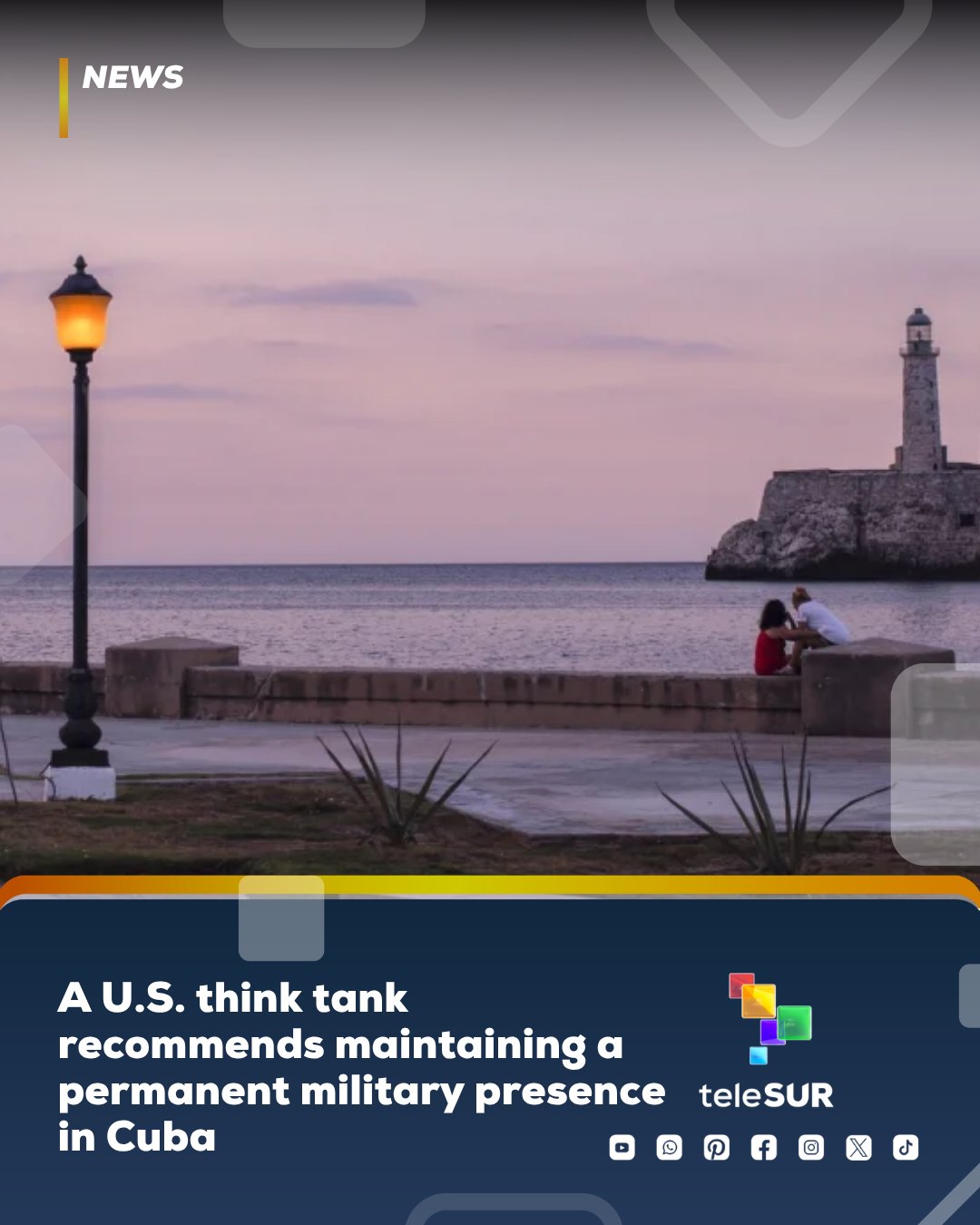
At 22:02 UTC on 10 July 2026, Al Alam Arabic carried an urgent bulletin from Cuba's state electricity operator: a nationwide power outage, the fourth island-wide collapse this year, with fuel scarcity named as the proximate cause and the US embargo cited as the amplifier. A near-identical dispatch followed minutes later on Tasnim News, signalling that state media across the Middle East were treating the Havana announcement as a wire-level event rather than a Havana-only story.
The blackout is not a meteorological accident. It is the predictable output of a power system that runs almost entirely on imported fuel, that has lost several of its principal suppliers since 2023, and that is being asked to keep the lights on across an island of eleven million people while its foreign-exchange reserves contract. The Cuban government's framing — blockade plus aggression — is not wrong; it is also not the whole story. The arithmetic of the grid is doing most of the talking.
The blackout, in sequence
The Cuban Electricity Company (Unión Eléctrica, UNE) reported the system-wide collapse on the evening of 10 July, the fourth such event of 2026 according to the same operator. Earlier island-wide outages this year have been logged in March, May, and June; the pattern has accelerated as summer demand peaks and the diesel and fuel-oil inventory thins. UNE has, in parallel, been publishing daily deficit estimates that have routinely run above 1,000 megawatts against peak evening demand of roughly 3,000 MW, a shortfall large enough to force rolling blackouts even when the grid is technically "up." A complete collapse, as opposed to scheduled disconnection, is the failure mode that follows when generation drops below the technical floor the grid needs to remain synchronised.
The state's framing — that the US economic embargo, renewed and tightened across successive administrations, restricts Cuba's access to fuel markets, shipping insurance, and dollar-based payment rails — is consistent with how Cuban officials have described the crisis since at least 2023. That framing has been carried by sympathetic outlets in the Global South and by Iran-aligned state media, which is why the Tasnim wire arrived within forty minutes of Al Alam's: the announcement serves both Havana's narrative and Tehran's interest in documenting US sanctions pressure on third countries.
Where the fuel used to come from
For most of the past decade, Cuba's thermal generation has depended on a narrow import portfolio: heavy crude and fuel oil from Venezuela under preferential terms, residual shipments from Mexico, and spot diesel purchases on the open market financed through intermediary traders. That structure has frayed in three directions.
Venezuelan deliveries, once the backbone of the system, have fallen sharply since 2023 as Caracas's own refining capacity contracted and US secondary sanctions tightened enforcement on third-country traders handling Venezuelan crude. Mexican shipments, never formalised under long-term contract, have been episodic. Spot-market purchases, meanwhile, must be paid for in hard currency Havana increasingly lacks: tourism receipts are below 2018 levels, remittances have been disrupted by US financial-monitoring rules on Cuban military-controlled remittance channels, and nickel and cobalt export earnings — among the few hard-currency generators left — are themselves subject to sanctions friction.
The result is an island that has, in effect, been running a hot summer on a rationed fuel pantry. Generation that once ran on 60,000-70,000 barrels per day of imported heavy fuel has been operating with materially less in 2026, with the shortfall absorbed first by reducing industrial and commercial load, then by residential rolling blackouts, and finally — when synchronisation fails outright — by total system collapse.
What the blockade argument does, and does not, explain
The official Cuban line, echoed in the Al Alam and Tasnim dispatches, holds that the US embargo is the decisive variable: relax it, the argument runs, and fuel flows resume, generation stabilises, and the blackouts end. The line has structural truth. The embargo does restrict Cuba's access to dollar-cleared trade, raises shipping insurance premia, and deters third-country banks from handling Cuban letters of credit. Even fuel purchased from non-US producers typically transits markets in which US persons or dollar payments are involved at some point in the chain.
What the blockade argument does not fully explain is why comparable mid-sized, fuel-import-dependent states — the Dominican Republic, Jamaica, or Trinidad and Tobago — have not seen four nationwide blackouts in seven months. Those economies run on similar thermal-generation profiles and pay similar import premia. The difference is not embargo exposure; it is foreign-currency availability, fleet maintenance, and the deferred-renewal backlog that has accumulated across Cuba's thermal plants, several of which are now operating past their original design life with limited access to OEM spares.
In other words: sanctions raise the cost and narrow the option set. They do not, by themselves, switch the lights off. The grid fails because maintenance has been deferred, because fuel is rationed, and because the synchronisation margins on an aged thermal fleet are thin.
The structural frame
What is unfolding in Cuba is the slower cousin of the supply shocks visible elsewhere in the sanctions-exposed world. Where Venezuela experienced a near-instant collapse of oil export volumes after 2017-19 sanctions tightening, Cuba's exposure is diffused: it is a state whose primary external vulnerability is the cost and availability of imported energy, but whose internal vulnerability is the age and maintenance state of the generating fleet that consumes that energy. The two reinforce each other. When fuel is cheap and abundant, deferred maintenance is tolerable; when fuel is rationed, every forced outage and every failed boiler is harder to ride through.
For Havana, the political economy is unforgiving. The government cannot publicly admit that the embargo alone is insufficient as an explanation without undercutting its central diplomatic ask — the lifting of sanctions. It also cannot fully acknowledge the maintenance backlog without admitting that the policy of preserving consumption at the expense of capital investment, pursued across several five-year plans, has reached its operational limit. The blackout announcements, with their formulaic attribution to "the severe fuel crisis exacerbated by the American blockade," thread that needle: true enough to defend, narrow enough to avoid the harder conversation.
For Washington, the calculation is similarly constrained. Relaxation of sanctions in a US election year — particularly without reciprocal commitments on political prisoners, labour rights, or compensation for expropriated US claims certified in 2024 — is a non-starter for the foreign-policy mainstream in both parties. The status quo of managed attrition persists.
What the next seventy-two hours look like
UNE's standard recovery sequence involves re-energising transmission corridors from black-start capable thermal units — increasingly, the floating diesel barges moored at Mariel and Havana Bay — and restoring load in blocks as frequency stabilises. Full restoration across an island the size of Cuba typically runs twelve to twenty-four hours under favourable conditions; longer if multiple generating units tripped off-line during the collapse and require individual restart procedures. The two previous 2026 island-wide blackouts were restored within that window.
The harder question is whether the fourth outage of the year accelerates the political timetable. Each successive collapse narrows the buffer between operational crisis and open political contention. Provincial-level reports of public frustration are harder to verify independently — Cuban state security has consistently restricted foreign press access to grid sites — but the operational signal is clear: a system that collapses four times in seven months is a system whose margin of safety has been spent. Whether that margin can be replenished before the next peak-demand window in late August depends on fuel deliveries that, as of the latest dispatch, have not been confirmed.
Monexus framed this as an energy-rationing story first and a sanctions story second, inverting the sequencing of the wire dispatches without dismissing their causal weight.
Wire provenance
This editorial synthesis draws on the following public wire/social posts:
- https://t.me/alalamaarabic
- https://t.me/JahanTasnim
- https://en.wikipedia.org/wiki/Energy_in_Cuba
- https://en.wikipedia.org/wiki/United_States_embargo_against_Cuba