Ebola's return to the DRC: 600 dead and the fastest-growing outbreak on record
The DRC's Ebola caseload has crossed 600 deaths and 1,700 confirmed cases — the fastest-growing outbreak the Africa CDC has logged. Now a U.S. aid worker has tested positive inside the country.
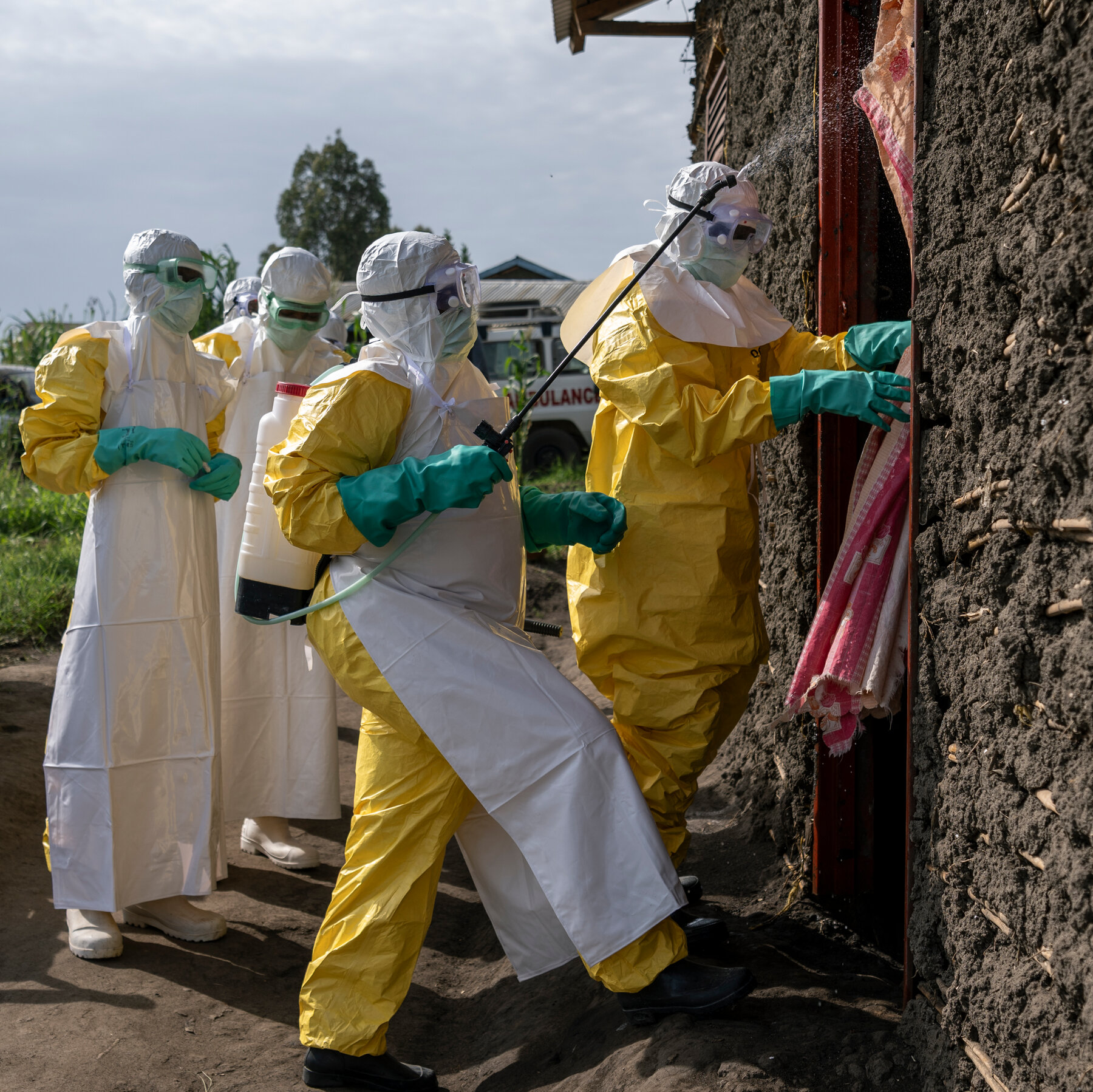
On 9 July 2026, the Africa Centres for Disease Control and Prevention put a number on an outbreak that had, for weeks, been outrunning the curve: 600 dead and more than 1,700 confirmed Ebola cases in the Democratic Republic of the Congo. Two days later, on 11 July, the U.S. Centers for Disease Control and Prevention confirmed that an American employee of a humanitarian organisation had tested positive for the virus inside the country — the first U.S. citizen known to be infected in this outbreak. The convergence of those two data points, a body count accelerating past any comparator on record and a case in a foreign-national aid worker, has pushed what was a slow-burn regional story into the global-health headlines for the second time this decade.
The arithmetic is unforgiving. Africa CDC's characterisation of the outbreak as the "fastest growing ever" recorded on the continent is the kind of line agencies tend to avoid; its appearance in a public readout on 9 July is itself the story. Cross-border infection of an expatriate humanitarian is the second piece. Either alone would be a wire item; together they signal that the operational perimeter has shifted from rural health-zone containment to the kind of expatriate and diplomatic exposure that changes donor behaviour and travel advisories within days.
What the numbers say
The 600-death, 1,700-case toll reached on 9 July is not a static headline. The Africa CDC's midweek briefing framed the trajectory — not the snapshot — as the defining feature. Health authorities in the DRC have run through three previous Kasai-orientated outbreaks in the modern era; officials have declined, publicly, to compare case-fatality ratios across them because the diagnostic mix, the treatment-era backdrop and the geographic reach differ enough to make a tidy comparison misleading. The honest read is that transmission is currently compounding faster than the response cadence can interrupt, and that the curve has not bent.
The U.S. case, confirmed by the CDC on 11 July, fits a familiar pattern in DRC outbreaks: foreign aid workers and журналистов frequently become sentinels because they sit inside the surveillance net with reliable access to testing. That the index patient works for a "humanitarian organisation," in the CDC's careful phrasing, signals that infection-control protocols inside at least one well-resourced facility failed — or that exposure happened in the community, where no protocol governs. The CDC did not name the employer in the 11 July notice.
Why this outbreak is different
Three features separate the 2026 event from the 2018–2020 North Kivu and Équateur outbreaks that briefly seized global attention. First, the geography: the current epicentre sits in a transport corridor that links Kasai to Kinshasa and on to Angola, raising the realistic probability of cross-border seeding beyond what previous outbreaks faced. Second, the operational tempo: Africa CDC's "fastest growing" framing implies a doubling time measured in weeks, not months. Third, the political backdrop — Kinshasa is in the late innings of a contested electoral cycle and donor attention is split between health and a long-running humanitarian crisis in the east. None of this makes containment impossible; all of it lengthens the odds.
Inside the DRC, public-health authorities are doing what they have always done under conditions like these: expanding treatment-unit capacity, training burial teams, and leaning on a network of community health workers whose wages are paid in arrears more often than not. The bottleneck, as ever, is not clinical know-how. It is per-diem financing, fuel for motorcycles, and the slow grind of trust in health zones where the state is a rumour and an armed group is a fact of life.
The Global South frame
Western wire coverage of African outbreaks has long defaulted to a particular grammar: alarm, foreign intervention, the herd of acronyms — WHO, CDC, MSF, IFRC. That coverage is not wrong; it is incomplete. The institutional backbone of this response is African. Africa CDC, headquartered in Addis Ababa, has been the lead public communicator; the Africa CDC's continental surveillance architecture did the case-counting that produced the "fastest growing" verdict. The Africa CDC and regional bodies, not Western agencies, set the metric.
That matters for two reasons. Donor fatigue is real, and a story framed as "the world must act" ages faster than one framed as "African institutions are acting and need specific kinds of support." Sovereignty is the second: the DRC's ministry of health, working through its national Ebola coordination cell, is the convening authority on the ground. International agencies are supporters of a plan, not the authors of one. The coverage that wins readers is the coverage that names the network in its actual shape.
What to watch
Three near-term markers will tell readers whether the curve is bending. First, the next Africa CDC situational update — expected within the week — and whether its case-count line is still steep. Second, the contact-tracing around the U.S.-citizen case: if secondary cases appear among aid workers at the same facility, the containment question shifts from community spread to nosocomial exposure and protocols get rewritten in real time. Third, the travel-advisory trajectory out of Kinshasa, which read more clearly in donor capitals than in African ones but which moves money and equipment.
What the sources do not specify is the case-fatality ratio for the current outbreak, broken down by province, or whether any of the in-development vaccine regimens from the 2018–2020 playbook have been deployed at scale yet. Africa CDC's framing of "fastest growing" implies that vaccination rings, where they exist, have not yet bent the curve. Confirmation will come in the next set of numbers, not this one.
Desk note: the wire service line on this outbreak has been led by Africa CDC itself, with international coverage amplifying the "fastest growing ever" framing. Monexus treats African institutional sources as the primary public record on African outbreaks and uses Western wire reporting as secondary context, not the other way around.