An IDFC First Bank accused paid for a Haryana official's Dubai and Bangkok trips, and a hotel stay
A key accused in the IDFC First Bank fraud case allegedly bankrolled a Haryana government official's foreign trips and luxury hotel stays. The pattern suggests the corruption net extends well beyond the bank itself.
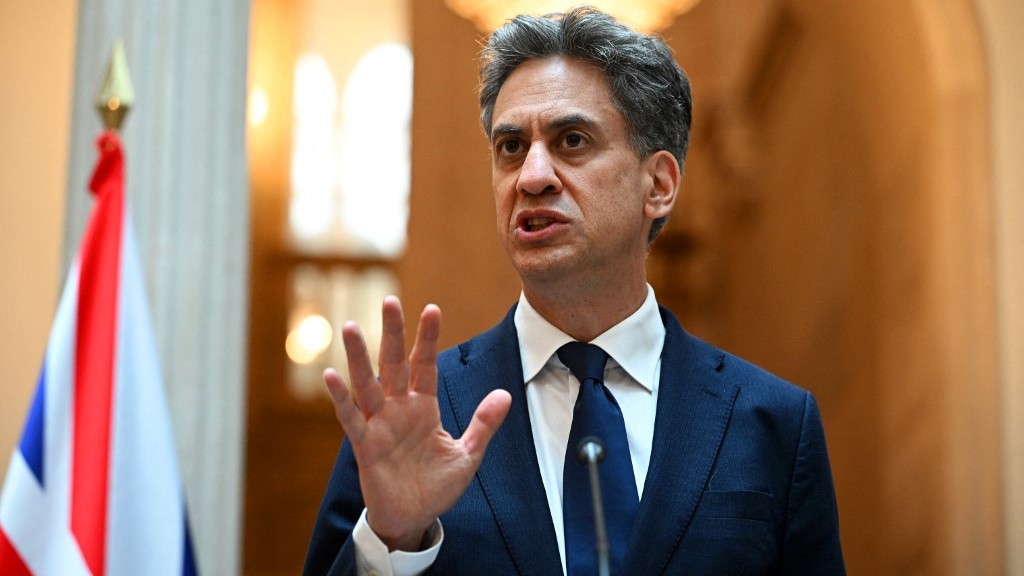
On 11 July 2026, The Indian Express reported that a key accused in the IDFC First Bank fraud case allegedly funded foreign trips and hotel stays for a Haryana government official, in return for unspecified "help." The trips, described as Dubai and Bangkok visits, were paid for by the accused; the official also allegedly stayed at a luxury hotel on the accused's tab.
IDFC First Bank, the private-sector lender at the centre of the case, becomes the public face of an alleged scheme whose tentacles appear to extend into state administration. The Indian Express's reporting frames the relationship as transactional: foreign travel and luxury accommodation in exchange for assistance to the accused. The "help" itself has not yet been detailed publicly, but the pattern is the classical architecture of a bribery arrangement, with the official's compliance as the currency.
What the bureau knew
The Indian Express report is the first public disclosure linking a serving Haryana official by name to the IDFC First Bank fraud. Until now, the case has been understood as a banking-sector matter — an internal fraud at a private lender. The new reporting re-frames the matter as a corruption case that crossed institutional lines, drawing in a state-government actor whose cooperation has now become part of the evidence trail.
The pattern is familiar in Indian enforcement history: financial frauds rarely stay confined to the firms they first touch. Banking fraud investigations routinely surface second-layer relationships — intermediaries, brokers, regulators, and state-level officials — whose cooperation greased the original transaction. The IDFC First Bank case, if The Indian Express's reporting holds up, now sits inside that template.
Why a state-level official matters
A fraud case that touches only the bank itself is a corporate-governance problem. A fraud case that touches a state-level official is a state-capacity problem. Banks rely on multiple layers of state cooperation: regulatory approvals, land and branch permissions, enforcement referrals, occasionally access to government schemes. A Haryana official's cooperation — whatever form it took — was not incidental to the alleged scheme. It was structural.
This is the analytical point that elevates the story above routine fraud coverage. Indian banking has been hardened against internal control failures post-PNB and post-WB-HSBC. What regulators find harder to police is the integrity of the state actors who orbit the bank — precisely because those relationships fall outside the bank's compliance perimeter and inside the state's own accountability chain.
What remains contested
The Indian Express's reporting is the public-source point of the case so far. The official's name, precise role, and the specific acts of "help" are not yet spelled out in the wire copy Monexus read. Enforcement agencies — the Central Bureau of Investigation, the Enforcement Directorate, or the state police — would ordinarily be the bodies to disclose those details, and their filings will determine whether the alleged conduct is treated as criminal corruption or as civil misconduct.
The "luxury hotel stay" framing is suggestive but legally inconclusive on its own. Hotel stays can be legitimate hospitality; they can also be the textbook form of a private benefit conferred on a public servant. The legal threshold turns on whether the official was acting in an official capacity at the time, whether any quid pro quo can be proven, and whether the travel arrangements were concealed. Those granular facts are not yet on the public record.
The structural frame
Indian banking fraud enforcement has matured visibly over the last decade. Investigative journalism now precedes — rather than follows — formal charge sheets in several marquee cases. The reverse-flow of information, with leaks to outlets like The Indian Express driving the public narrative before agencies speak, has become the dominant tempo. It is a healthier system than the prior arrangement, in which agencies briefed selectively and the press caught up years later, but it also produces reporting whose evidentiary base is necessarily partial and whose legal conclusions must wait for filings.
For IDFC First Bank itself, the reputational damage is independent of whether the official-cooperation allegations are ultimately proven. The bank is now associated, in public memory, with a corruption case involving foreign trips and a luxury hotel. The market price of that association is paid regardless of the verdict.
What to watch
Three filings, in order of public visibility, will move this story. First, a First Information Report or chargesheet naming the Haryana official and specifying the alleged acts of "help." Second, any remand application that describes the financial flows in detail — who paid, when, for what. Third, the bank's own disclosure to the stock exchanges under Sebi listing obligations, once its counsel is satisfied that disclosure thresholds have been crossed.
Until any of those filings lands, the public story rests on a single newspaper report. That report is credible, its outlet is credible, and the underlying case is being actively investigated. But "actively investigated" is not the same as "proven," and an investigation that surfaces state-level corruption is also an investigation that can be politically weaponised against incumbent state governments. Read the next filing carefully before drawing the final line.
Desk note: Monexus treated this as a corruption case with a banking-sector origin rather than a banking case with a corruption coda. The Indian Express's reporting framed the official's role as central to the alleged scheme; the structural reading here follows that framing while flagging what still needs corroboration.
Wire provenance
This editorial synthesis draws on the following public wire/social posts:
- https://en.wikipedia.org/wiki/IDFC_FIRST_Bank
- https://en.wikipedia.org/wiki/Reserve_Bank_of_India
- https://en.wikipedia.org/wiki/Central_Bureau_of_Investigation