Sanctions, lawsuits and an assassination list: three signals the Iran file is being rewritten in public
A countersuit over DEI, a presidential admission of a kill-order, and a sanctions package that contradicts a previous memorandum landed within hours of each other. The pattern, not any one item, is the news.
On 10 July 2026, three separate dispatches landed inside a two-hour window and, taken together, redrew the line between sanctions policy, presidential war-making and the legal architecture of American public life.
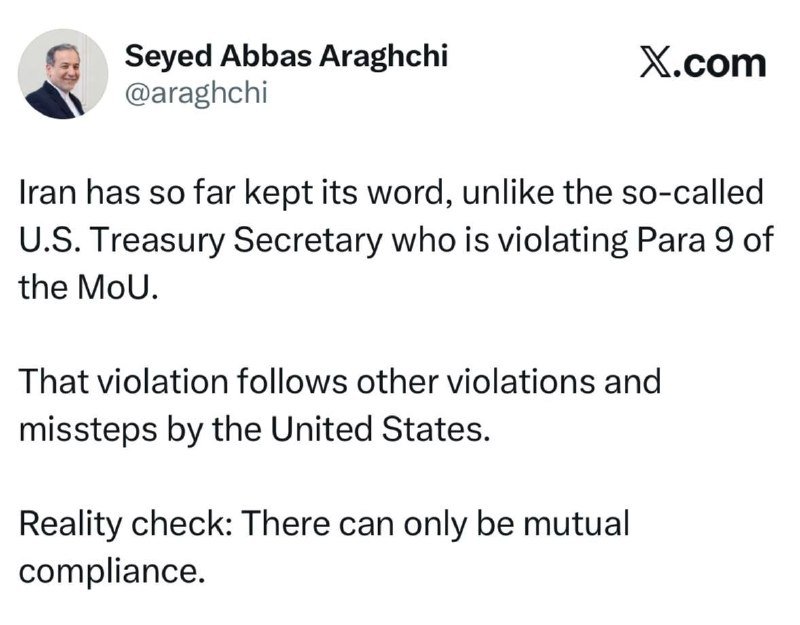
The first was a countersuit: the New York Times filed against a United States employment agency over a diversity, equity and inclusion lawsuit, according to a Reuters wire moving at 22:01 UTC. The second, at 21:48 UTC, was an interview with the President of the United States in which he told the New York Times: "I have been on Iran's list of targets for a long time. The only thing I did was give the order that if there were a succes…" — the excerpt truncated on the wire. The third, at 21:38 UTC, was a notice that Washington had imposed new sanctions on Iran even though, per the dispatch, a memorandum previously signed by the parties had been supposed to lift earlier measures.
These are not the same story. They are the same pattern. Read in sequence, they describe a state that is simultaneously loosening legal guardrails on its own institutions, normalising the public articulation of an assassination order against a head of state, and reneging — or at least materially reinterpreting — a written commitment to a foreign adversary. None of that requires speculation about motive; the documents and quotes are doing the talking.
A sanctions package that contradicts a memorandum
Start with the third item because it is the most procedural and therefore the easiest to falsify if the reporting is wrong. The dispatch, carried on X by sprinterpress at 21:38 UTC on 10 July 2026, states plainly that "the United States has imposed new sanctions against Iran, although, according to a memorandum signed by the parties, previous sanctions were supposed to be lifted." The wire then begins to expand on the rationale but cuts off.
This is the part of the story that Western foreign-policy readers should not wave through. A memorandum is, in the language of diplomacy, the thing that stands in for a treaty when neither side wants the political cost of a treaty. If the new sanctions are consistent with that memorandum, the Treasury Department will say so, in writing, with section citations. If they are not, the question is no longer about Iran policy. It is about whether written commitments between sovereigns mean anything once they become inconvenient — a question that lands differently in Moscow, Beijing and Pyongyang, where the same word "memorandum" is being weighed against American behaviour in real time.
The counter-narrative, which an administration sympathetic to the package would push, is that snapback clauses and terrorism-related designations routinely operate outside the headline framework, and that what looks like a contradiction is in fact a layered enforcement architecture. That is plausible. It is also precisely the kind of plausible that needs to be demonstrated with documents rather than asserted with adjectives.
A presidential admission, on the record, of a kill-order
At 21:48 UTC, twelve minutes before the Reuters item and ten minutes after the sanctions wire, the same outlet carried an interview excerpt in which the President of the United States told the New York Times: "I have been on Iran's list of targets for a long time. The only thing I did was give the order that if there were a succes…" The sentence runs off the end of the excerpt.
Whatever the missing verb is — a successful opportunity, a successful attack, a successful attempt — the structural content of the sentence is already clear. A sitting US president has, in an on-the-record interview with a major American newspaper, characterised himself as a target of an Iranian assassination programme and explicitly claimed authorship of a retaliatory directive. That is not a leak. It is not a "according to a US official familiar with the matter" formulation. It is a quote, attributed by name and venue.
The legal scholars who care about this will note that the President has not, in that quote, admitted to a completed killing. He has admitted to issuing an order contingent on a condition. But conditional kill-orders against named heads of state are the precise mechanism that distinguishes a war of attribution from a war of declaration, and the latter is what the post-1945 order was designed to prevent. The framing here — threatened first, ordering in response — is also the framing that justifies almost any extraterritorial strike a White House wants to authorise.
A press freedom case dressed as an employment case
The Reuters item at 22:01 UTC reports the New York Times countersuing a US employment agency over a diversity, equity and inclusion lawsuit. On its face, this is HR-adjacent. It is not. A countersuit by a national newspaper against a federal employment regulator over DEI is, structurally, a press institution arguing in open court that a category of workplace law is being weaponised against its editorial decisions. Whether the court agrees is a question for the court. The fact that the Times — historically allergic to litigation against the federal government — has elected to litigate tells the reader something about how the institution reads the present.
What the three together actually say
Read individually, each of these items is the kind of thing that gets buried in the back half of a news cycle: a sanctions tweak, a presidential aside, a labour complaint. Read together, they describe a state that is (a) reinterpreting its own written commitments to adversaries, (b) normalising the public articulation of extraterritorial lethal authority, and (c) preparing to litigate, rather than negotiate, the boundaries of internal governance. The common variable is not Iran, not DEI, not the First Amendment in the abstract. The common variable is the credibility of written commitments — outward-facing in the sanctions case, inward-facing in the DEI case, lethal-facing in the interview.
The alternative reading is the obvious one: that these are three unrelated stories that happened to land within ninety minutes, that the administration will produce documentation showing the sanctions are memorandum-compliant, that the interview quote will be clarified in the full transcript, and that the Times suit will resolve into a narrow procedural dispute. That is the prior. It is also the prior that requires evidence rather than faith.
What remains genuinely uncertain — and the sources do not resolve — is the textual content of the truncated presidential quote, the specific legal authority cited for the new sanctions designations, and the precise scope of the New York Times filing. Until those three things are on the public record, the pattern above is a working hypothesis, not a finding. Monexus treats it as such.
This piece connects three wires that crossed within ninety minutes on 10 July 2026; the editorial choice to read them together is this publication's, not Reuters's or the New York Times's.
Wire provenance
This editorial synthesis draws on the following public wire/social posts:
- http://reut.rs/4aOdXvd
- https://x.com/sprinterpress/status/2075675244874874880
- https://x.com/sprinterpress/status/2075675244874874880