Live Wire
06:06ZPRESSTVIranian Foreign Minister Araghchi arrives in Muscat, Oman06:06ZIRNAENIranian deputy foreign minister says UAE must explain its role in US actions against Iran06:05ZJAHANTASNITrump criticized for not signing housing protection law despite congressional approval06:03ZKYIVPOSTOFRussia Launches Ballistic Missile Attack on Kyiv, Injuring 11, Including a Child06:02ZTASNIMNEWSIran begins selling Arbaeen currency at agreed rate for pilgrims06:01ZJAHANTASNIReport: Turkish newspaper to feature S400 sale on front page06:01ZAFRICAINTEAlgeria reopens airspace to Malian flights, state media says06:00ZUKRPRAVDAN82-year-old woman killed in Russian shelling of Svarkove, Sumy Oblast
Markets
S&P 500754.95 0.43%Nasdaq26,282 0.29%Nasdaq 10029,825 0.33%Dow525.78 0.30%Nikkei94.55 1.10%China 5033.48 0.21%Europe88.57 0.18%DAX41.49 0.12%BTC$64,124 0.16%ETH$1,796 1.11%BNB$574.79 0.32%XRP$1.11 0.32%SOL$77.77 1.71%TRX$0.3297 1.00%HYPE$66.39 2.36%DOGE$0.0743 0.27%RAIN$0.0144 0.20%LEO$9.5 0.57%QQQ$725.51 0.31%VOO$693.86 0.46%VTI$372.69 0.33%IWM$295.99 0.42%ARKK$80.25 1.58%HYG$79.71 0.05%Gold$377.01 0.31%Silver$53.95 0.35%WTI Crude$108.7 0.28%Brent$42.15 0.05%Nat Gas$10.6 2.12%Copper$37.99 0.64%EUR/USD1.1430 0.00%GBP/USD1.3423 0.00%USD/JPY161.87 0.00%USD/CNY6.7745 0.00%
CLOSEDNYSEopens in 2d 7h 19m
The Monexus
Vol. I · No. 192
Saturday, 11 July 2026
Saturday Ed.
Updated 06:10 UTC
  • UTC06:10
  • EDT02:10
  • GMT07:10
  • CET08:10
  • JST15:10
  • HKT14:10
← The MonexusGeopolitics

Tehran signals it is ready to walk away from the Islamabad memorandum

Iran's foreign minister says Washington has violated the Islamabad memorandum; its UN envoy warns Tehran will no longer consider itself bound by the deal if US non-compliance continues.
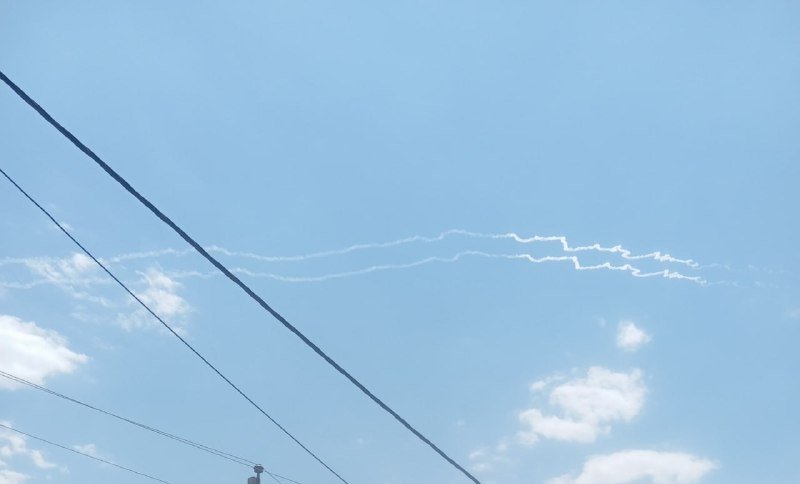
Iran's foreign minister says Washington has violated the Islamabad memorandum; its UN envoy warns Tehran will no longer consider itself bound by the deal if US non-compliance continues. @alalamfa · Telegram

Iran's foreign minister accused the United States on Friday 11 July 2026 of breaching the Islamabad memorandum of understanding, hours after Tehran's ambassador to the United Nations warned that Iran would no longer consider itself bound by the deal if American non-compliance continued. The exchange, broadcast across Iranian state media in the small hours of UTC morning, marks the sharpest public Iranian challenge to a months-old arrangement that had briefly held the prospect of de-escalation between Washington and Tehran.

The framing matters more than the wording. Two officials, on two different platforms, inside the same eight-hour window, are publicly constructing a legal and political case for Iranian exit. Whether or not that exit materialises, the rhetoric shifts the burden of proof: from now on, every contested move in the Gulf can be read by Tehran as a violation, and every Iranian counter-move as a defensive response.

The minister's case

Foreign Minister Abbas Araghchi posted on X in the early hours of UTC 11 July that Iran "has fulfilled its promises," directly contradicting what he described as claims by the US Treasury Secretary that violate "Paragraph 9 of the Memorandum of Understanding." The reference to a numbered clause is deliberate: it allows Tehran to argue, in language familiar to international lawyers, that the disagreement is technical and textual rather than strategic. State-aligned outlet Tasnim reported the minister adding that the only way forward is for both parties to honour the Islamabad memorandum — language that preserves the deal in form while accusing Washington of breaking it in substance.

The choice of venue is also a signal. The Treasury Secretary is a sanctions official, not a nuclear envoy. By naming that cabinet post specifically, Araghchi is reframing the dispute as one about financial compliance — frozen assets, oil licences, banking channels — rather than about enrichment or missile activity. The implication: if Washington is moving on sanctions architecture while asking Tehran to stay still on the nuclear file, the bargain is no longer reciprocal.

The UN warning, written in advance

Two hours earlier, Press TV carried a separate statement from Iran's ambassador to the United Nations, who warned that Tehran "will no longer consider itself bound by the Islamabad memorandum" if US violations continue. The sequencing is significant. The ambassador's statement, which is addressed to a UN audience, was issued before the minister's X post, which was addressed to American politicians. Tehran is therefore speaking to two rooms at once: the Security Council and the US Congress, with two slightly different tones and two slightly different exit ramps.

This is not the first time Iranian diplomacy has used parallel tracks to widen the cost of a possible breakdown. What is new is the explicit mention of the memorandum's own paragraph structure as the metric of compliance. That framing hands Iran a forensic instrument: a single sanctions designation, a single waived enforcement letter, can now be cited as a Paragraph 9 violation and treated as casus belli for withdrawal.

What the Islamabad memorandum actually binds

The text of the memorandum has not been published in full, and the four source items in this thread do not enumerate its contents. What is clear from the Iranian statements is that the document is structured as a numbered set of mutual obligations, with compliance measured clause by clause. That architecture is closer to a Joint Comprehensive Plan of Action-style technical arrangement than to a political communiqué — and that is precisely why paragraph-level disputes are so combustible. A political declaration can be honoured in the breach; a numbered technical memorandum cannot, at least not in front of the audience Tehran is now addressing.

Western reporting in recent months has emphasised Iran's continued enrichment activity and the slow pace of any reciprocal US relief. Iranian reporting, by contrast, has stressed the absence of concrete sanctions relief and the continued enforcement of secondary measures. Both can be true at the same time, and the memorandum appears to have been drafted precisely to manage the gap between them. Friday's language suggests the gap is now being read, by Tehran, as unmanageable.

Stakes and the next forty-eight hours

The most immediate risk is procedural rather than kinetic. A formal Iranian notice of non-continuation, delivered through the UN, would reset the diplomatic clock and free Tehran from the quiet constraints it accepted when the memorandum was signed. A Treasury response — either conciliatory or punitive — would then determine whether the dispute stays in the lawyers' room or moves to the operations room. The most dangerous outcome is a slow drift in which neither side formally withdraws, but each treats the other's moves as nullities, raising the probability of a tanker seizure, a cyber operation, or a proxy escalation that neither capital intended.

What the sources do not specify is the content of Paragraph 9, the specific Treasury action Araghchi is contesting, or whether the US side has issued any public response. The next forty-eight hours will tell whether the Iranian warnings are a negotiating posture — pressure applied to extract relief — or a prelude to a managed walkout. Either reading is plausible. The signals, as of 11 July 2026 at 02:20 UTC, are deliberately ambiguous, and the ambiguity is itself the message.


This publication framed the Pakistani-mediated memorandum as a fragile technical instrument rather than a political settlement, and gave the Iranian legal argument structural weight on the assumption that the dispute is over clauses, not atmospherics.

Wire provenance

This editorial synthesis draws on the following public wire/social posts:

  • https://t.me/presstv/
  • https://t.me/alalamarabic/
  • https://t.me/tasnimnews_en/
  • https://t.me/presstv/
© 2026 Monexus Media · reported from the wire