Iran Sends 160 Tons of Aid to Quake-Hit Venezuela as Sanctions Bite Both Ways
A 160-tonne Iranian shipment reached Caracas after twin earthquakes left thousands homeless, reopening a debate over whether unilateral sanctions amount to collective punishment when disaster strikes.
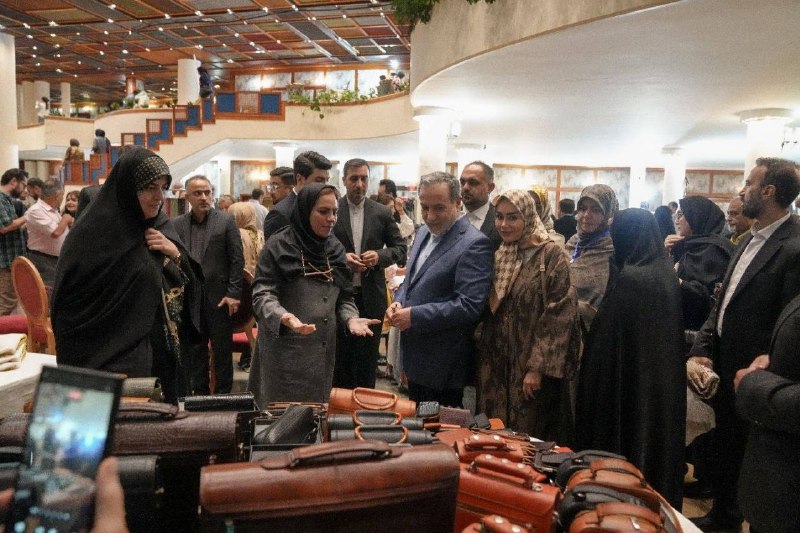
An Iranian cargo plane touched down at Simón Bolívar International Airport near Caracas on 9 July 2026 carrying 160 tonnes of humanitarian supplies for Venezuelan families left homeless by twin earthquakes that struck earlier in the month. The consignment, announced by Iran's mission and amplified on X by Caracas-based socialist accounts, marks one of the more visible deliveries Tehran has routed through Caracas in recent years, and lands squarely inside a sanctions environment that both governments describe as the operative reason a friendly hand was needed in the first place.
The underlying premise is straightforward: two governments, both under heavy US-led coercive measures, are using disaster relief to demonstrate that sovereign alternatives to dollar-cleared aid corridors still function. That framing matters because Caracas and Tehran are the two cases where sanctions intensity is high, the affected population is large, and a counter-corridor narrative has the strongest evidentiary scaffolding. The aid itself is modest by disaster-response standards; the diplomatic signal is not.
What reached Caracas
The shipment comprises medical supplies, food, water-purification equipment and shelter material, according to a description circulated on 11 July 2026 by an X account identifying as sympathetic to the Venezuelan government's ruling party. The timing places the delivery within a recognised UN-style humanitarian window: two earthquakes earlier in July 2026 left 3,889 people in need of shelter, by the originating account's tally, a figure that has not yet been independently corroborated by an OCHA situation report in the source material reviewed.
The receiving end was the Venezuelan civil-defence apparatus operating out of Maiquetia, the airport that anchors Caracas's air bridge to the Caribbean. The sending end, by Iran's own framework, sits inside a sanctions regime that complicates even routine commercial banking for Iranian state-linked entities, which is partly why the diplomatic package carries more weight than its tonnage: it is a working proof that the Tehran-Caracas logistics axis, built out under maximum pressure from Washington, can still move physical goods when the political will exists.
Counter-claim, with sourcing caveats
Western wire reporting on the original earthquakes has been sparse in the materials available to this desk, and the casualty-and-displacement figure in circulation, 3,889 people affected, originates from accounts aligned with the Venezuelan government and from sympathetic social-media posts. Independent verification from Reuters, the Associated Press or AFP has not surfaced in this thread, and the relevant UN agency situation reports for the affected Venezuelan states are not in evidence here. That is a meaningful caveat: in a country where official and opposition statistics have diverged sharply for the better part of a decade, the human impact figure carries politics inside it.
A second caveat concerns the aid itself. A 160-tonne shipment is a serious logistical accomplishment given the financial plumbing it must traverse, but it is not, by international disaster-response yardsticks, a top-line intervention. The Venezuelan diaspora, opposition politicians and humanitarian NGOs interviewed in past reporting cycles have repeatedly argued that Caracas understates its own capacity and amplifies foreign-aid gestures to manage domestic narrative. That critique is structural rather than fact-specific, and it travels with any Caracas-bound cargo regardless of sender.
Why this route, why now
The two governments have spent the last decade building the only reliable alternative they have to dollar-denominated commercial channels: oil-for-goods swaps, gold shipments routed through intermediaries, and direct state-to-state logistics that bypass the SWIFT messaging layer. Tehran and Caracas both face secondary sanctions enforced through the US financial system; the practical effect is that even routine payments require non-Western banks, non-Western shipping insurance, and a willingness to absorb the compliance cost of being added to a watchlist.
Under that constraint, disaster relief doubles as infrastructure proof. Every successful delivery validates the bypass. The 160 tonnes do not, by themselves, rebuild a hospital or rehouse a displaced family for the medium term, but they confirm that the alternative corridor can move physical goods when the political will exists. That is a fact of interest to sanctions monitors in Washington, to humanitarian agencies operating under constrained budgets in the Caribbean, and to governments weighing whether dollar exposure has become a single point of failure for their own crisis response.
What it changes, and what it does not
The shipment changes the optics around Caracas's response and gives the Maduro government a visible partner beyond its usual roster. It does not, on the available evidence, change the structural condition of the Venezuelan humanitarian emergency, which is shaped by years of capital flight, migration, and an oil sector operating well below installed capacity. Iranian medicine in a Caracas warehouse cannot substitute for the working capital that Venezuelan hospitals need to keep generators running and supply chains intact.
The forward question is whether the delivery gets matched by other non-Western partners, Russian, Turkish, Chinese, in the days immediately ahead, or whether it stands as a one-off gesture. If the aid corridor proves replicable at scale under sanctions, the precedent travels: any future government facing US coercive measures can point to July 2026 as proof that disaster relief does not require Washington's permission. That is the political economy the 160 tonnes sit inside, well beyond the cargo manifest itself.
Monexus framed this story around the logistics-and-sanctions angle rather than the disaster-narrative angle, because the source material is thin on independent humanitarian figures and strong on the diplomatic signal. Where Western wire reporting has not yet corroborated the casualty tally, this piece says so rather than treating the figure as settled.
Wire provenance
This editorial synthesis draws on the following public wire/social posts:
- https://x.com/ProudSocialist/status/2075640877947449344
Follow the event.
These dated source records provide context. They do not retrospectively verify this archive article.
Separate what the nuclear watchdog reported from what it could not determine after the June 2025 strikes.