Mali recaptures Anefis after week of Tuareg fighting, with rebels still in the hills
Bamako says it has retaken the northern town of Anefis after almost a week of combat; Tuareg separatists say they withdrew in good order and remain in surrounding terrain.
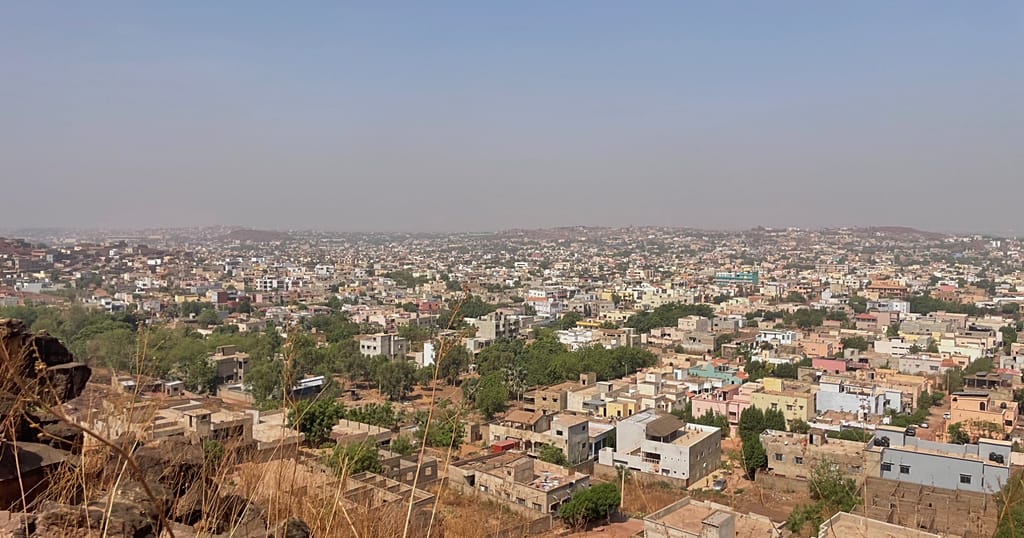
The Malian army announced on 10 July 2026 that it had regained control of the town of Anefis, in the country's restive Kidal Region, after nearly a week of combat with separatist Tuareg fighters; both a military source and the rebels themselves confirmed the recapture, while disagreeing sharply on its significance. According to a wire dispatch carried by Africanews, Bamako framed the operation as a successful clearance, while Tuareg commanders described a tactical withdrawal from the urban centre into the surrounding wadis and ridgelines. The town, small and strategically sited along routes connecting Kidal to Tessalit and into Algeria's borderlands, has changed hands more than once since Mali's latest conflict cycle began, and the fighting around it has become a recurring test of the army's reach into the country's deep north.
That both sides can claim something close to a win after the same week of fighting tells you what kind of war this has become: a grinding contest over terrain that is held, lost, and re-taken, in which the decisive question is rarely the flag over a town but who controls the roads, the wells and the high ground between towns.
What Bamako is claiming
A military source quoted by Africanews on 10 July said government forces "regained control" of Anefis after fighting that had lasted close to a week. The account presented by Bamako is consistent with the standard pattern of operations since the army withdrew from heavy northern garrisons a few years ago and then began re-deploying under the transitional authorities: a deliberate assault, often preceded by aerial and artillery preparation, followed by a public assertion that the town is once more under state authority. The framing sells competence to a domestic audience that has heard the same line about other northern communes and asks, fairly, what is different this time.
The rebels' counter-narrative
Tuareg separatist outlets, including the wing of the former Permanent Strategic Framework (CSP) press apparatus, gave a very different reading of the same days. They acknowledge that their fighters pulled out of the town itself but insist this was a deliberate, orderly withdrawal rather than a defeat, and that their units remain positioned in the surrounding terrain with functioning supply lines. The pattern is familiar from earlier rounds in the Malian theatre: a frontal position inside a built-up area is given up once it becomes untenable; the combat then disperses into the kind of mobile, road-ambush warfare the Saharan environment rewards. The dispute between the two accounts is not over whether Anefis the town is held by the army right now; it is over whether the army can hold it through next month.
Why a town this small matters this much
Anefis sits in a corridor whose value is geographically disproportionate to its population. The route network running from Kidal north-west toward Tessalit, and on toward the Algerian frontier, is one of the few paved and improved arteries in the eastern north. Control of a town on that road is also control of the only practical axis for armoured movement in the dry season, and of the wells, airstrips and supply caches that any longer operation depends on. With similar fighting reported in recent months across the wider tri-border area, the cumulative picture is one in which the Malian state is fighting to physically re-assert the map its officers inherited at independence, square kilometre by square kilometre.
The structural story here is the limits of security built on foreign legibility. Mali's transitional authorities have leaned on a mix of Russian-adjacent military assistance and a reduced Western footprint to project force in the north; that posture can take a town, but it has so far struggled to deliver the quieter, slower work of holding villages and protecting convoys once the headlines move on. The Tuareg movements, for their part, have limited leverage over the national capital but considerable leverage over the terrain, and they have shown a capacity to absorb a tactical loss and re-emerge a few valleys away.
What remains contested
Three points of fact have not been settled in the reporting available on 10 July. First, casualty counts: the military source cited by Africanews did not provide a figure for dead or wounded on either side, and the rebels' own statements rarely do; independent numbers in this corridor typically emerge only when survivors filter across the border. Second, the depth of the rebel withdrawal: insurgent claims that fighters remain "in the surrounding terrain" are easy to make and hard to verify from outside the theatre, and the next 10 to 14 days of road traffic around Anefis will be the most informative signal. Third, the broader question of whether fighting at Anefis is part of a new offensive cycle or a localised reaction to recent army patrols, which the available wire line alone cannot resolve. Monexus will watch for corroborating reporting from regional outlets and from humanitarian agencies operating near Tessalit, and update as it emerges.
Desk note: the Africanews wire gives Bamako the first word and the Tuareg response the last word; Monexus has kept that ordering while flagging the dispute in the running text rather than in a quiet qualifying clause.
Wire provenance
This editorial synthesis draws on the following public wire/social posts:
- https://en.wikipedia.org/wiki/Anefis
- https://en.wikipedia.org/wiki/Kidal_Region
- https://en.wikipedia.org/wiki/Permanent_Strategic_Framework_(Mali)