Disney’s live-action ‘Moana’ lands with the cultural scaffolding intact, for once
Disney’s live-action ‘Moana’ premieres with its Polynesian creative team intact. The film is being read less as a corporate pivot and more as a test of whether representation survives scale.
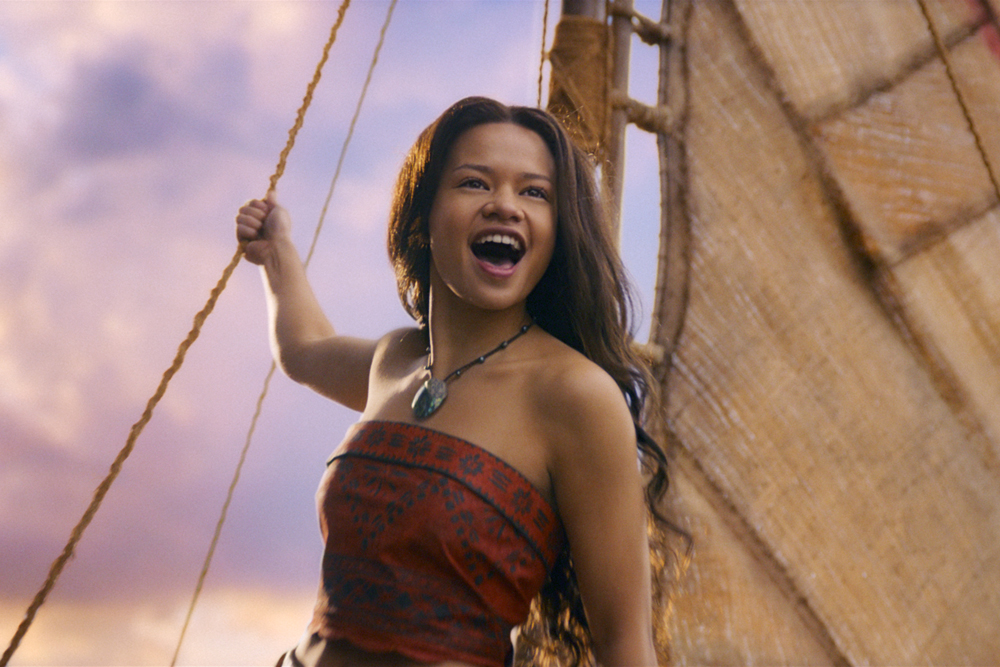
On 11 July 2026, Disney rolled out the red carpet for its live-action "Moana," and the most striking thing on stage wasn't a special effect. It was the lineup. The film arrives in theatres with the same creative team that built the 2016 animated original at the centre of the production, not consigned to a "cultural advisor" credit buried in the third column of the press kit. The premiere made that decision legible: the people who consulted on the film were the people who built it.
That is, in the current Hollywood landscape, the story. Disney has spent a decade absorbing public criticism over how it borrows from non-Western cultures: the tattoos, the songs, the dance vocabularies, the gods. The 2016 "Moana" was the studio's first large-scale test of a different model, in which Polynesian creatives were credited as writers, composers and movement directors rather than brought in after the screenplay had been locked. The live-action version, by every available signal, extends that arrangement. The question the industry is asking now is whether the scaffolding holds when the budget roughly doubles and the marketing apparatus gets louder.
What the premiere actually showed
The premiere footage and the cast interviews that followed it were notable less for the scale of the spectacle than for the answers the principals gave when asked why representation mattered. The framing was defensive but consistent: the creative team treated Polynesian authorship not as a marketing add-on but as a precondition for the film making sense at all. The set pieces that have generated the most discussion, including the renewed centrality of the wayfinding scenes and the use of traditional voyaging canoes rather than digitally fabricated substitutes, are read by Pacific-Islander cultural organisations as the kind of choices that only happen when the room making them looks like the room on screen.
The studio's commercial calculus is also easier to read than it once was. "Moana" has earned more than a billion dollars at the global box office across both releases, and the live-action remake cycle is one of the few bets in the studio's slate that has produced reliable returns. Disney's incentive structure now points in one direction: the safest path to a hit is the one that doesn't detonate a cultural-appropriation controversy on the way to opening weekend. Representation, in other words, has become load-bearing.
The critique that won't go away
It is worth naming the counter-narrative plainly, because it is held by serious people and not just by online critics. The argument runs: a live-action remake of an animated film that is itself only ten years old is, at best, a redundancy, and at worst a corporate move to extract more value from a property whose original was already the result of the same consultation process. Pacific-Islander filmmakers who have watched the industry for two decades point out that the same studios that have spent the last ten years publicly crediting Indigenous creatives have not, in the same period, materially increased the share of greenlit projects whose directors, writers and showrunners come from those communities. The list of studio features directed by Pacific-Islander filmmakers in 2025 and 2026 remains short. The "Moana" model, in this reading, is the exception that proves the rule: it lets the studios claim the credit for doing the work once, while the structural pipeline for Indigenous-led projects stays roughly where it was.
A second, more procedural line of critique focuses on the credit structure rather than the personnel. Several of the Pacific-Islander collaborators who worked on the 2016 film have spoken publicly, in interviews outside the premiere cycle, about the gap between being named as a consultant on a project and having the kind of structural authority that lets you change a scene at the screenplay stage. The live-action film's publicity materials acknowledge the same consultants and elevate several of them into credited production roles. Whether that elevation reflects a real change in decision-making authority or a re-labelling exercise is the kind of question that can only be answered by watching what gets made next.
The structural shift underneath the spectacle
Step back from the premiere and the picture that emerges is less about one film and more about how the relationship between Hollywood studios and the cultural communities they depict has been renegotiated over the last decade. Three patterns are now visible in the industry's own data.
First, the consultative process has been formalised. Where the 2016 "Moana" relied on a small group of Polynesian creatives who were brought in early and given unusual latitude, the live-action production operates inside a more institutional arrangement. The film credits an Oceanic cultural trust, in addition to named individuals, as a consultative body. That is a different kind of arrangement: it shifts the locus of authority from a person who can be hired and fired to an institution with a continuity the studio cannot easily override. The studios have accepted this because, in practice, it has lowered their litigation and reputation risk. The communities involved have accepted it because, in practice, it has produced films they can defend in public.
Second, the economics have moved in the same direction. The global audience for non-English-language and culturally specific content has grown faster than the industry forecast. The original "Moana" performed strongly in territories that the studio's traditional marketing models had not prioritised, including the Pacific Islands themselves, where it became a phenomenon that fed tourism and merchandise revenue. The live-action version is being released into a market that has been educated, by the previous film's existence, to expect a particular standard of cultural handling. The audience now has opinions, and the studios have noticed.
Third, the alternative cost of getting it wrong has risen. The past five years have produced a series of public failures in which studios have mis-handled cultural material and absorbed the cost in box-office underperformance, regulatory scrutiny and organised consumer response. Each of those failures has made the next studio more cautious, and each has increased the leverage of the communities whose consent is now being sought earlier in the production cycle. The "Moana" model, in this sense, is not generosity. It is risk management that happens to coincide with a defensible ethical position.
What to watch over the next twelve months
The live-action "Moana" opens against a slate that will test the model more rigorously than a single premiere can. Three signals will tell us whether the scaffolding holds or whether the studios revert to the older pattern once the marketing cycle ends.
The first is the credit structure on the next wave of culturally specific projects at Disney and its peers. If the next Polynesian-led, Indigenous-led or African-led studio feature is built on the same institutional model that the live-action "Moana" used, the change is structural. If the next project reverts to the consultant-on-the-third-credits-page arrangement, the change was cosmetic. The trade press will surface this within months.
The second is the commercial performance of the film outside North America. The 2016 film did disproportionate business in markets that Hollywood's traditional distribution models underserve. If the live-action version replicates that pattern, the studios' financial case for the model is made. If the audience shows up only in the territories the studio already prioritised, the studios will read the result as confirmation that the consultation was a cost, not an investment.
The third is the production pipeline for the people who were in the room this time. The names attached to the 2016 film have, in the decade since, gone on to direct, write and produce projects at a rate that the industry should be tracking. If the live-action team sees the same trajectory, the model is producing the next generation of decision-makers, which is the only durable form representation can take. If those careers stall, the studio has consumed their authority without building the pipeline that would have made that authority self-reproducing.
The 11 July premiere was, in the end, a single data point. It is the choices that get made about the next film, and the one after that, that will tell us whether the studios have changed or whether they have just learned to talk about not changing.
This article was written by Monexus's culture desk, which framed the live-action 'Moana' premiere less as a Disney corporate event and more as a test case for whether Hollywood's consultative model survives the move from animation to live action.