Moana's live-action turn tests whether representation can survive the remake economy
Dwayne Johnson framed Disney's live-action 'Moana' as a corrective to a childhood without on-screen reflection. The harder question is what a Hollywood studio owes a community it built a billion-dollar franchise around.
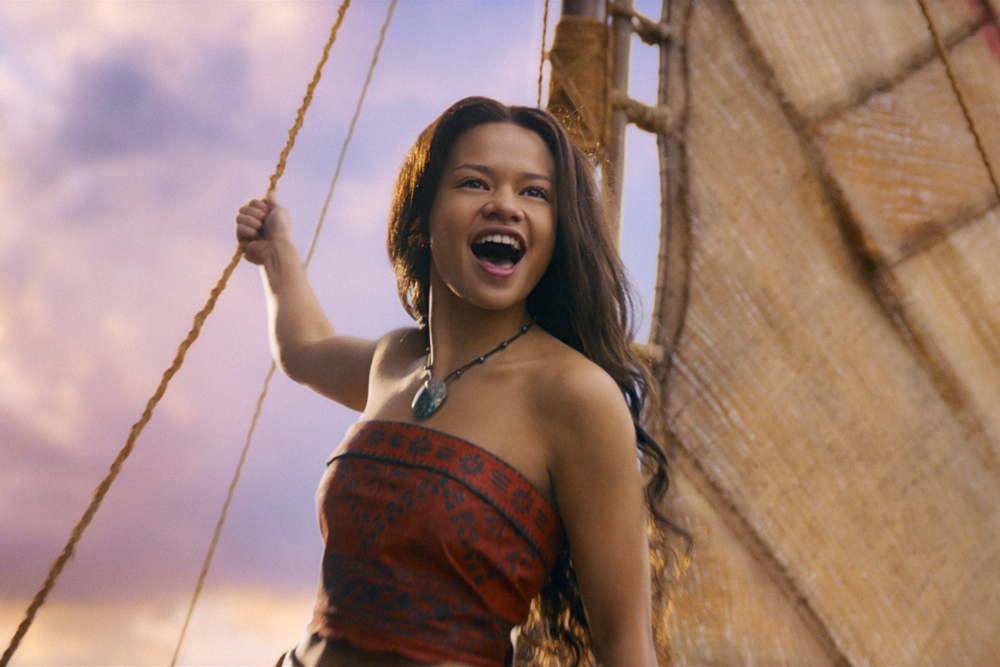
Dwayne Johnson used the premiere of Disney's live-action "Moana" on 11 July 2026 to do something the studio's marketing cycle rarely permits: he talked about absence. Growing up, Johnson told Variety, he did not see himself represented in the media, and named "Indiana Jones" as the reference point that did the work instead. The comment, made on a red carpet for a film that Disney has spent the better part of a decade positioning as a tentpole, cuts in two directions at once. It is a credit to the project that the film's lead could say it out loud. It is also a quiet indictment of how long it took for a studio with Johnson's resources to give him a frame he could grow into.
The premiere, and the small body of reporting around it, sits at the seam between two Hollywood bets. The first is the commercial bet: that the studio can translate an animated hit, released in 2016 and built on Polynesian navigation mythology, into a live-action property without alienating the diaspora it was originally made for. The second is the reputational bet: that the same production can absorb the heaviest critique of the remake era, the charge that these films are asset-recycling with a culturally licensed wrapper, and still come out the other side with credibility intact. The two bets do not always point in the same direction.
The reference points the studio chose
Johnson's comments to Variety emphasise collaboration with Polynesian creatives and the importance of representing the culture on screen. That language has become standard for the live-action cycle; "Moana 2," the 2024 animated sequel, was promoted on similar terms, and the live-action version appears to extend the same arrangement. The framing matters because it is the part of the project most exposed to the community it claims to serve. The earlier animated "Moana" was, by the studio's own subsequent accounting, a corrective: a film built with cultural consultants, scored with Oceanic musical references, and fronted by a teenage protagonist from a fictional island that drew on Samoan, Tongan, Tahitian and other Polynesian visual traditions.
What a live-action remake does is force the same arrangement through a different production apparatus. A filmed Moana cannot rely on the stylised shorthand that animation permitted. Costume, landscape, choreography, casting of background players, the texture of food and water and weather, all of it becomes legible in a way that the 2016 film could elide. The studio's choice to keep the Polynesian creative bench intact, rather than handing the project to a generalist prestige director, is the operational answer to the critique. Whether it is enough is a question that will be settled in the film's first month of release, when diaspora audiences and the press that follows them decide.
What the remake economy actually rewards
Disney's live-action strategy is not a single film; it is a portfolio. "The Lion King" (2019), "Beauty and the Beast" (2017), "The Little Mermaid" (2023), "Mufasa: The Lion King" (2024) and a string of others have established a template: take a title the audience already trusts, rebuild it at a price point that justifies a global theatrical run, and let the brand do the lifting. The economics of that template are well understood. Less discussed is what it does to the cultural property underneath.
The Polynesian case is unusually clean. The 2016 "Moana" was a film that audiences, including non-Polynesian ones, already received as a respectful portrayal. Its soundtrack crossed over; its mythology was taught in schools. A live-action remake is, in this sense, not correcting a wrong so much as monetising a relationship the studio has spent a decade cultivating. That is not a critique specific to "Moana," but it is the structural frame in which the film arrives: a community that did the work of making the original a cultural object is now being asked to validate a new version of it.
The view from outside the press cycle
The mainstream entertainment press has, broadly, accepted the studio's framing. Variety's premiere coverage, the strongest piece of trade reporting on the launch, foregrounds collaboration with Polynesian creatives and Johnson's personal history with the material. That emphasis is accurate. It is also incomplete, because the questions raised by the remake are not solely about intent. They are about ownership, royalties, and whether the cultural consultants credited in the press kit have the kind of structural leverage, contractually and financially, that the language of partnership implies.
A counter-reading worth taking seriously: the more Disney invests in "Moana" as a long-cycle IP, the more it has an interest in defining who counts as a legitimate voice on the project. Cultural consultation can be authentic and still be asymmetric. The community receives recognition; the studio receives a defensible position. Whether the live-action version's credits reflect something closer to partnership than to a more sophisticated form of approval will be visible in the months after release, in interviews, in the production's own published materials, and in the reception among the Pacific Islander press and cultural organisations that have a stake in the answer.
What the next eighteen months will show
The commercial test is straightforward and will resolve quickly. The harder test is whether the studio treats the film's Polynesian collaborators as a permanent feature of the property, or as a launch-phase utility. The 2016 film earned its reception by doing something the studio had not done at that scale. The 2026 version's claim on the same reception rests on the same logic, applied harder, at a budget the original did not have to clear. If the next instalment, whether animated or live-action, treats that arrangement as load-bearing rather than decorative, the cycle has done something useful. If it does not, the premiere comments will read in retrospect as the marketing they so often are.
Johnson's reference to "Indiana Jones" is, in the end, the cleanest summary of the bet. A child who had to borrow someone else's archaeology to imagine himself in the frame is now the public face of a property that, on paper, belongs to the community it depicts. The distance between those two positions is the distance the film has to close.
The Monexus culture desk treats representation claims in major franchise releases as a structural question, not a press-release one: the test is not what the studio says at the premiere, but what the credits, the contracts and the next production cycle actually show.