Oman hosts Iran's top diplomat as Gulf mediation track widens
Iranian foreign minister Abbas Araghchi landed in Muscat on 11 July 2026 for talks with his Omani counterpart, signalling a renewed Gulf channel as nuclear negotiations with Washington remain stalled.
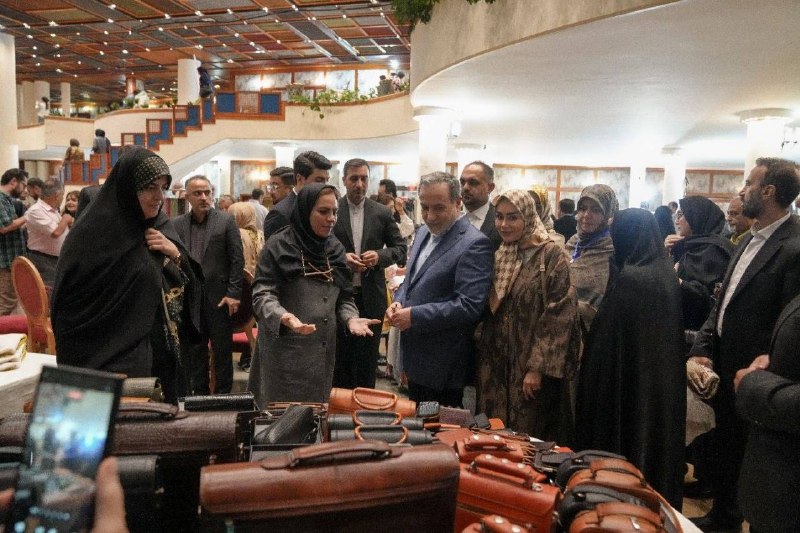
Iranian foreign minister Abbas Araghchi arrived in Muscat on the morning of 11 July 2026 and was received at the Omani foreign ministry by his counterpart, Badr Albusaidi. The two posed for photographs outside the ministry building before moving into closed-door talks, according to a Telegram post by Africa News Agency carrying the ministry's own images. The visit, which was not formally announced by Tehran in advance, places Oman back at the centre of a Gulf-mediated channel between Iran and the United States at a moment when broader nuclear diplomacy has visibly slowed.
The timing matters. Indirect talks between Washington and Tehran, which for most of 2025 ran through Omani intermediaries, have produced little visible movement in 2026, with the IAEA continuing to document restrictions on inspector access at Iranian nuclear sites and with sanctions enforcement on Iranian oil exports remaining a live flashpoint. A face-to-face meeting between Araghchi and Albusaidi is therefore best read not as a stand-alone courtesy call, but as a maintenance visit on a still-active track. Muscat's value to both sides is procedural: it offers Tehran a sovereign channel that does not require direct contact with a US administration it distrusts, and it offers Washington a discreet way to test whether Iranian red lines have shifted without paying the political cost of formal bilateral engagement.
A channel built for slow movement
Oman has played this intermediary role for the better part of two decades, with the most consequential episode being the secret 2012–13 exchanges between Washington and Tehran that produced an interim understanding on the nuclear file. The Gulf state's position in regional diplomacy is unusual: it maintains diplomatic relations with Israel, hosts US and Iranian representatives, and is one of the few Arab states to keep open lines to Tehran's foreign ministry even at moments of acute Gulf tension. That posture is not neutral in the way Western commentary sometimes frames it; it is a deliberate commercial and strategic choice, predicated on the calculation that Muscat is too small to be a threat to any larger neighbour and too useful to be sidelined.
The Araghchi-Albusaidi meeting therefore sits inside a longer pattern. What the optics of a ministerial handshake at the foreign ministry entrance signal, in plain terms, is that the channel has not been allowed to go cold. Whether anything concrete emerges from the closed session is a different question. The Telegram imagery carries no policy detail, no joint statement, and no read-out from either foreign ministry beyond the fact of the meeting itself. The honest reading is that this is housekeeping: a refresh of contacts, an exchange of positions, and likely a message intended for onward delivery to the US side, conveyed through Omani intermediaries rather than through direct engagement.
What the framing leaves out
Western wire coverage of Iranian diplomacy, when it bothers with a visit like this one at all, tends to treat Oman as little more than a post office. The structural reality is more interesting. Muscat is not a passive mailbox; it is an actor with its own regional interests, including energy export routes, its own relationship with Gulf partners, and a long-standing bet that diplomacy outlasts confrontation. The Omani position is that incremental engagement is preferable to crisis, a posture that frequently puts the sultanate at odds with louder Gulf voices that prefer pressure.
The Iranian counter-frame is equally important and is rarely given space in English-language coverage. Tehran's view, expressed in MFA briefings and in commentary across outlets aligned with the Islamic Republic, is that direct negotiations with the United States have a poor historical record: the 2015 nuclear deal was negotiated bilaterally, and the same deal was unilaterally abrogated by Washington in 2018, with no comparable recourse for the Iranian side. The Iranian position is that any track, including the Omani one, must be assessed against that experience. The structural point is not that Tehran is reflexively anti-diplomatic; it is that Tehran is selective about which diplomatic arrangements leave Iranian sovereignty intact.
The stakes, looking forward
Two dates will tell us whether the Muscat visit was procedural or substantive. The first is the next IAEA Board of Governors session, where Iran's level of cooperation with inspectors is on the table. The second is any movement on the sanctions architecture around Iranian oil exports, particularly the question of whether third-country buyers can transact without exposure to secondary US measures. If either of those fronts moves in the four to six weeks following Araghchi's visit, the Omani channel can claim credit. If neither moves, the visit joins a long list of cordial handshakes that produced little in the way of binding outcomes.
The wider frame is one the Africa desk has been tracking across 2026: the steady multiplication of mediation tracks around the Gulf, with Oman, Qatar, and to a lesser extent Iraq all positioning themselves as indispensable intermediaries. The pattern suggests that regional diplomacy is becoming less dependent on Washington-led formats than it was in the early 2010s, and that smaller Gulf states are accumulating diplomatic weight in inverse proportion to their military size. For African states with significant Muslim populations and active trade relationships with Iran, this matters directly: it shapes the diplomatic options available to them on issues ranging from sanctions compliance to energy import diversification. The Araghchi-Albusaidi meeting is, on the evidence so far, a small piece of that larger repositioning. The reading that turns out to be correct depends on what the closed session produced, and on that point the public record is, for now, silent.
Desk note: Monexus framed this visit as a maintenance stop on an active mediation track, leaning on the ministry-published imagery and the absence of any policy read-out rather than on speculation. The wire services have not yet published detailed coverage; we will update if a read-out emerges.
Wire provenance
This editorial synthesis draws on the following public wire/social posts:
- https://t.me/s/AfricaNewsAgency
Follow the event.
These dated source records provide context. They do not retrospectively verify this archive article.
Separate what the nuclear watchdog reported from what it could not determine after the June 2025 strikes.