Senegal's Constitutional Council blocks parliament's bid to clip presidential powers
On 10 July 2026 the Constitutional Council struck down a bill that would have tilted the balance toward the legislature, sharpening a standoff between parliament and the executive.
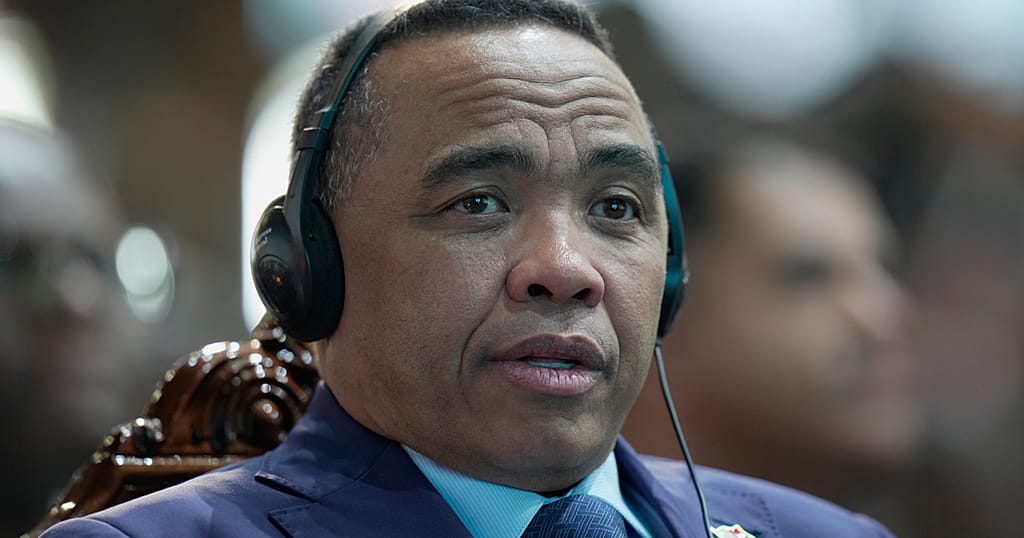
Senegal's Constitutional Council on 10 July 2026 struck down a bill passed by parliament last week that would have rebalanced authority away from the presidency and toward the legislature. According to AfricaNews Agency, the council rejected the parliamentary resolution on constitutional revision outright, the most consequential constitutional ruling the country has seen in this political cycle.
The ruling lands at a moment of institutional confrontation that has been building since the March 2024 election returned the executive to working order. The question the council was asked to settle is not a procedural one: it is whether the National Assembly can, by ordinary statute, redefine the distribution of powers between itself and the president — or whether such a reordering requires the heavier machinery of a referendum.
What the council actually ruled
The council's decision, reported on 10 July 2026 at 06:46 UTC via the AfricaNews RSS feed and amplified at 14:37 UTC by the AfricaNews Agency Telegram channel, was categorical: the parliamentary resolution purporting to revise the constitution was rejected. The substance of the bill, as described in the same reporting, was to strengthen the legislature at the expense of the presidency — a deliberate tilt away from the strong-executive architecture that has defined Senegalese governance since independence.
Senegal's Constitutional Council sits as the guardian of the fundamental law. Its judgments are not advisory. By ruling against the resolution in its entirety, the council has not merely sent the bill back for amendment; it has closed the door on the route the assembly chose.
The political backdrop
The legislative bid did not emerge in a vacuum. Since the 2024 transition restored competitive politics after years of institutional turbulence, parliament has pushed repeatedly to formalise its prerogatives — committee oversight powers, the right to compel testimony from ministers, a more muscular role in budgetary review. Some of those demands sit comfortably within the existing constitution. Others, including the provisions now struck down, tread on ground the drafters reserved for the higher bar of a constitutional amendment.
The argument inside the majority that backed the bill is straightforward: the country needs checks that do not depend on the personal restraint of whoever occupies the palace. The argument from the executive side, which the council has now endorsed in effect, is that the constitution already lays out how fundamental rebalancing must occur, and a parliamentary majority cannot substitute its preferred procedure for that.
Why this is not a routine constitutional dispute
Two readings are in circulation. The first holds that the council has simply enforced procedure: ordinary legislation cannot rewrite the constitutional architecture of the state, and the assembly overreached. Under that reading, the ruling is technical and the political question remains live — parliament can return to the issue through the harder road of referendum or genuine constitutional amendment.
The second reading is structural. It treats the council's intervention as a marker that certain institutional lines will not be moved by a parliamentary majority, however large. That framing reads the ruling as a constraint on the legislative branch's capacity to renegotiate executive authority, regardless of who commands a majority in the hemicycle. Both readings point in the same practical direction in the short term; they diverge sharply on what the council has actually foreclosed.
The dominant framing — that the council applied the constitution as written — holds because the alternative would require reading the ruling as a political act dressed in legal language, a claim the sources available do not support with any specificity.
What to watch next
The practical stakes are concentrated in three places. First, whether the parliamentary leadership treats the ruling as terminal or as a roadmap to a different procedural vehicle, including the possibility of a referendum that would force a public verdict on the rebalancing question. Second, whether the executive interprets the moment as licence to govern with a lighter legislative hand than the post-transition settlement implied — the very posture the bill's sponsors said they were trying to constrain. Third, whether the council's intervention narrows or widens the space available to opposition forces ahead of the next electoral cycle.
What the sources do not specify is the breakdown of the council's reasoning or the vote margin inside the institution. Those details will determine whether the ruling is read as a narrow jurisdictional objection or a broader statement about the limits of parliamentary power in this constitution. Until the full text of the decision is public, the second reading cannot be ruled out — and it is the reading that would matter most for the legislative calendar later this year.
For now, the council has spoken. Whether the assembly accepts the speaking as the end of the matter is the next fight over a constitution that has, for two and a half years, been doing the work of keeping the republic inside its own lines.
This publication framed the ruling as an institutional act with downstream political consequences rather than as a personal contest between branches, because the source material describes a constitutional decision, not a partisan one.
Wire provenance
This editorial synthesis draws on the following public wire/social posts:
- https://t.me/s/AfricaNewsAgency