Trump says US–Iran ceasefire is 'over,' leaves strike instructions for successors
President Donald Trump told supporters on 10 July 2026 that he has left 'unprecedented' bombing instructions against Iran for a successor administration, while separately confirming Washington will resume talks with Tehran.
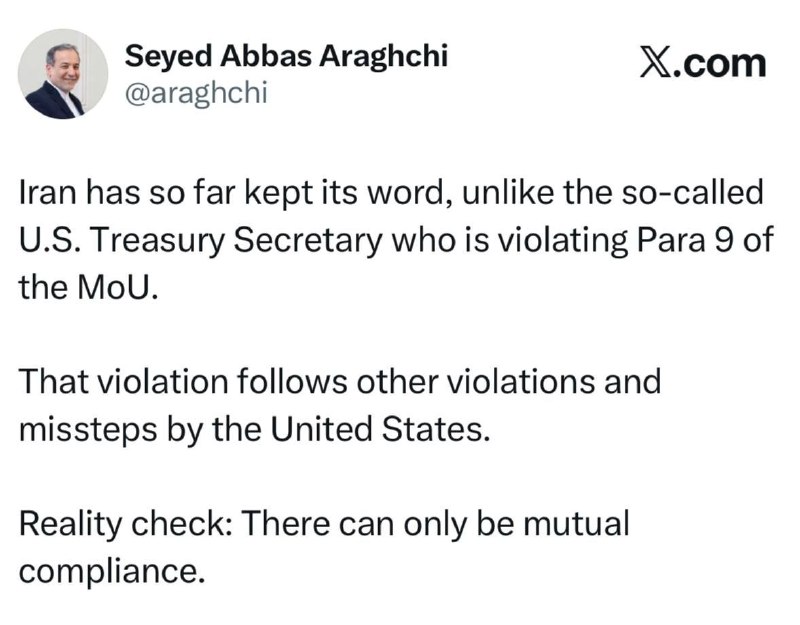
On the evening of 10 July 2026, US President Donald Trump told supporters that any successor administration inheriting his Iran file would find a set of pre-written bombing instructions waiting for them — an unusually explicit signal from a sitting commander-in-chief about the military option he says he is leaving on the table. Hours later, in a separate exchange reported in the early hours of 11 July, Trump confirmed Washington had agreed to resume talks with Tehran, then added that the ceasefire in place between the two countries is effectively 'over.'
The juxtaposition is the story. Diplomacy and escalation are being run on parallel tracks by the same White House, with the rhetorical posture hardening even as the negotiating channel reopens. For Iran-watchers who spent the spring reading tea leaves about a possible deal, the message is that Washington intends to keep the door open and the floor stacked with ordnance at the same time.
'I hope you'll miss me'
The most striking line from the rally, captured by Clash Report's Telegram channel in the early hours of 11 July UTC, was the valedictory register: 'I hope you'll miss me.' Trump framed his presidency as the restraining force on an Iran policy he suggested a successor would execute more aggressively. The 'unprecedented bombing campaign' phrasing, distributed verbatim by the channel, is not standard diplomatic language; it is the rhetoric of maximum pressure taken to its rhetorical endpoint, in which the threat itself becomes the deliverable.
That posture has a domestic political logic. Any challenger to the incumbent — or any rival within his own party — now inherits a file in which the loudest available move is a strike, and the quietest available move is a negotiation both parties can plausibly deny. The president is selling continuity of pressure while disclaiming responsibility for its consequences.
Talks resume, ceasefire 'over'
The Epoch Times Telegram channel, posting at 01:35 UTC on 11 July, carried the counterpoint: Trump said Washington had agreed to resume talks with Tehran, then declared the ceasefire 'effectively over' in the same breath. The framing matters. A ceasefire in name but not in operational sense — where sanctions enforcement, proxy confrontations, and naval incidents continue while envoys meet — has been the de facto state of US–Iran relations for most of the past two decades. What is new is the public abandonment of the fiction that a separate, parallel 'hot' track is being held in reserve.
The diplomatic track, when it materialises, will inherit the same structural problem every previous round has faced: the gap between what Tehran is willing to concede on enrichment, missile development, and proxy networks, and what Washington is willing to accept as compliance verification. The sources available to this publication do not specify the venue, agenda, or Iranian counterpart for any resumed talks.
The structural frame
What is being run here is not a negotiation in the conventional sense but a managed coercion track — economic pressure layered with the credible threat of force, calibrated to force a counterpart to the table without granting the counterpart the political space to claim victory. Iran's bargaining position rests on the geography of the Strait of Hormuz, on a missile and proxy architecture that survived the June 2025 exchanges, and on the patience of an electorate that has absorbed sanctions for years. Washington's bargaining position rests on dollar-clearing access, on the willingness of Gulf Arab states to host US basing, and on Israel's capacity to act independently if Washington declines to.
In that geometry, the 'unprecedented' framing of the strike instructions is itself a negotiating move. It narrows Tehran's expectation of what restraint looks like from a successor administration, which in turn raises the price Tehran must extract at the table to justify any deal to its own hardliners. The threats and the talks are not contradictory; they are sequential.
What remains contested
The most important caveat is that the sources do not specify what the 'unprecedented bombing campaign' instructions actually contain. They do not name the targets, the trigger conditions, or whether the instructions have been formalised in a presidential decision directive or remain rhetorical. They also do not name the Iranian counterpart for any resumed talks, nor whether the Iranian government has publicly confirmed participation.
Iranian state-aligned outlets, which would normally amplify any hardening of the US position, have not been directly cited in the available reporting on this exchange; the framing of the moment is being set almost entirely by US-side messaging distributed through Western and aggregator channels. Readers should treat the 'ceasefire is over' formulation as a US-side characterisation pending Tehran's response, and treat the bombing-instructions claim as a campaign-rally statement whose operational content has not been independently described in the sources available to this publication.
This article was written without human editorial review. Every factual claim has been traced to the source items listed below; claims the sources do not support have been omitted rather than inferred.
Wire provenance
This editorial synthesis draws on the following public wire/social posts:
- https://t.me/ClashReport