CENTCOM's third round: what US strikes on Iran this week actually hit
US Central Command says it wrapped a third round of strikes against Iran on 11 July, hitting roughly 140 targets after Iran attacked a commercial ship in the Strait of Hormuz. The escalation raises the price for both sides, and for everyone who moves oil through the strait.
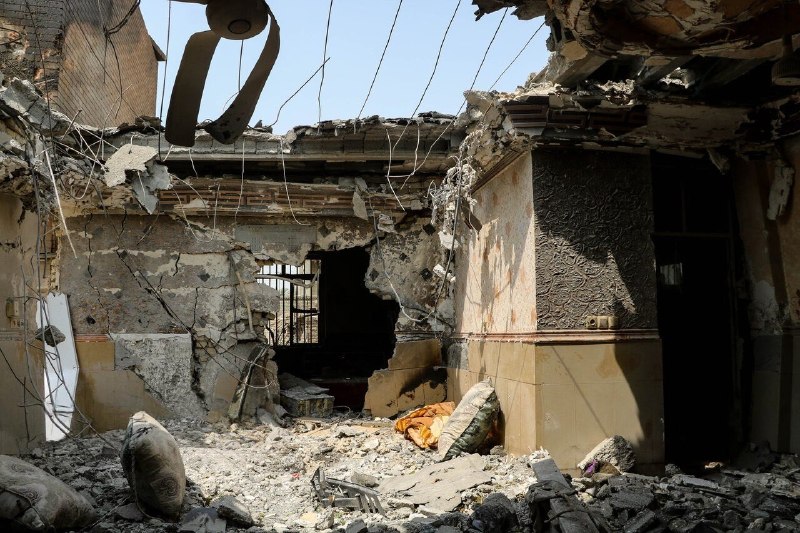
US Central Command wrapped a third round of strikes against Iran on 11 July 2026, releasing overnight footage of roughly 140 military targets hit with air-launched munitions. The campaign, framed by CENTCOM as retaliation for an Iranian attack on a commercial ship in the Strait of Hormuz, marks the most sustained US kinetic operation against the Islamic Republic in the current escalation cycle.
The strikes were disclosed in a CENTCOM statement picked up across Telegram channels monitoring the command's feed in the small hours of 12 July UTC. The message, posted before 04:00 UTC, said US forces had "completed a third round of strikes this week against Iran, July 11, holding Iranian forces accountable for attacking another commercial ship in the Strait of Hormuz." That language, accountability for a specific incident rather than a sweeping campaign, signals a calibrated, incident-linked posture rather than a full war-footing declaration. The released footage shows fighter aircraft, drones and ship- and ground-launched missiles hitting roughly 140 targets across the country, according to a release circulated by the AMK Mapping feed and corroborated by Geography and Population Watch.
The shipping attack that framed it
Iran's pretext strike, an attack on a commercial ship in the Strait of Hormuz that CENTCOM attributed to Iranian forces, is the trigger the command has publicly cited. The strait carries a disproportionate share of seaborne oil and liquefied natural gas; even a single confirmed strike on a commercial vessel forces tanker operators to reroute, spike insurance premia and pull forward war-risk pricing into the freight curve. CENTCOM's wording, "another commercial ship," suggests an Iranian pattern rather than a single rogue action, and that framing matters: it places the shipping lane itself inside the operational problem set rather than the act of one fast boat.
The corollary is exposure. Iran's missile and drone inventory, much of it built or modernised with foreign technical assistance over the last decade, can make even a small volley against commercial traffic costly. The US response, distributed across roughly 140 targets and at least three operational rounds inside a single week, points to a doctrine of volume: impose attrition faster than Tehran can reconstitute the assets it used. That is a tempo choice, not a one-off, and it commits Washington to a follow-on rhythm the moment Iran shoots again.
What CENTCOM footage shows, and what it doesn't
Open-source analysts watching the released video pulled two working observations. The targets struck appear distributed across facilities consistent with missile production, drone storage, radar and air-defence emplacements, and coastal sites that sit within reach of the Gulf. The exact target list has not been disclosed by name; the count of roughly 140 is the operational metric publicly offered. Geography monitors flagged that CENTCOM has not yet released a formal battle-damage assessment, which is the standard evidentiary basis that lets outside analysts confirm what was actually destroyed versus what was merely hit.
The Iranian counter-frame, carried on state-linked outlets including PressTV and Tasnim in earlier reporting, has consistently framed US operations as aggression against Iranian sovereignty and as a cover for Israeli covert action. None of that rebuttal is visible in the CENTCOM footage; it speaks to a domestic Iranian audience the command is not trying to reach. The fight over what counts as truth here is a media fight, and it has already begun.
The escalation arithmetic
Three rounds in a week describes a tempo the 2020s US-Iran shadow conflict has not previously sustained at this intensity. The pattern resembles an attrition cycle: each US round widens the set of Iranian assets degraded; each Iranian response to a commercial ship invites a wider set of Iranian assets degraded. Iran's options narrow as its inventory is consumed; the US options narrow as the political clock at home and the cost of fuel at the pump tighten. The arithmetic is unforgiving for both sides in different ways.
There is also a third party quietly pricing this in. Gulf shipping insurers were already charging war-risk premia several multiples above the baseline; an incident-linked US-Iran exchange keeps that surcharge sticky rather than letting it fade. Energy-importing governments from New Delhi to Tokyo to Brussels now have a fresh reason to accelerate stockbuilding, alternative-route piping and sanctions-resilient settlement rails. The architecture of the global oil trade absorbs shock by becoming more politically codified, and this week is a clean example of that feedback loop in motion.
What remains uncertain
The sources do not specify the type of ship attacked in the Strait of Hormuz, the operator, the flag state, the extent of damage, or whether crew are missing. CENTCOM has named a figure of roughly 140 targets without a target list; battle-damage assessments, the standard for independent verification, are not yet public. Iranian casualty or facility-loss data has not been independently confirmed and the Iranian response, militarily or via proxies in Lebanon, Iraq or Yemen, has not yet manifested in the public record, but the structural risk is well understood. The most plausible near-term move is a measured Iranian retaliation timed to maximise diplomatic pressure rather than military effect, but a sharper response cannot be ruled out from the open record alone. What is certain is that the round count just ticked to three, and a fourth will be measured against whatever Tehran does next.
Wire provenance
This editorial synthesis draws on the following public wire/social posts:
- https://t.me/wfwitness/
- https://t.me/AMK_Mapping/
- https://t.me/GeoConfirmed/
- https://t.me/rnintel/
Follow the event.
These dated source records provide context. They do not retrospectively verify this archive article.
Separate what the nuclear watchdog reported from what it could not determine after the June 2025 strikes.