Iran's missile reach reaches Bahrain as sirens sound and a Gulf port burns
Sirens sounded across Bahrain in the small hours of 12 July 2026 as Iranian missiles were reported over the Gulf, while state television acknowledged two explosions at the southern Iranian port of Jask.
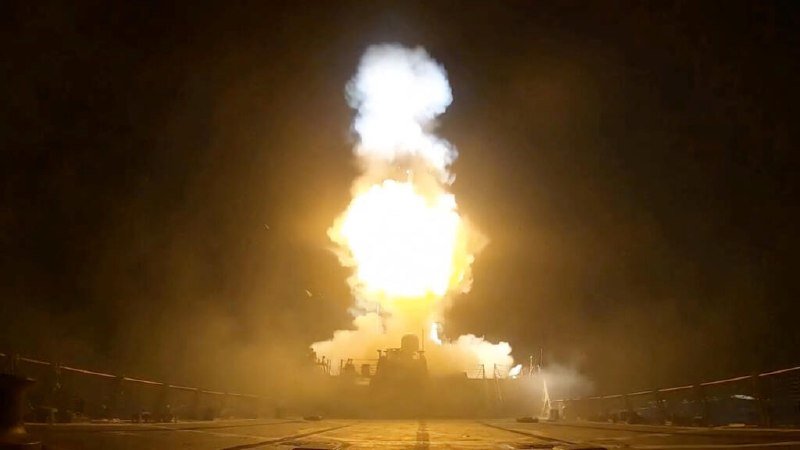
At 02:33 UTC on 12 July 2026, air-raid sirens sounded across Bahrain, the first such alert in a confrontation that, within the hour, would put Iranian missiles over the Gulf and two explosions at the Iranian port of Jask on state television. A recording sent to a regional monitoring channel and circulated shortly after 03:04 UTC depicts the detonation of an Iranian missile on Bahraini territory, framing a sequence in which Tehran's reach and the small Gulf state's exposure are both on the page at once.
What is being tested tonight is not whether Iran can strike Bahrain, but whether the wider Gulf can absorb a multi-front missile campaign without a structural break in the US-led security architecture that has held the waterway open for four decades. Bahrain hosts the US Navy's Fifth Fleet and Naval Forces Central Command; Manama's silence in the minutes after the sirens, captured by AMK Mapping at 03:03 UTC, suggested a government unwilling to amplify a moment that may have come from a miscalculation as easily as from a deliberate order.
A Gulf-wide alert in three minutes
The operational shape of the night was unusually compressed. At 02:32 UTC, the Middle East Spectator Telegram channel posted a single-line flash: sirens in Bahrain. Sixty seconds later, AMK Mapping, a Syria-focused field-monitoring channel that has expanded its coverage to Gulf flashpoints, reported sirens sounding in Bahrain due to the threat of an Iranian missile or drone attack. A minute after that, the same channel posted again: total radio silence from Bahrain, an editorial judgment on the absence of any official Manama statement in the immediate window. By 03:04 UTC, GeoPolitical Watch had received and circulated a recording from a local source showing what it described as the explosion of an Iranian missile in Bahrain. The cadence, three alerts in roughly thirty minutes, is the rhythm of an active air-defence event rather than a single inbound projectile.
The Jask file moves on a parallel track. At 01:29 UTC, Al-Alam Arabic, the Iranian state broadcaster's Arabic-language outlet, carried a breaking bulletin citing Iranian television reporting two explosions at the port of Jask, a strategic oil terminal on the Strait of Hormuz in Hormozgan Province. The two tracks together are consistent with the early shape of a missile exchange rather than a one-sided strike: one set of detonations inside Iran, another claimed on Bahraini soil, sirens and silence in between.
What the official wires have not yet said
A first-pass reading has to reckon with what is missing. No mainstream wire service, no Western or Gulf government communications office, has been cited in the public thread confirming or denying the Bahrain impact as of the reporting window. The Bahraini information ministry, normally quick to acknowledge or deny incidents affecting the US Fifth Fleet's host, has not posted. The US Naval Forces Central Command public affairs feed has not surfaced a corroborating statement in the inputs available to this publication. The Iranian mission to the United Nations and the foreign ministry in Tehran have not been quoted in the immediate thread. Al-Alam Arabic's Jask bulletin is sourced to Iranian television itself, which means it carries the evidentiary weight of a state broadcaster describing events inside its own country, useful as a data point on what Tehran is willing to put on the record, but not an independent confirmation.
That asymmetry is itself the story. The only actors currently on the public record are Telegram channels and an Iranian state outlet, and the only institutional voice is the broadcaster in Tehran. The credible path through the next few hours runs through Manama, through US Central Command, and through the small set of maritime authorities that monitor the Strait. Until one of those speaks, the working hypothesis is that an Iranian missile did detonate on Bahraini soil and that the Jask explosions are either a retaliatory strike against Iranian infrastructure or the visible residue of Iranian air defence at work, and this publication will revise as the official ledger fills in.
The structural frame: a Gulf that has run out of distance
Read against the last eighteen months of escalation, the Bahrain alert closes a loop. Iran's missile and drone arsenal has been used against Israel, against Iraq's Kurdistan Region, and against shipping in the Red Sea and the Bab el-Mandeb; Bahrain's appearance on the target list puts a permanent US naval base inside the envelope of an Iranian first strike for the first time. The geographic argument that ran through Western planning assumptions, that the Gulf was too shallow a theatre for escalation because the US Fifth Fleet could deter anything Iran attempted, has been retired by the night's events in a way that no policy paper has yet acknowledged.
The counter-narrative holds that the Bahrain incident, like the Jask blasts, sits inside the same tit-for-tat logic that has governed the Strait of Hormuz since 2019. Iran's pattern has been to probe, to absorb the response, and to normalise a new boundary for its deterrent. The structural critique is that this logic only works when both sides agree on what counts as a probe; once the boundary moves to a US-Fleet-host state, the Western response cannot be calibrated the same way, because the audience for the response is no longer just Tehran but the wider Gulf monarchies whose confidence in the American umbrella is now on the table.
What to watch before sunrise
Three signals will resolve the night's ambiguity. First, a Bahraini information ministry statement, or a US Naval Forces Central Command read-out, that places the incident inside or outside Iranian responsibility. Second, satellite or shipping-traffic data on the Strait of Hormuz that shows whether commercial transit has been suspended, a pattern that would indicate Bahrain is not the only Gulf capital on alert. Third, an Iranian foreign ministry briefing, scheduled or extraordinary, that either claims the strike or frames it as the work of an Iranian-aligned proxy operating outside Tehran's direct command.
The stakes are concrete: the Fifth Fleet's continued operation out of Mina Salman depends on a Bahraini government that is publicly willing to host it under fire. The Gulf monarchies' confidence in extended US deterrence depends on a Washington response that is faster than the next siren. And Tehran's calculus on the cost of escalation depends on whether the night's events are absorbed as another probe or read as the crossing of a line that invites a different category of reply. The next twelve hours will tell which of those registers this night is being filed under.
This publication is sourcing the night from regional Telegram channels and Iranian state media because no mainstream wire has yet broken on Bahrain. As Western and Gulf official sources publish, Monexus will revise the record on those channels.
Wire provenance
This editorial synthesis draws on the following public wire/social posts:
- https://t.me/GeoPWatch
- https://t.me/AMK_Mapping
- https://t.me/AMK_Mapping
- https://t.me/Middle_East_Spectator
- https://t.me/alalamarabic