IRGC shipping strikes, B-2 talk and bunker alerts: a week of signals in the Gulf
A Telegram OSINT account flags IRGC strikes on shipping, hints at B-2 movements, and warns the author may soon need a shelter. The signals point to a week the markets have not priced.
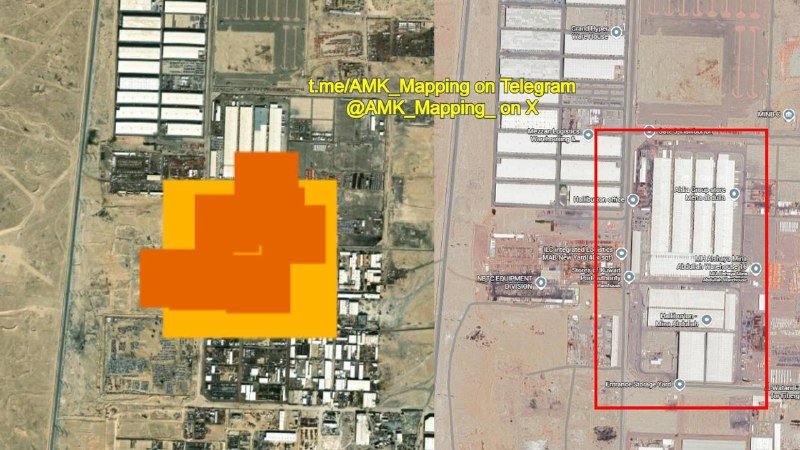
At 23:04 UTC on 11 July 2026, the open-source intelligence channel Open Source Intel posted that Iran's Islamic Revolutionary Guard Corps was, in its words, "striking ships again" and that "you'll be watching a very interesting week ahead this week." Thirty minutes later, at 23:34 UTC, the same account posted a one-line update: "Response has begun." By 00:35 UTC on 12 July 2026 the channel was speculating that American B-2 stealth bombers might deploy, "and when they do, they are going to come out of nowhere," before adding that its author would "not be surprised" at having to enter a shelter within the week.
Read together, the four messages sketch a week in which an Iranian auxiliary force is hitting commercial traffic in or near the Persian Gulf, a US counter-response is already underway, and the possibility of deep-penetration American air power is back in the conversation. The sourcing is narrow, anonymous, and intentionally vague; the operational picture being drawn is anything but.
What the channel is claiming
The four posts compress a great deal into a small footprint. The first frames the week, the second announces retaliation has started, the third reintroduces the B-2 as a possible delivery vehicle for that retaliation, and the fourth names the personal risk the author is running. None of the messages is attributed to an institution, none cites a specific vessel, incident coordinates, or strike package, and none links to corroborating radar data, AIS gaps, or satellite imagery. The reader is being asked to follow the channel's sequencing rather than verify a discrete event. That sequencing is itself the story: a build-up, a threshold, a stealth option, a shelter.
The Iran file is unusually well-served by telemetry, both commercial and military. AIS gaps on tankers transiting the Strait of Hormuz, infrared signatures picked up by the NASA / NOAA / ESA constellation, and Lloyd's List casualty reports have, over the past three years, given reporters a way to check Iranian proxy claims against the maritime record. The Open Source Intel posts name none of those datasets.
Why B-2 talk is the signal inside the noise
The mention of the B-2 matters less than the timing. The Spirit fleet is based at Whiteman Air Force Base in Missouri and is the only US platform purpose-built to put a 30,000-pound payload through a contested integrated air defence network and return. When an OSINT account publicly floats the possibility of a B-2 sortie into the Gulf, it is usually reaching for one of three reads: a decapitation strike against hardened command-and-control nodes buried in the Zagros, a pre-strike posture change designed to move Iranian ballistic missile batteries, or signalling meant to be picked up by Tehran via second-order channels rather than by the audience on the platform. The channel's own description of the bombers arriving "out of nowhere" leans toward the third, while its shelter warning hedges toward the first.
The Iranian system has spent two decades hardening exactly the kind of facilities a B-2 would be tasked with destroying: deep-cut missile cities, dispersed IRGC Navy fast-boat pens, and the leadership bunker complex around Tehran. The relevant question is not whether the US has the tools; it is whether a one-week window of telegraphed signalling, retail OSINT chatter, and open Telegram threats is the precondition for, or the obstacle to, their use.
The shipping lane the markets have already forgotten
Through the spring of 2026, the Strait of Hormuz has been the quiet line on commodity desks. Brent has traded in a $74-$82 range, war-risk premia on Gulf of Aden transits have compressed, and Chinese refiners have continued to lift Iranian crude at a steady clip through legitimate and shadow channels. Iranian irregular maritime warfare, conducted by the IRGC Navy and its proxy flotillas, has been episodic rather than sustained. The channel's reference to "IRGC striking ships again" suggests the operational tempo is being ratcheted up just as the market has stopped paying for the risk.
This is the asymmetry that the propaganda of both sides usually obscures: shipping insurance, freight rates, and the political cover for escalation do not move in real time. They reprice when the streak of incidents is long enough to clear the threshold at which the Lloyd's Market Association's Joint War Committee reloads its listed areas. A channel that flags a renewed sequence of attacks is implicitly betting that the next Lloyd's revision is the trade.
What we do not know
Four things remain genuinely unsettled by the four posts. The specific vessels, if any, that have been struck. The state of any US force posture change in the past twelve hours. Whether the IRGC action is centrally directed or the freelancing of a regional command. And whether the channel itself is reading primary feeds or amplifying second-hand chatter. Each of those gaps is, in itself, a piece of information. The week ahead will determine which one closes first.
This publication frames OSINT signals against the structural backdrop they describe; the wire outlets are still waiting on attribution.
Wire provenance
This editorial synthesis draws on the following public wire/social posts:
- https://t.me/s/osintlive
- https://t.me/s/osintlive
- https://t.me/s/osintlive
- https://t.me/s/osintlive
- https://en.wikipedia.org/wiki/Northrop_Grumman_B-2_Spirit
- https://en.wikipedia.org/wiki/Strait_of_Hormuz
Follow the event.
These dated source records provide context. They do not retrospectively verify this archive article.
Separate what the nuclear watchdog reported from what it could not determine after the June 2025 strikes.