Israeli officials praise Lindsey Graham as 'greatest friend' after senator's death
Israel's internal security minister and President Herzog led the condolences for the South Carolina senator, whose hawkish posture toward Tehran shaped two decades of US Middle East policy.
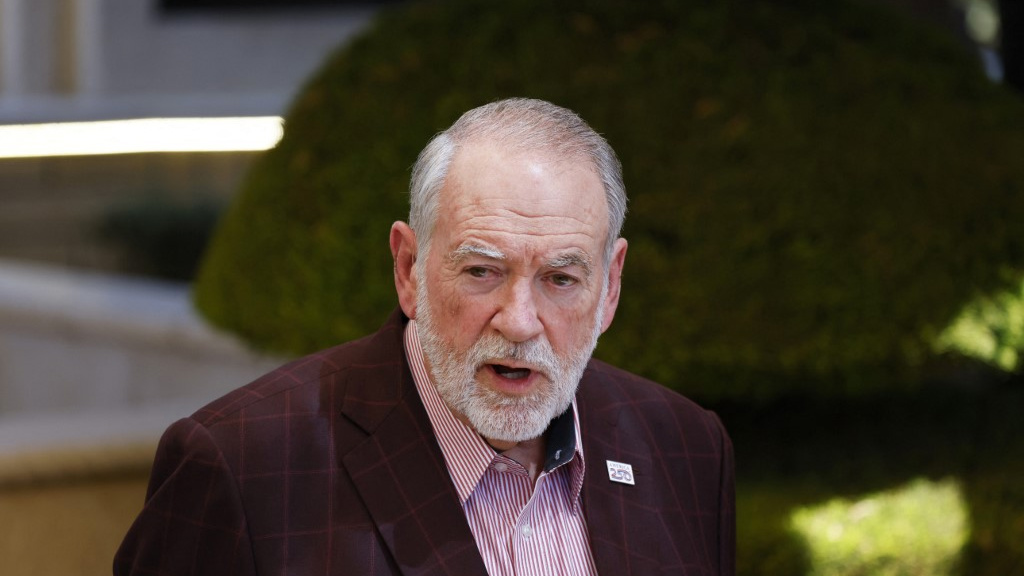
Israel's internal security minister Ben Goyer declared on 12 July 2026 that "Israel has lost one of its greatest friends," responding to the death of US Senator Lindsey Graham, the South Carolina Republican whose two-decade hawkish stance toward Tehran made him one of the most reliable pro-Israel voices in the United States Senate. The tribute, carried by the Iranian state-affiliated outlet Tasnim, came hours before Israeli President Isaac Herzog added his own message, telling the public he was "heartbroken" by Graham's death and casting the senator as a central American ally whose imprint on Middle East policy will outlast his Senate tenure. The dual messages, dispatched within an hour of each other, are the most concrete signal yet of how Tel Aviv intends to memorialise a lawmaker whose office functioned, for years, as one of the loudest megaphones in Washington for a more confrontational posture toward the Islamic Republic.
Graham's death closes a chapter in US Middle East politics in which a single senator could reliably move the conversation on Iran, on military aid to Israel, and on sanctions architecture. The tributes from Goyer and Herzog do not merely honour a foreign dignitary. They are an early, public marker of the political vacuum the senator leaves behind on Capitol Hill, and an indication that the Israeli government intends to treat that vacuum as a relationship to be actively managed rather than mourned.
The condolence as foreign policy
Tasnim, the Iranian outlet that first published Goyer's reaction at 07:34 UTC on 12 July 2026, framed the tribute as a moment of loss for "the Zionist regime," a label Iranian state media uses for Israel. That framing is itself part of the story. By routing the Israeli minister's condolence through Tehran's preferred translation service, the news cycle in Iran receives the message twice: once as a fact about Israel losing a friend, and once as confirmation that Israel's friends in Washington are dwindling in number. President Herzog's own statement, reported by Fars News at 07:35 UTC, was carried with the same editorial overlay. The optics matter. Israeli leaders rarely address the domestic Iranian audience directly; Iranian outlets rarely relay Israeli voices without spin. Graham's death produced a rare alignment in which both sides were willing to publish, in near real time, the same set of statements.
The mechanics reveal a small but durable pattern in how the region's media ecosystem handles senior American deaths. When a US official who took a hard line on Iran dies, Iranian state media treats the condolence cycle as confirmation of a thesis it has argued for years: that the Israel–US relationship is a partisan asset of a shrinking political class, not a national consensus. Israeli officials, in turn, treat the condolence cycle as an opportunity to remind Washington, and its remaining pro-Israel legislators, that the relationship still has institutional defenders. The exchange is conducted through grief. It is still foreign policy.
What Graham actually delivered
Graham's legislative record on Israel and Iran was unusually consistent for a Senate career that spanned five presidential administrations. He was a steady vote for annual US military aid packages to Israel, a vocal backer of the maximum-pressure sanctions regime on Iran, and an early champion of the 2018 withdrawal from the Joint Comprehensive Plan of Action. He also travelled frequently to the region, including reported visits to Israeli military headquarters during periods of escalation in Gaza and along the northern frontier. Goyer's choice of the phrase "greatest friends" is therefore not ceremonial. It maps onto specific policy outputs: aid authorisations, veto-proof majorities on sanctions, and a willingness to publicly align with Israeli red lines on Iranian nuclear enrichment that several of his Senate colleagues preferred to leave unstated.
That alignment carried a domestic cost Graham bore visibly. He weathered criticism from both ends of the US political spectrum for what critics called a reflexive posture toward the Israeli government, and he responded by leaning into the role rather than away from it. The Herzog condolence is, in that sense, a receipt for a relationship the Israeli presidency considers a return on sustained diplomatic investment.
The structural frame, in plain terms
When a senior American lawmaker dies, three things happen at once. The first is the condolence cycle described above: allied governments state their loss, adversaries state their interpretation of the loss, and the policy community begins to draft the obituary in real time. The second is the succession question: who in the chamber inherits the vacated committee seats, the donor relationships, and the speaking slots on the Sunday shows. The third, and slowest, is the rebalancing: which of the deceased's policy positions were personal to them, and which are durable features of the institution they served.
Graham occupied an unusual position in that taxonomy. His stance on Iran was personal, but the votes he organised were institutional. The condolence messages from Goyer and Herzog suggest that Tel Aviv reads the personal and institutional layers as inseparable. If that reading holds, the immediate next step for Israeli diplomacy is not mourning but identification: finding the senators, many of them less publicly identified, who will reliably staff the relationship Graham sustained for two decades. The search has, in effect, already begun.
Stakes and what to watch next
The political stakes inside Israel are modest in the short term. Graham's death does not change the aid pipeline, the existing sanctions architecture, or the operational tempo of the US military presence in the region. The medium-term stakes sit in Washington. The Senate Foreign Relations Committee and the Appropriations defense subcommittee, both of which Graham shaped, will need new advocates for the same posture. The Israeli government, judging by the speed of the condolence cycle, intends to be a presence in that transition.
Two things to watch in the coming weeks. First, whether Prime Minister Benjamin Netanyahu issues a personal statement, and whether it goes beyond the institutional language used by Goyer and Herzog. A prime ministerial tribute would signal that Tel Aviv intends to treat the relationship as a head-of-state file, not a portfolio matter. Second, whether Republican senators who share Graham's voting record on Iran begin to coordinate a public posture that visibly fills the gap. The most reliable indicator of how durable Graham's alignment was will not be the eulogies, which are uniform. It will be the first contested vote on a new Iran sanctions package, and the count.
This piece draws on Iranian state-affiliated reporting of the condolence cycle as the only verified public record of Goyer's and Herzog's statements at the time of writing. The Israeli government's own communications channels had not, as of 12 July 2026, published the full text of either statement in English, and Monexus has therefore relied on the Iranian-language relay for the wording quoted above.
Wire provenance
This editorial synthesis draws on the following public wire/social posts:
- https://t.me/JahanTasnim
- https://t.me/FarsNewsInt
- https://t.me/FarsNewsInt
- https://t.me/JahanTasnim
Follow the event.
These dated source records provide context. They do not retrospectively verify this archive article.
Separate what the nuclear watchdog reported from what it could not determine after the June 2025 strikes.