Strait of Hormuz flares as CENTCOM launches third round of strikes against Iran
IRGC activity around the Strait of Hormuz coincided with the expiry of a US-set deadline; within hours CENTCOM said it had begun a third round of strikes against Iran this week after IRGC forces attacked a merchant vessel.
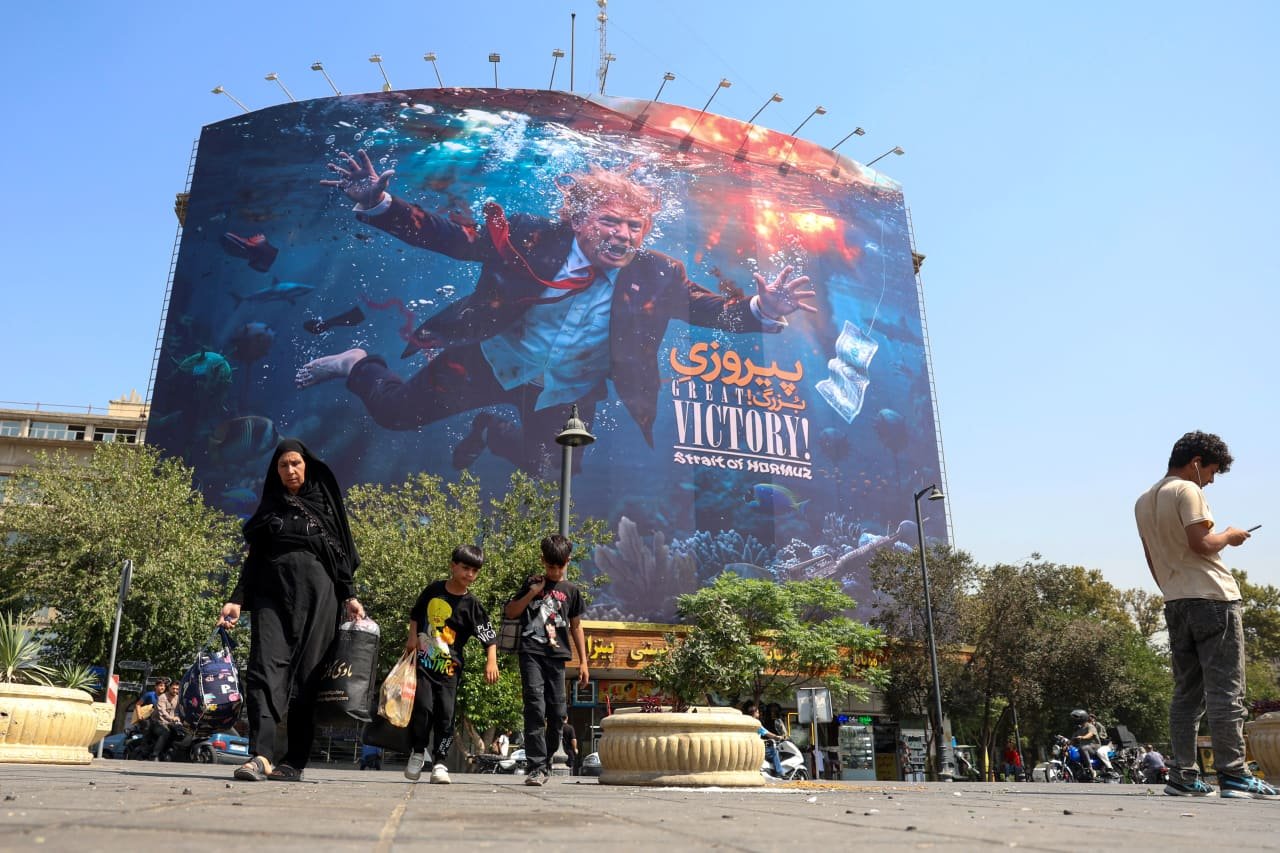
At 7:15 p.m. Eastern Time on 11 July 2026, US Central Command said its forces began the third round of strikes this week against Iran, hours after the Islamic Revolutionary Guard Corps declared activity in the Strait of Hormuz at the close of a deadline set by the US president. CENTCOM's statement, mirrored across multiple Telegram channels within minutes of release, said the action followed an IRGC attack on the merchant vessel M/V GFS Global. The sequencing, an Iranian announcement, then a US strike announcement within roughly two hours, points to a cycle of escalation in the world's most consequential oil chokepoint that is now operating on automatic.
The pattern that has emerged since the start of the week is straightforward. A deadline expires. Iranian state-adjacent channels publish statements about the Strait. Within hours, CENTCOM publishes a statement, and war-monitoring accounts republish it almost verbatim. Each round draws on the previous round's rhetoric. None of the channels that pushed the CENTCOM text on Friday, including Clash Report, GeoPWatch, and DDGeopolitics, provided independent confirmation of the strikes; they relayed the command's own account, sometimes with editorial dismissal, sometimes without.
The two statements, side by side
The IRGC statement, carried by Tasnim, framed its activity as a response to the "deadline announced by the terrorist president of the United States of America," the phrasing used in the channel's English-language text on 11 July at 22:30 UTC. The text characterised the Strait as a scene of Iranian action without elaborating, in the excerpts circulating, on what forces were moved or what vessels, if any, were boarded or escorted. CENTCOM's statement, circulated from 23:41 UTC, attributed the US action specifically to an IRGC attack on the M/V GFS Global, naming the vessel, the time of attack, and the triggering event.
The two accounts do not yet reconcile. CENTCOM's version treats the M/V GFS Global as a discrete incident requiring retaliation. The IRGC framing, as carried by Tasnim, treats the entire Strait as the operational theatre in response to a political deadline. Both versions may be true; a vessel attack and a wider posture announcement are not mutually exclusive. The evidence available across the Telegram sources does not settle whether the vessel incident preceded or followed the Iranian statement, nor does it confirm the crew's nationality, flag, or cargo. Those gaps matter because the legal characterisation of what happened, piracy under international maritime law versus a sanctioned interdiction versus a kinetic strike, depends on them.
Why the Strait, why now
Roughly a fifth of global oil passes through the Strait of Hormuz on any given day. Even a partial disruption does not need to halt traffic to move the price; the option value of closure is what markets price. Tehran does not need to close the Strait to weaponise it. Announcements of activity, in the right cadence, do much of the same work, especially when paired with attacks on named commercial vessels that raise underwriters' risk premiums. The CENTCOM strikes raise the cost of that strategy. They do not eliminate it.
The structural read is that both sides have converged on a tit-for-tat logic in which maritime incidents serve as both the trigger and the pretext for escalation. Each round of strikes resets the clock for the next. The IRGC statement uses the language of deadlines to put the burden of de-escalation on Washington; CENTCOM's statement uses the language of unprovoked attack to put the burden on Tehran. Neither framing leaves much room for the merchant shipping that actually moves through the water.
What remains contested
The sources circulating on Telegram on 11 July are not independent. Tasnim is Iranian state media; its reporting on the IRGC should be read as the IRGC's own framing. The CENTCOM statement was published by the US military and relayed by war-monitoring channels, including at least one that dismissed it as "PR slop" while still reproducing the text in full. There is no wire-service confirmation in the immediate aftermath of either the IRGC activity or the CENTCOM strikes in the material available on 12 July. The vessel named, the M/V GFS Global, has not been independently confirmed as attacked in the sources reviewed; CENTCOM's own statement is the sole basis for that claim as of publication.
The most plausible alternate read of the day's events is that the IRGC announcement was calibrated for a domestic Iranian audience on the eve of, or in the wake of, a US-imposed deadline, and that CENTCOM's strike announcement was timed to land in the same news cycle. Under that reading, both actions were choreographed for messaging rather than for operational effect. The reason the dominant framing holds is the named vessel. Specific vessel incidents are not the kind of detail that gets invented for messaging alone; they are the kind that get leaked from operational channels and that lawyers later have to account for. The burden of proof on the M/V GFS Global rests with CENTCOM, and the evidence to discharge that burden is not yet public.
This publication framed the day's events as a single escalation cycle rather than two separate stories, on the grounds that the IRGC announcement and the CENTCOM strike announcement share a trigger, a clock, and a theatre. Wire reporting on 12 July is likely to consolidate the same sequencing once vessel tracking and insurer data come in.
Wire provenance
This editorial synthesis draws on the following public wire/social posts:
- https://t.me/tasnimplus
- https://t.me/rnintel
- https://t.me/ClashReport
- https://t.me/GeoPWatch
- https://t.me/DDGeopolitics