Strikes on Khorramshahr and Behbahan put Iran's energy export arteries in the crosshairs
Multiple explosions hit the Khorramshahr port and reportedly the Behbahan refinery in Iran's oil-producing Khuzestan province, putting two nodes of the country's energy export system under simultaneous pressure within minutes of each other.
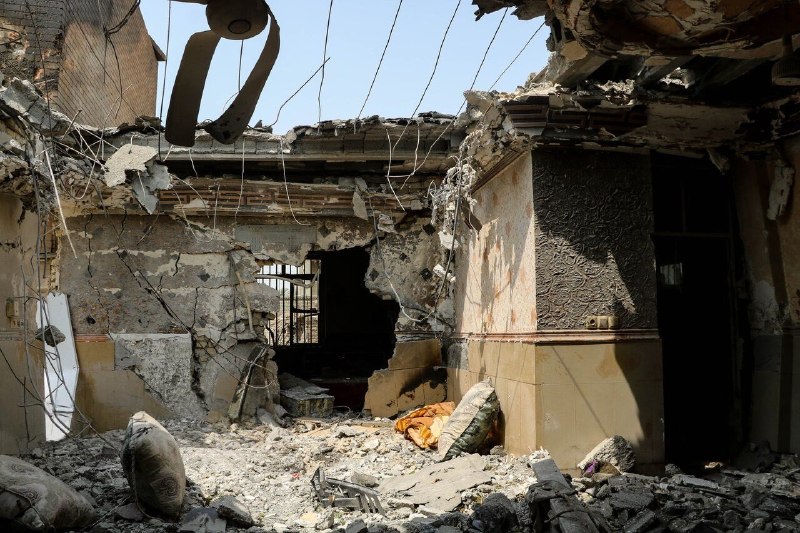
Six explosions tore through the Khorramshahr port on 12 July 2026, the geopolitical monitoring account GeoPWatch reported at 23:05 UTC, and within minutes a second set of unconfirmed reports named the Behbahan refinery as a separate target, with a city-wide power outage following. By 23:22 UTC the Middle East Spectator feed had added two further Khuzestan locations, Khorramshahr and Behbahan, to the list of sites hit, with the framing that the oil-rich province is being hit hard. The reports were flagged by the channels as US–Iran operations, and remained unconfirmed by either government at the time of publication.
The pattern is what makes the evening significant. Iran's energy export system is not one facility; it is a chain of nodes strung along Khuzestan, and within a 17-minute window two of the most strategically load-bearing of those nodes were reported under attack almost simultaneously. Khorramshahr handles a share of Iran's maritime petrochemical shipments on the Shatt al-Arab waterway. Behbahan hosts one of the country's larger refineries and sits close to the Aghajari and Marun fields that feed Iran's domestic product market. Hitting both at once is a different proposition from hitting either alone, because the redundancy that normally allows Iran to reroute crude or product around a damaged node depends on the neighbour node still functioning.
What the early reports say
The reporting is fragmentary and arrives through channels that explicitly flag the limits of their own sourcing. The 23:05 UTC GeoPWatch alert, six explosions at the Khorramshahr port, is presented as eyewitness-sourced rather than confirmed by Iranian state media. The 23:06 UTC intelslava alert repeats the Khorramshahr framing in shorter form. The 23:13 UTC GeoPWatch follow-up adds Behbahan and a city-wide power outage, marked as unconfirmed reports of an attack on the refinery. The 23:22 UTC Middle East Spectator post is the most aggressive of the four, asserting without qualification that Khorramshahr and Behbahan were targeted, and that Khuzestan is being hit hard. None of the four items carries footage verified by mainstream wire services, and none has yet been matched by an Iranian state media confirmation or denial.
That pattern of sourcing is itself the news. Western wire services have not, as of the time these items were published, named the specific facilities under attack. The information is moving first through independent war-monitoring accounts, the kind of Telegram channels that have become the de facto early-warning layer for the Iran file since 2024. The cost of that arrangement is obvious: an unverified refinery strike and a verified port explosion sit side by side in the public record, distinguished only by the word "unconfirmed." The benefit is that something is being reported at all in the first minutes, when prices in Singapore and London are still recalculating the risk premium on Strait of Hormuz transit.
Why Khuzestan, and why these two nodes
Khuzestan produces the majority of Iran's crude oil and almost all of its domestic refining throughput for the southern half of the country. The province's geography concentrates that infrastructure into a corridor running from the Ahvaz field complex in the centre to the export terminals on the Shatt al-Arab in the west, with Abadan, Khorramshahr, Mahshahr and Behbahan as the load-bearing cities along the way. Khorramshahr's port sits where Iranian oil and petrochemical product meets the shipping lanes that exit the Persian Gulf. Behbahan's refinery sits upstream of that, processing crude that would otherwise be shipped semi-refined or routed inland.
Targeting logic, if the early framing holds, points in two directions at once. A strike on Khorramshahr raises the cost of maritime export for whatever volume of product was already in transit or in storage at the terminal. A strike on Behbahan narrows the domestic refining margin that Iran can use to absorb export disruption, because damaged refinery capacity cannot be replaced by simply rerouting crude to a working terminal. The combination attacks both ends of the chain simultaneously, which is structurally different from the more familiar pattern of strikes against isolated IRGC-linked facilities or proxy logistics in Syria and Lebanon.
What this fits inside
Iran's energy infrastructure has come under attack in cycles before, most recently in 2024 during the limited exchange that followed the IRGC strikes on Israeli air-defence infrastructure. The difference in 2026 is the simultaneity. Strikes that arrive as a sequence allow operators and adversaries to recalibrate between events; strikes that arrive inside a single news cycle, against two geographically distinct nodes of the same system, leave no recalibration window. The market consequence is to widen the bid-ask spread on Iran-loaded crude for as long as the uncertainty holds, and to push Asian buyers, who absorb the bulk of Iranian export volumes, into spot pricing rather than term contracts.
The wider frame is a confrontation that has moved from proxy deniability to direct infrastructure targeting in under three years. The 2024 episode was framed by both sides as calibrated. The reporting on 12 July 2026 is not using that word. None of the available sources names a US or Israeli operational command confirming the strikes; the US attribution is being carried by the channels' own framing rather than by official briefings. That matters: a US-claimed strike and a US-denied strike produce different markets, different diplomatic exchanges, and different Iranian responses, and the gap between those two readings is currently the story.
What remains unresolved
Three things have to settle before the picture clears. First, whether Iranian state media confirms or denies hits on the specific facilities named, and at what level of granularity; an acknowledgement of damage without a facility name is itself a political signal. Second, whether any of the four Telegram-channel reports can be matched to commercial satellite imagery or wire-service footage in the next 24 hours, which would either upgrade the Behbahan refinery report from unconfirmed to verified, or downgrade it. Third, whether Iran's retaliatory posture moves through a regional proxy channel, the kind of response that took hours to surface in April 2024, or through a direct counter-strike against US or partner assets in the Gulf, which would mark a categorical escalation.
The next 72 hours are the window. If the Behbahan refinery report confirms, the conversation moves to refinery restart timelines, which run in months rather than weeks, and to the question of which Iranian crude streams are now stranded in the field. If it does not confirm, the evening will still leave a mark: six explosions at Khorramshahr port are a verified, dated, geolocatable event on the public record, and the market and the diplomacy will both price that in.
Desk note: Monexus treats this story on the strength of the four source-channel reports alone, none of which carries wire confirmation or official attribution. The framing is explicit about what is confirmed (explosions at Khorramshahr port), what is reported but unconfirmed (attack on the Behbahan refinery), and what is editorial inference (the simultaneity argument). No Iranian or US official statement is attributed in this piece because none appears in the source material.
Wire provenance
This editorial synthesis draws on the following public wire/social posts:
- https://t.me/Middle_East_Spectator
- https://t.me/GeoPWatch
- https://t.me/intelslava
- https://t.me/GeoPWatch
- https://en.wikipedia.org/wiki/Khorramshahr
- https://en.wikipedia.org/wiki/Behbahan
Follow the event.
These dated source records provide context. They do not retrospectively verify this archive article.
Separate what the nuclear watchdog reported from what it could not determine after the June 2025 strikes.