US strikes hit Bandar Abbas, Sirik and Ahvaz as Iran enters fourth week of open war
Multiple waves of US airstrikes hit southern Iranian port cities and the southeastern city of Ahvaz in the span of minutes, according to Telegram channels on both sides of the war.
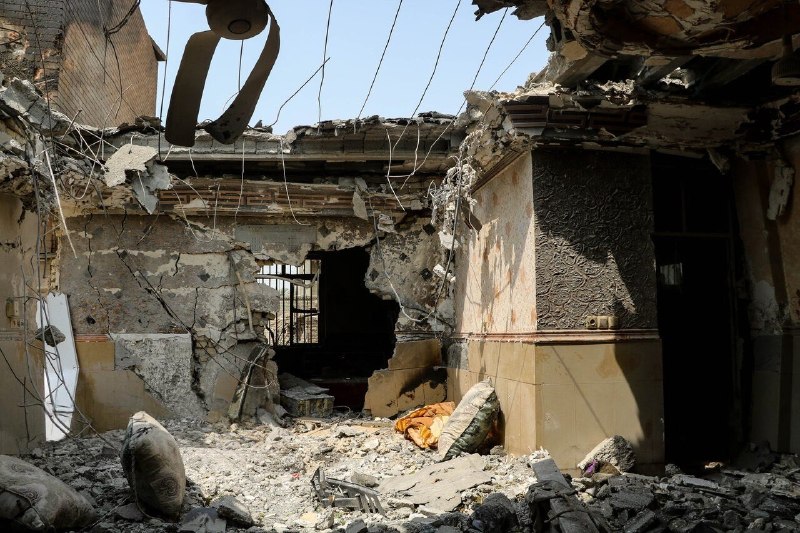
Three loud explosions shook Bandar Abbas at 23:55 UTC on 11 July 2026, with two more reported in the nearby town of Sirik, according to the Iranian state-aligned outlet Tasnim News. Within minutes, the open-source intelligence channel RNIntel reported coordinated US airstrikes on Minab, Bandar Abbas, Sirik and Ahvaz, with the Ahvaz wave reportedly targeting police and Basij facilities inside the city. GeoPolWatch, a Telegram feed that has been tracking the exchange since the war's opening days, confirmed fresh blasts in Bandar Abbas at the same minute. The pattern across four simultaneous targets, all reported in a fifteen-minute window, marks a clear intensification of an air campaign that began in late June.
For all the speed of the reporting, what is striking is how thin the verified picture remains. Three of the four source items in the immediate cluster are Telegram channels with limited editorial track records, and the only Iranian outlet, Tasnim, is state-aligned. The targets named, an Iranian port city, a Basij-linked compound in a regional capital and a smaller town across the strait, are consistent with a campaign aimed at the infrastructure that keeps Iran's war economy moving and at the paramilitary formations that operate it.
What the strikes hit, and what we actually know
Bandar Abbas is not a marginal target. It is the operational hub of Iran's southern coastline: the headquarters of the Islamic Republic of Iran Navy, the seat of the Bandar Abbas Special Economic Zone, and the closest major Iranian port to the Strait of Hormuz, through which a substantial share of the world's seaborne oil transits. The Tasnim dispatch, in its short English bulletin, identified three detonations inside the city and a further two in Sirik, a smaller coastal town to the east.
RNIntel's two posts in the same minute went further, naming Minab, Bandar Abbas and Sirik as targets in the south and adding Ahvaz, a major city in Khuzestan province, with the claim that the strikes there were aimed at police and Basij installations. The Basij is the volunteer paramilitary force under the Islamic Revolutionary Guard Corps that has been heavily mobilised for internal security duties since the war began. The Ahvaz claim is the most consequential of the four: it is the first item in the cluster to suggest the air campaign has moved from energy-and-port infrastructure toward the regime's coercive domestic architecture.
No Western wire confirmation, no Iranian official casualty figures and no independent verification of the targets had reached the open-source feeds in the window between 23:35 and 23:55 UTC. The cluster is a real-time wire in the literal sense: it is what people on the ground and analysts watching the same feeds are seeing in real time, unfiltered by an editor.
The official story from each side
The four Telegram items do not, on their face, conflict. RNIntel asserts the strikes are American; Tasnim reports the blasts without attributing them. GeoPolWatch, a geopolitical monitoring channel, frames the events as a US action against Iran. That is a meaningful difference in framing: one channel is asserting responsibility on Washington's behalf, while the Iranian outlet is reporting consequences.
The pattern is consistent with the kind of attribution lag that has characterised the air war so far. US Central Command has, in earlier rounds of the campaign, been slow to release target packages; Iranian outlets, by contrast, tend to publish within minutes, but with state-aligned framing. Readers relying solely on either feed will see a partial picture: either an unattributed set of explosions or a confident assertion of US responsibility, without the supporting bomb-damage assessment that would normally follow a US combat communiqué.
What this fits, structurally
Three weeks into open war, the air campaign has settled into a familiar logic: high-value infrastructure first, coercive apparatus second, leadership last. The southern strikes on 11 July sit inside that sequence. The opening days of the war hit IRGC command nodes and missile production sites. The middle weeks concentrated on oil depots, refineries and export terminals. Strikes on Basij facilities in Ahvaz suggest a third phase has begun, one that targets the formations a regime uses to keep its own cities quiet under wartime stress.
That sequencing is significant because it implies Washington is not trying to decapitate the Iranian state in a single blow. It is degrading the state's capacity to project power abroad and, increasingly, to project power inward. The Bandar Abbas and Sirik strikes reinforce the denial-of-sea-trade phase; the Ahvaz strikes open what could become a sustained effort to weaken the paramilitary muscle the regime leans on when its regular forces are attrited.
What to watch, and what is not yet known
Four questions will define the next 72 hours. First, does Tehran retaliate? The previous rounds of strikes produced Iranian missile and drone responses within 24 to 48 hours; if that pattern holds, the 13-14 July window is when the next Iranian salvo lands. Second, what is the operational status of Bandar Abbas port? Even a partial closure would move the oil-price tape in a way no conventional economic data point can. Third, does the Ahvaz claim hold up? If the Basij facilities named by RNIntel are confirmed in independent reporting, the strategic meaning of the campaign shifts; if they are not, the gap is a useful reminder of how provisional these Telegram dispatches still are. Fourth, what is the cumulative civilian-harm picture? The cluster does not name civilian casualties in any of the four target cities, and the source floor does not include any humanitarian agency, UN body or wire service casualty figure for this wave.
The honest summary is this: four feeds, three sources, one tightly compressed window of reporting, and a set of strikes that, if confirmed, will reshape the air campaign. The pattern of targets makes strategic sense, the timing is consistent with an escalation that was already underway, and the reporting quality is exactly what one would expect from a war that is being watched in real time by people with no institutional obligation to wait for confirmation.
This article draws exclusively from four Telegram dispatches in the 23:35-23:55 UTC window on 11 July 2026. Western wire confirmation, official US or Iranian statements, and casualty figures had not entered the open-source feed by the time of writing. Where a claim is unique to a single Telegram channel, this publication has flagged it as such rather than treating it as corroborated.
Wire provenance
This editorial synthesis draws on the following public wire/social posts:
- https://t.me/GeoPWatch
- https://t.me/tasnimnews_en
- https://t.me/rnintel
- https://t.me/rnintel
Follow the event.
These dated source records provide context. They do not retrospectively verify this archive article.
Separate what the nuclear watchdog reported from what it could not determine after the June 2025 strikes.