US strikes hit western Iran and the Strait of Hormuz coast as Tehran vows retaliation
Renewed strikes on Dezful, Behbahan and Sirik in the space of an hour suggest an escalation toward the Strait of Hormuz, with both Washington and Tehran signalling they expect the next round.
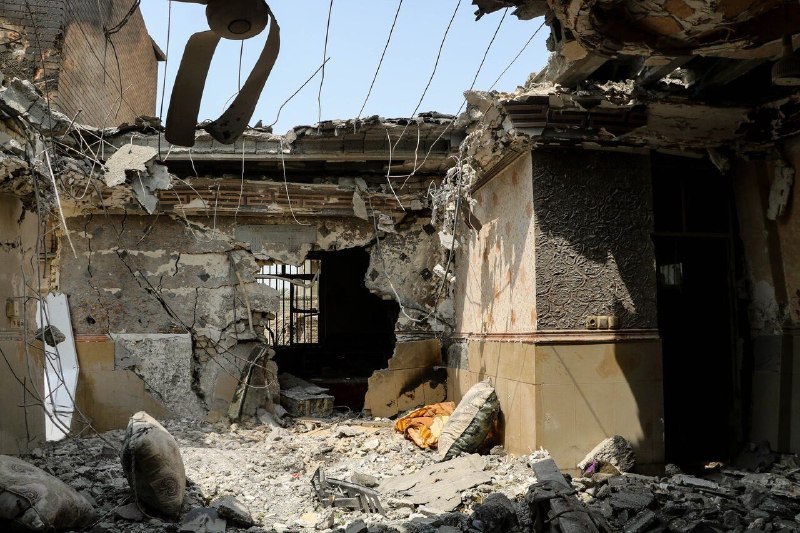
At 21:57 UTC on 12 July 2026, six explosions were reported around the Tahrowi area in Sirik, a port town on Iran's southern coast overlooking the Strait of Hormuz. Within the next hour, renewed strikes hit Behbahan and Dezful further inland, in the oil-rich province of Khuzestan, before another round reportedly struck Sirik a second time, according to OSINT channels tracking the air campaign. The clustering is unusual: three named Iranian cities, two of them along the country's energy export corridor, struck in roughly ninety minutes.
The dominant framing inside Western wires reads this as a calibrated pressure campaign, designed to degrade Iran's missile and proxy infrastructure while keeping the diplomacy open. That framing holds up against the geography. Sirik sits within striking distance of Bandar Abbas, the base of the Iranian navy, and of the chokepoint through which a fifth of seaborne oil passes; Dezful and Behbahan sit in the same province as the Ahvaz oilfield and the Abadan refinery complex. Hitting them is not random punishment. It is a signal aimed at the revenue stream that funds the missile programme, and at the coast that chokes Gulf shipping.
Reading the targeting logic
Declassified US targeting doctrine, repeated across decades of post-1991 air campaigns, treats dual-use energy infrastructure as a legitimate military objective once a conflict is formally recognised. Iran has not crossed that legal threshold itself; it is the target rather than the initiator here. Sirik matters for a different reason. The town's naval infrastructure supports the Islamic Revolutionary Guard Corps Navy, which fields fast-attack craft and anti-ship cruise missiles in the Strait. Striking Sirik alongside Dezful and Behbahan therefore does two things at once: it warns Tehran that the coast is no longer a sanctuary, and it sets up the conditions for any future maritime interdiction by degrading the assets that would contest one.
Iranian state-aligned channels have framed the strikes as an act of war and warned of retaliation through proxies, including in the Gulf and through Iraqi and Lebanese fronts. That framing has structural merit. Any decision by Tehran to mine the Strait, accelerate nuclear activity, or sanction attacks on US bases in the Gulf would not require the kind of public proof that an outright strike on Israel would; the playbook is well rehearsed.
Why the Korps' South is now the front
Coverage of the air campaign has, until this week, focused on Iran's western frontier, on Tehran, and on the missile plants around Isfahan and Natanz. The 12 July sequence marks a deliberate southward pivot. It pulls the centre of gravity towards Bandar Abbas and the Strait, and away from the more familiar staging grounds. The pivot is consistent with what a sanctions-plus-pressure strategy requires: attacks further south are harder to deny as defensive, and harder to sell domestically in Iran as anything other than an attack on the country's economic lifeline. That makes them more politically useful to Washington, and more politically dangerous for Tehran to absorb in silence.
The hour that matters next
Three plausible follow-ons are now on the table. First, an Iranian retaliatory strike through the IRGC Navy or via proxies in Iraq, where militia ceasefire discipline has frayed repeatedly. Second, an attempt by Tehran to accelerate nuclear activity to a point that makes the next round of targeting more complicated for the US and its partners. Third, a diplomatic reset, which depends on the United States and Iran recognising that the present trajectory sets up a contested maritime space, rather than a controlled negotiation. Which path dominates depends on decisions in Washington and Tehran that have not been disclosed in any of the available reporting.
The sources for tonight's strikes are Telegram-based OSINT channels whose on-the-ground confirmation is by video and geolocation rather than official spokespeople. Neither the Pentagon nor Iranian state outlets have, at the time of writing, put a comprehensive public ledger on the record for the 21:57, 22:15, 22:51, 22:52 and 22:53 UTC incidents. That caveat matters. What is verifiable is the place-name sequence: Sirik, twice, and then Dezful and Behbahan in quick succession. What remains contestable is the full strike count, the ordnance used, and whether tonight's pattern is the opening salvo of a wider campaign or a shorter, sharper pressure turn.
Desk note: Monexus frames this as a turning point in the air campaign's geography rather than its intensity. Sirik and the Strait are now in the targeting picture, and that is where the next escalation, or de-escalation, will most likely play out.
Wire provenance
This editorial synthesis draws on the following public wire/social posts:
- https://t.me/intelslava/
- https://t.me/intelslava/
- https://t.me/GeoPWatch/
- https://t.me/rnintel/
- https://t.me/GeoPWatch/
Follow the event.
These dated source records provide context. They do not retrospectively verify this archive article.
Separate what the nuclear watchdog reported from what it could not determine after the June 2025 strikes.