US strikes on Qeshm Island and an OIC rebuke sharpen Iran's diplomatic isolation
US warplanes hit targets on Iran's Qeshm Island in the Persian Gulf on 12 July, hours before the Organisation of Islamic Cooperation declared Iranian attacks on Gulf states a clear breach of international law.
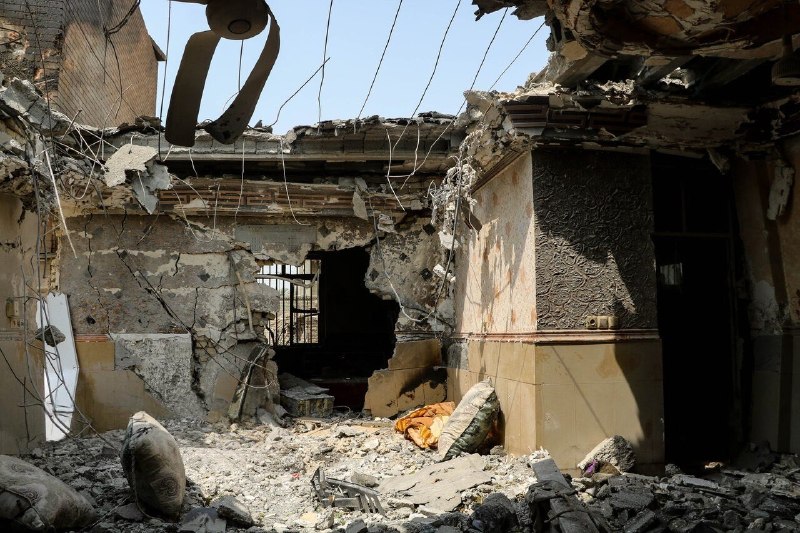
Smoke rose from multiple sites on Iran's Qeshm Island at roughly 16:45 UTC on 12 July 2026, after a new wave of US air strikes hit military targets there within the hour, according to the open-source channel OSINTdefender. The strikes followed an earlier round reported the same afternoon by the wire monitoring account BRICS News, and came as Iranian state-aligned channels said additional attacks had struck the island in the Strait of Hormuz.
The escalation lands at an awkward moment for Tehran. Hours before the latest strike package, the Organisation of Islamic Cooperation declared Iran's attacks on Gulf countries a "clear breach of international law," per a wire alert carried by BRICS News at 18:08 UTC on 12 July. Read together, the two developments frame the same day as both a kinetic and a diplomatic inflection point: a widening air campaign against Iranian territory on one side, and the most consequential Muslim-state rebuke of the Islamic Republic in years on the other.
A second strike package in a single afternoon
The pattern of fire matters as much as the targets. Reporting carried by BRICS News at 17:42 UTC on 12 July flagged a "new round of strikes" on Qeshm Island, and the Associated Press, cited by the X account Disclose TV at 16:50 UTC, said Iran was reporting fresh attacks on military targets there. OSINTdefender's imagery, timestamped to roughly 16:45 UTC, showed smoke rising from multiple impact points inside the same hour as the Iranian read-out. Two strike packages, three independent confirmations, one small island that sits astride the chokepoint through which a significant share of the world's seaborne oil moves.
Qeshm is not a symbolic target. The island, Iran's largest in the Persian Gulf, hosts IRGC Navy facilities, fast-boat bases and coastal-defence sites that overlook the Strait of Hormuz. Striking it is a deliberate attempt to degrade the asymmetric capability Tehran has long used to threaten Gulf shipping without provoking a head-on confrontation with US carrier groups.
The OIC line that changes the room
The diplomatic track moved at the same speed. The Organisation of Islamic Cooperation's statement, carried at 18:08 UTC on 12 July, described Iranian attacks on Gulf states as a "clear breach of international law." The phrasing is sharper than the circumlocutions the Jeddah-based body usually favours, and the political cost for Tehran is high: the OIC is the only multilateral forum in which the Islamic Republic still commands automatic sympathy, and breaking with it costs Iran cover it cannot easily replace.
Read against the strikes, the OIC line suggests a sequencing. Gulf monarchies have absorbed Iranian-backed attacks on their territory; the calculus inside the OIC has shifted from neutral mediation toward public censure. That shift does not by itself realign the region's security architecture, but it removes a layer of diplomatic insulation Tehran has leaned on for two decades.
What the dominant framing leaves out
Western wire coverage tends to render this as a tidy story of resolve: the United States degrades Iranian military infrastructure, the Muslim world lines up behind restraint, Iran's regional position weakens. The picture is messier than that.
The strike package is real and verifiable, but casualty figures, the specific military sites hit, and the Iranian government's confirmed death toll remain undisclosed in the open-source feed available to this publication. Tehran's framing of the strikes as attacks on sovereign Iranian territory is structurally equivalent to the framing it would use for any cross-border action against its soil, and the Gulf states now publicly denouncing Iran are the same states that, in earlier phases of proxy competition, hosted US bases while quiet on Iranian retaliation. The OIC's wording is firm, but the institution's enforcement capacity is thin: a declaratory statement does not move a missile battery.
The counter-frame worth holding in mind is this. A widened US air campaign on Iranian territory is not a substitute for the diplomatic settlement the same Gulf monarchies keep telling Washington they want. Each strike on Qeshm hardens the constituency in Tehran for retaliation, and the retaliation tracks that have been used so far have pointed at Gulf oil infrastructure and at US bases in the region, not at US soil. The OIC rebuke may be sharpening the cost-benefit calculus for Iran's clerical leadership, or it may simply be moving the conversation onto terrain where Iran has fewer allies and fewer tools.
What to watch next
The near-term questions are concrete and dated. Will the OIC statement be followed by a coordinated diplomatic action, such as a recall of ambassadors from Tehran or a session of the UN Security Council convened at the request of a Gulf monarchy? Will Iran's retaliatory cycle, which has historically targeted Gulf infrastructure and third-country shipping, activate in the 24 to 72 hours after a strike of this scale? And will the next round of US action target the IRGC's fast-boat infrastructure on Qeshm itself, where the strategic logic of pre-emption is strongest, or shift to the mainland where the escalatory ladder steepens?
The structural story is older than this week's headlines. Iran's regional posture has rested on three pillars: a deterrent threat against Gulf shipping, a network of allied armed groups from Lebanon to Yemen, and diplomatic cover in forums such as the OIC. Two of those pillars are now under visible stress on the same day. The third, the proxy network, is the variable that will most likely determine whether 12 July 2026 is remembered as the day the cost imposed on Iran became too high to absorb, or as the day the region entered a deeper cycle of retaliation.
Desk note: this publication framed the Qeshm strikes and the OIC statement as a single news event, rather than as two separate stories, because the four wire items available for 12 July 2026 describe them as unfolding within the same two-hour window. Open-source accounts are treated as leads on imagery and pacing, not as ground-truth claims on casualties or specific sites hit.
Wire provenance
This editorial synthesis draws on the following public wire/social posts:
- https://t.me/bricsnews
- https://t.me/bricsnews
- https://twitter.com/sentdefender/status/2076343853456543765
Follow the event.
These dated source records provide context. They do not retrospectively verify this archive article.
Separate what the nuclear watchdog reported from what it could not determine after the June 2025 strikes.