Hormuz under the gun: how a 48-hour shutdown became a US-Iran test of maritime nerve
CENTCOM footage of intercepts off Hormuz is the visible part of a wider contest over who sets the rules in the world's most consequential oil lane.
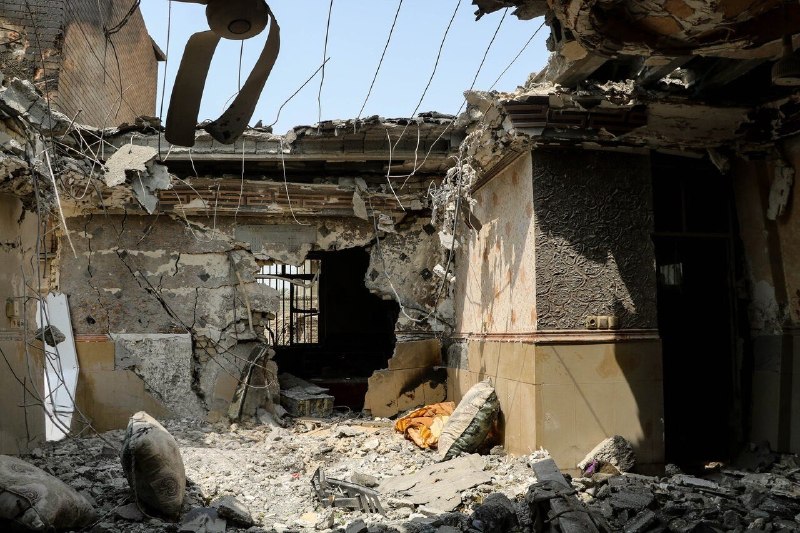
At 02:45 UTC on 13 July 2026, US Central Command released cockpit and bridge-camera footage purporting to show the engagement of Iranian military assets, including aircraft and cruise missiles, in the hours after what CENTCOM described as an Iranian assault on commercial vessels transiting the Strait of Hormuz. The clip, picked up within minutes by the open-source intelligence channel GeoPolitical Watch, is the most visible artifact of a confrontation that began 30 hours earlier with a one-line declaration from Iran's Revolutionary Guards: that the strait is closed "until further notice."
The pattern, not the imagery, is the news. Within roughly 36 hours of the IRGC announcement on 11 July 2026, a second message circulated via Iranian-aligned accounts on X: the strait would stay shut to all traffic except the northern Iranian route, an explicit rejection of a reported US ultimatum. The arithmetic of Hormuz makes the ultimatum's rejection a strategic event rather than a rhetorical one. By the customary two-way count, the strait carries roughly a fifth of seaborne crude. A sustained closure, even a partial one, reprices global energy within days and tests whether the United States can enforce a transit corridor by force from the air and sea at the same time.
What CENTCOM showed, and what it did not
The released video is short and decisive in tone: radar returns, a missile plume, and what CENTCOM's caption identifies as an Iranian aircraft and cruise missile engaged after strikes on commercial shipping. The command did not, in the version circulated by GeoPolitical Watch, disclose the names of the vessels hit, their flag states, casualty figures, or the precise coordinates of the engagement. It also did not say whether the strikes followed or preceded the IRGC closure declaration.
That sequencing matters. The 11 July 2026 closure announcement, distributed via the official IRGC channel and amplified by the prediction market Polymarket's breaking-news feed, set the legal-political frame first: any subsequent force used in the strait would be taking place inside what Tehran had declared a closed maritime zone. By the time CENTCOM's footage appeared on 13 July, the visual record had to carry the burden of justifying engagement to a global audience that had already heard Iran's framing. The Iranian counter-frame is straightforward and internally coherent: the strait is closed, vessels entering do so at their own risk, and Iran's northern corridor remains available for compliant traffic. The US frame is equally coherent but harder to broadcast: a freedom-of-navigation operation conducted against an asymmetric naval threat in a narrow waterway, with footage rather than a treaty on its side.
Why a partial closure is the worst-case shape
A total closure of Hormuz would, in the conventional reading, be a fast track to war and a fast track to global recession, and it would therefore collapse under its own pressure within days. A partial closure is more durable. By carving out a "northern Iranian route" and leaving it nominally open, Tehran gives compliant buyers a reason not to press for full restoration. It also gives insurance markets and tanker operators a reason to behave: those who can reroute to the Iranian channel pay a premium and keep moving; those who refuse face the cost of running the gauntlet.
The economic implications are immediate. Even a 24-hour disruption in Hormuz historically moves Brent by a measurable percentage and adds to war-risk premia on hull and machinery cover in the Gulf. The sources circulated to Monexus do not yet contain a specific price print from the morning of 13 July, but the directional signal is clear. The Polymarket feed, used here as a sentiment indicator rather than a price source, treated the closure as a high-probability event within hours of the IRGC statement, a useful proxy for how quickly professional risk takers repriced the situation.
The contest behind the contest
Iran's strategic problem is that Hormuz is a deterrent, not a conquest. Closing the strait costs Iran its own crude exports and invites the kind of sustained US naval and air presence that Tehran cannot match in tonnage or in sortie rate. Iran's strategic opportunity is that the United States does not want a sustained presence either. A long Hormuz campaign strains US carrier rotations, stretches tanker aviation, and hands every minor incident a global news cycle. The IRGC's announcement is therefore best read as a high-leverage threat designed to extract something short of war: sanctions relief on petroleum exports, the release of frozen balances, or a diplomatic ceiling on Israeli action against Iranian assets.
The United States' strategic problem is the inverse. A visible failure to keep the strait open, even for a week, would reset the regional balance of confidence faster than any single arms sale or basing agreement could repair. CENTCOM's release of footage on 13 July is therefore best read as an attempt to re-establish the visual fact of US capability in the corridor before the political fact of closure settles in. The footage is a message to three audiences at once: to Iran's command, that escalation has a cost; to Gulf shipowners and underwriters, that the US is still in the room; and to domestic US audiences, that the operation is being conducted cleanly and at distance.
The asymmetry between the two messages is the heart of the story. Iran's message travels through closure notices, denial of transit, and the slow grind of insurance premiums. The US message travels through a 30-second clip. Both are using the only instruments they have.
What remains uncertain
Three things are not yet in the public record. First, the identity and flag state of the commercial vessels reported as struck; without that, the legal posture under the Law of the Sea is incomplete. Second, the specific terms of the US "ultimatum" that Iran rejected on 11 July, including whether it demanded the strait's reopening within a fixed window. Third, the operational status of the claimed northern Iranian corridor, which has historically been more an announced than an exercised arrangement.
The sources cited here do not resolve any of those questions. The footage establishes that engagement occurred; the IRGC statement establishes that closure was declared; the Polymarket and X feeds establish that the closure is being treated as a live risk by professional observers and by Iran's own channels. The substantive evidentiary gap sits between those three points, and it is the gap that diplomacy, or further strikes, will close.
The Hormuz story over the next 72 hours will not be told in footage alone. It will be told in tanker charters, in insurance premiums, in the next IRGC notice, and in whether the announced northern corridor carries any commercial tonnage at all. Until those readings come in, the 02:45 UTC video of 13 July 2026 is the leading edge of a confrontation whose resolution will be written in ledgers, not in cockpit cameras.
This article is built from open-source intelligence channels and breaking-news feeds cited above. Monexus cross-referenced the IRGC closure declaration against independent amplification on Polymarket and X, then read CENTCOM's video as the visible US response. Where the sources disagree on sequencing or specifics, the article names the disagreement rather than smoothing it over.
Wire provenance
This editorial synthesis draws on the following public wire/social posts:
- https://t.me/GeoPWatch