Flydubai cockpit dispute forces Dubai-Tel Aviv flight to divert to Saudi Arabia, prompting Israeli fighter scramble
A Flydubai Boeing 737 bound for Tel Aviv squawked hijacking code 7500 on 30 September 2026, triggered an Israeli Air Force scramble, and landed at Tabuk in northwestern Saudi Arabia after Israeli media reported a physical altercation between the two pilots.
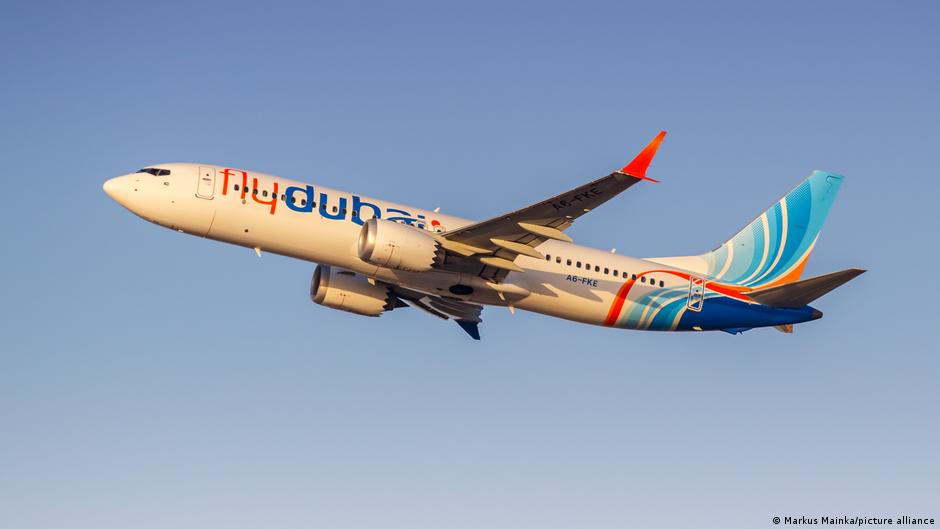
A Flydubai Boeing 737 flying from Dubai to Tel Aviv transmitted the universal hijacking code 7500 on 30 September 2026, prompting the Israeli Air Force to scramble fighter jets, according to the open-source flight-watch channel Clash Report. The transponder subsequently switched to the general emergency squawk 7700 and the aircraft dropped off third-party civilian flight-tracking feeds for several minutes before the available record resumed with the aircraft on the ground at Tabuk Airport in northwestern Saudi Arabia, according to Iran's Tasnim News Agency and the IRNA English Telegram channel.
This is an unusual aviation incident along one of the most heavily monitored air corridors in the Middle East, and the most plausible early reading of the reviewed sources is that no external hijacker was involved. Israeli media reported that the trigger was a physical altercation between the two pilots on the flight deck, a sequence the crew then escalated into a hijack squawk and an emergency squawk while they attempted to resolve the dispute, according to France 24 and the English-language feed of The Cradle, both citing Israeli reporting. The flight's diversion into Saudi airspace makes the episode an awkward test of the quiet regional normalisation that Gulf carriers and Israeli carriers have been operating under in recent years. The open-source record of the event, as assembled at the time of writing, is carried by Telegram channels and by France 24's English-language wire copy rather than by a formal airline or regulator statement.
What the open-source trail shows
Clash Report, an open-source flight-watch channel, was the first source in the reviewed pack to report the 7500 squawk and the Israeli fighter scramble. BRICS News, citing the same early indicators, framed the episode on first detection as a possible hijacking. The Iranian state outlets Tasnim and IRNA then carried accounts attributing the diversion to a "dispute between the pilots" and reporting that the aircraft had briefly disappeared from radar before landing at Tabuk. Tasnim explicitly referenced Hebrew and Israeli media and Al Mayadeen. The Cradle's English feed carried the Israeli-source characterisation of a "physical altercation between the pilots." France 24, the tier-one Western wire confirmation in the reviewed pack, reported that the aircraft was diverted after a fight between the two pilots, citing Israeli media, and that the plane had transmitted an emergency signal.
What is firm from the reviewed record: the aircraft briefly squawked 7500, the international code reserved for unlawful interference, then switched to 7700, the general emergency code, before its transponder dropped off third-party tracking networks for several minutes. The Israeli Air Force scrambled interceptors after the 7500 squawk. The aircraft landed at Tabuk. The reviewed source items do not specify the precise location along the Dubai-Tel Aviv track over which the 7500 squawk was transmitted, nor the exact UTC time at which the episode began; nor do they specify whether passengers were briefed, whether the cabin crew secured the cockpit door, or how long the aircraft sat on the apron at Tabuk before passengers and crew could disembark.
The Saudi piece
The aircraft did not land at the nearest diversion airfield, on the reviewed evidence; the reviewed source items do not specify which diversion airfield was nearest to the Dubai-Tel Aviv track at the moment the crew declared an emergency, nor do they specify whether the diversion to Tabuk was requested by the crew, by the airline's operations centre, or by the Israeli military coordinating with Saudi authorities. What the sources establish is that a Saudi airfield was chosen and accepted: IRNA, citing "officials," reported the landing at Tabuk, and Tasnim reported the landing at Tabuk, referencing Hebrew and Israeli media and Al Mayadeen.
That a Saudi airfield accepted an Israel-destined flight carrying an active emergency is the politically loaded part of the incident. Saudi Arabia does not recognise Israel, and the reviewed sources do not cite a public, formal air-services agreement between the two on the public record. Saudi civil aviation authorities have in recent years permitted overflights of their territory by Israel-destined flights under arrangements that the reviewed sources do not specify. The reviewed sources do not specify whether this diversion operated under that existing overflight permission, under a separate ad hoc arrangement, or under a coordination mechanism the reviewed sources do not name. The reviewed sources do not specify whether Israeli security personnel were permitted to board the aircraft on Saudi soil, whether the pilots were handed to Saudi authorities or to Flydubai's own security, or whether any third jurisdiction will lead the formal investigation that follows.
What the wires left unclear
Threads point in different directions. Clash Report and BRICS News framed the episode as a possible hijacking on initial detection of the 7500 squawk, citing the Israeli fighter scramble. IRNA, Tasnim and The Cradle, drawing on Israeli media, framed it as a cockpit dispute that triggered the hijack code by reflex or protocol error rather than by an outside actor. France 24 carried the Israeli "fight between pilots" account. The IRNA and Tasnim framing, Israeli-source-based, is consistent with the more credible early reading on the reviewed evidence: that the hijack squawk was a procedural step taken during an internal cockpit crisis rather than an indication of an outside actor.
Monexus analysis: read as analysis rather than reporting, the open-source record points more naturally to a cockpit crisis than to an outside actor. The two squawks in sequence (7500 followed by 7700) are consistent with a crew that initially reached for the unlawful-interference code under stress and then downgraded to a general emergency once the situation clarified. A genuine hijacker would typically be expected to hold 7500 and continue broadcasting on a discrete frequency rather than cycle to 7700 and drop off tracking. The reviewed sources do not contain any claim of a separate hijacker, a hostage situation, a demand, or a political statement from the cockpit, which the desk reads as consistent with the cockpit-dispute framing rather than as confirmation of one. The desk flags two strands from the wider open record that the reviewed pack does not address: a Times of India account that reportedly frames the episode as a pilot attempting to crash the aircraft, which is a materially different narrative from the cockpit-dispute reading; and a MiGFlug-derived report placing the 7500 alert over Jordan, which would change the geography of the incident if confirmed. Neither strand is carried by the reviewed Telegram and wire sources, and the desk treats both as unverified at the time of writing.
Stakes for the corridor
For Flydubai, the incident is an operational disruption on one of the most visible commercial corridors linking the Gulf to Israel, a route whose existence is itself a product of the post-2020 normalisation arrangements between Israel and several Arab states. A cockpit dispute that triggers a fighter scramble and a diversion into a third country is not a hijack in outcome, but it is a hijack in protocol terms: every cockpit crew that ever again squawks 7500 over the eastern Mediterranean will now be benchmarked against this event.
For Saudi Arabia, the incident confirmed that its airspace can absorb a live emergency involving an Israel-destined flight without public rupture in the immediate term, which is a useful rehearsal. For Israel, the airspace command's ability to scramble and recover the aircraft without an in-flight disaster is a small operational reassurance; the embarrassing part, that the proximate cause was reportedly a physical fight in the cockpit rather than an external threat, sits less comfortably. The open question is how the formal investigation, the lead authority for which the reviewed sources do not specify, will classify the incident: as unlawful interference, as an in-flight crew dispute, or both. The classification will determine how the next cockpit crew, on the next 7500 squawk over the same stretch of Middle Eastern airspace, is trained to respond.
Desk note: the open-source channels treated the initial squawk as a possible hijack; IRNA, Tasnim and The Cradle, drawing on Israeli reporting, treated the underlying cause as a cockpit dispute. Monexus finds the cockpit-dispute framing the more credible early reading on the reviewed evidence, given the Israeli-source provenance carried by the secondary accounts, the 7500-to-7700 sequence, and the absence in the reviewed pack of any claim of a separate hijacker. The desk flags two strands outside the reviewed pack, a Times of India pilot-crash account and a MiGFlug Jordan-squawk report, as unverified leads that may yet reshape the story. The reviewed sources do not specify which authority will lead the investigation, the nationalities of the pilots, or the precise point along the Dubai-Tel Aviv track at which the 7500 squawk was transmitted.
Wire provenance
This editorial synthesis draws on the following public wire/social posts:
- https://www.france24.com/en/middle-east/20260930-israel-bound-flight-diverted-to-saudi-arabia-after-brawl-between-pilots
- https://t.me/Irna_en/40155
- https://t.me/tasnimnews_en/39740
- https://t.me/TheCradleMedia/68654
- https://t.me/ClashReport/98973
- https://t.me/bricsnews/18644