A 14,000-foot dive, a code 7500, and what Israeli airspace security looks like in practice
A Dubai-to-Tel Aviv flight dropped 29 seconds of altitude, broadcast a hijacking code, and landed in Saudi Arabia. The story beneath the squawk matters more than the squawk itself.
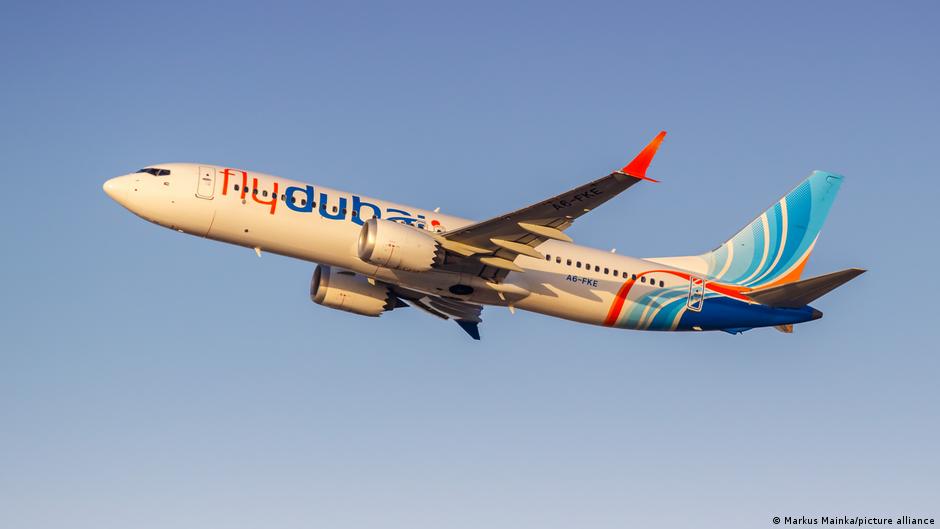
Flightradar24 captured the descent in the most clinical way modern aviation knows how: 14,125 feet in 29 seconds. The aircraft, a Flydubai Boeing 737 MAX 8 carrying more than 150 Israeli passengers out of Dubai, transmitted transponder code 7500, the international signal for unlawful interference, then 7700, the general emergency code, before disappearing from tracking feeds and re-emerging on the ground at Tabuk, in northwestern Saudi Arabia. Israeli Air Force jets had been scrambled to meet it. The plane landed safely. Everyone is accounted for.
This publication's reading: the operational response worked. The squawk worked, the scramble worked, the diversion to a friendly airfield worked. The story now is what happens next, because the same incident that exposed a sharp reflex also exposed how little hard information is on the public record hours after the wheels stopped.
What the transponder tape shows
The first hard artefact is not a press release but a radar track. Flightradar24 data logged the aircraft losing 14,125 feet of altitude inside a 29-second window during the Dubai–Tel Aviv leg, according to the tracking feed relayed by the War and Frontlines witness channel. That kind of descent, in a pressurised narrow-body, is not a routine manoeuvre and is not a controlled emergency descent in the technical sense. It is closer to what an aircraft does when the flight deck needs the cabin at a breathable altitude immediately and the profile becomes secondary.
Within minutes of the drop, the aircraft briefly squawked 7500, then switched to 7700, then went off-grid. The order is itself diagnostic. 7500 is reserved for hijack or unlawful interference and is supposed to be set discreetly, not toggled in and out of. 7700 is the catch-all distress signal. The relay channels that first published the sequence, Clash Report, osintlive, and Bellum Acta, describe the same arc: brief 7500, longer 7700, silent patch, reappearance at Tabuk.
What the Israeli reporting says happened inside the cockpit
Al Jazeera's breaking-news desk reported the airline's statement that the plane experienced an "incident" en route and was diverted to Tabuk, where it landed safely. That is the airline's framing: minimal, factual, neutral.
The Israeli picture is sharper and uglier, and it came through Kyiv Post's official channel citing N12, the outlet formerly known as Channel 12 News. Israeli officials are investigating a possible stabbing incident between the two pilots, N12 said. A second aircraft is being positioned in Dubai to fly the passengers to Israel via Saudi Arabia. Separately, the same Israeli reporting identified the crew composition as a Russian pilot and a Ukrainian co-pilot.
Both details matter. The alleged crew-on-crew violence is the most plausible single explanation for a 14,000-foot uncontrolled descent paired with a hijack squawk: a flight deck emergency that the crew classified, in the moment, as unlawful interference rather than a medical or mechanical event. The crew's nationalities are a separate thread. Russian and Ukrainian cockpit pairings are routine on carriers that recruited from both labour pools, and there is nothing in the source material to suggest that composition drove the incident. But the composition will draw commentary precisely because it is available, and a sober account has to acknowledge that.
Why a Saudi diversion reads as a feature, not a bug
Tabuk sits in northwestern Saudi Arabia, the closest major Saudi airfield to Israeli airspace on the Dubai–Tel Aviv arc. Saudi Arabia opened its airspace to Israeli overflights as part of the 2020 Abraham normalisation track. For an aircraft in distress that cannot make Ben Gurion, a Saudi diversion point is a clean option on the chart. The available source items do not specify the routing logic, the controller hand-offs, or the airspace choreography that produced the Tabuk landing.
The fact that this aircraft made it to Tabuk at all does suggest a flight deck that was still capable of negotiating with air traffic control during the descent. A fully incapacitated cockpit does not coordinate a trans-border diversion to a specific field. That is consistent with the Israeli reporting of a contained, localised emergency rather than a sustained loss of control.
Monexus analysis: the operational shape of the response, rapid Israeli scramble, airline positioning a rescue aircraft inside an hour, reads as a normalised bilateral playbook rather than an improvised crisis. The architecture built for quiet normalisation appears to be doing what it was built to do, under maximum public stress. That is a reading of the available evidence, not a finding the evidence itself states.
What is not yet on the record
Hours after landing, the public sourcing is still a relay chain: Telegram OSINT channels first, then a Kyiv Post wire of an N12 bulletin, then Al Jazeera's breaking desk citing Flydubai's own statement. There is no Israeli Air Force statement in the thread, no Flydubai press conference transcript, no readout from the Israeli aviation authority, and no Saudi confirmation that the aircraft has been cleared to disembark. The available source items do not specify the condition of either pilot, whether anyone else aboard was injured, or whether criminal proceedings are now in train.
That last question is the one to watch. If N12's reporting of a stabbing is corroborated by Flydubai and by Israeli investigators, the case is straightforwardly a criminal matter inside a cockpit, not a security breach. If it is not corroborated, the descent itself becomes a separate, harder puzzle, and one with direct implications for how 7500 squawks get treated in this corridor going forward.
The Israeli public will not wait for the second question to be answered. The operational reflex on display this morning will be read, fairly or not, as evidence that the country's layered air-defence architecture still works against the kind of threat it was built for, even when the threat turns out to be a cockpit door rather than a missile battery. That is the headline the next 24 hours will produce, regardless of what the actual investigation eventually finds.
Monexus framed this as a flight-deck emergency with a security overlay, not as a security event with an aviation overlay. The Israeli wire picture is sharper than the airline's; we followed it, but flagged what it has not yet proven.
Wire provenance
This editorial synthesis draws on the following public wire/social posts:
- https://www.aljazeera.com/news/2026/9/30/flydubai-flight-to-israel-diverted-to-saudi-arabia-after-emergency-alert?traffic_source=rss
- https://t.me/wfwitness/113823
- https://t.me/ClashReport/98986
- https://t.me/wfwitness/113819
- https://t.me/Kyivpost_official/40372
- https://t.me/osintlive/576685
- https://t.me/BellumActaNews/177414
- https://t.me/wfwitness/113815
- https://www.aljazeera.com/news/2026/9/30/flydubai-flight-to-israel-diverted-to-saudi-arabia-after-emergency-alert?traffic_source=rss
- https://t.me/wfwitness/113823
- https://t.me/ClashReport/98986
- https://t.me/wfwitness/113819
- https://t.me/Kyivpost_official/40372
- https://t.me/osintlive/576685
- https://t.me/BellumActaNews/177414
- https://t.me/wfwitness/113815