Sam Neill, who carried a generation's idea of danger into a calmer register, dies at 78
Tributes from Colin Trevorrow, Karl Urban and Alan Cumming landed within hours of the announcement on 13 July 2026, restoring the New Zealand actor's later-career quietness to the story.
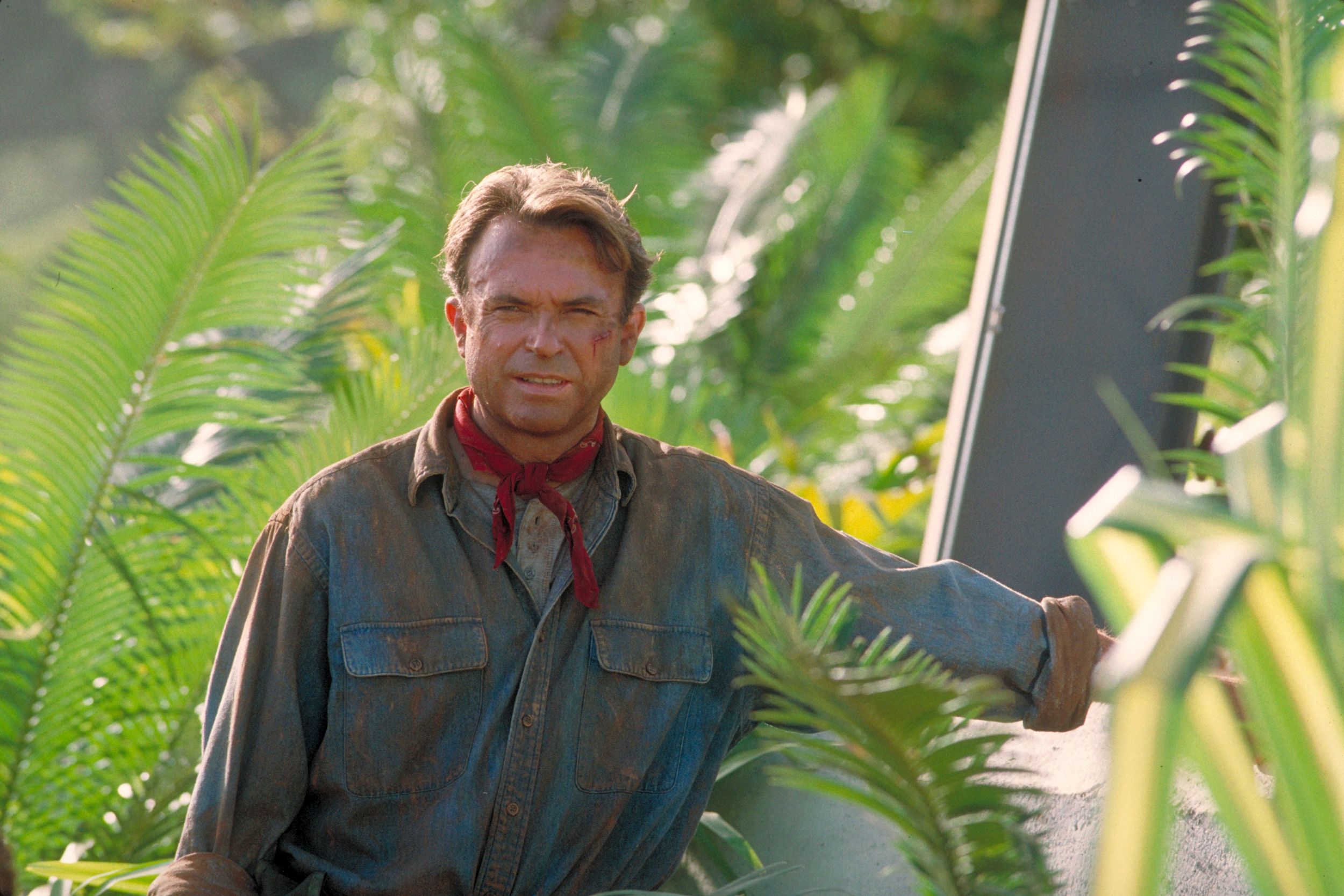
Sam Neill, the New Zealand actor whose career spanned more than four decades, from arthouse Australian cinema to the global blockbuster that defined the modern dinosaur picture and a late-career turn as a steely Birmingham gangster, died on Monday at the age of 78. Variety's obituary notice on 13 July 2026 carried the first industry tributes, led by "Jurassic World Dominion" director Colin Trevorrow, who called Neill "a deeply sou…" in a statement published the same morning. The phrasing, truncated by Variety's paywall, framed the news as both a Hollywood loss and a trans-Tasman one: Neill spent the bulk of his working life shooting across New Zealand, Australia and the United Kingdom, and the notices that followed read like a roll-call of the directors, costars and crews he had quietly anchored.
The arithmetic of obituaries works differently in Neill's case. He was never a once-in-a-generation leading man in the way his generation's other exports were; he was instead the actor who made the leading men look plausible. That distinction matters for how the tributes land, because the people stepping forward are not just the stars of a single shared production but the writers, directors and fellow actors who learned their trade in his orbit and who now want the public record to say so.
A director's first call
Colin Trevorrow's tribute, fronting Variety's noon update on 13 July, made the case plainly. Trevorrow directed Neill across the third act of the "Jurassic World" trilogy and relied on him to do something the franchise had previously outsourced to animatronics and to nostalgia: carry the human weight of a story about cloned dinosaurs. The line that survived the Variety excerpt framed Neill less as a scene-stealer than as a steadier, a performer whose stillness forced the chaos around him into proportion. That is the kind of praise actors privately trade about each other and rarely make public, and its prominence at the top of the obituary is itself a signal of how the industry wants this death remembered.
Karl Urban, the New Zealand-born actor who has spent the past two decades moving between the Marvel and "The Lord of the Rings" continuities, was among the next names on Variety's list. Urban's career intersects Neill's at the seam where New Zealand-built screen industries began to export serious acting talent at scale rather than as one-off curiosities. The tribute names a kinship; Neill was the actor who made it normal for a kid from Wellington to land a role on a Hollywood poster.
A different register in Birmingham
The name sitting alongside Urban's in Variety's listing is Alan Cumming, who shared scenes with Neill on "Peaky Blinders," the BBC period gangster drama filmed across the English Midlands. Cumming's appearance in the obituary roll is the one that complicates the standard reading. Neill's performance as Major Chester Campbell in the show's first two seasons is, in retrospect, what rescued him from typecasting as the wry scientist with a bottle of pinot. The role let him be openly menacing, and it let him show that the ease he carried into Indiana Jones's hat in "Jurassic Park" was not charm but craft, transferable.
That career pivot, from the post-1993 dinosaur franchise into a BBC drama as a brute in a peaked cap, is the detail the tributes tend to skip past. Variety's framing leans on the "Jurassic" material because that is the work with the largest mass audience, but Cumming's presence implicitly pushes back. The Neill worth mourning on 13 July is not only the man who made dinosaurs feel plausible again, but the actor who proved he could menace without the dinosaurs.
A New Zealand film industry's quiet cornerstone
Read the Variety notice as a film-industry document rather than as celebrity copy and a different picture forms. The directors, co-stars and crew leads named are linked less by genre than by jurisdiction. Most of them cut their first teeth on New Zealand and Australian productions in the 1980s and early 1990s, when the local screen sector was doubling in size and the country's then-new film commission was quietly underwriting a national cinema that didn't talk about itself as one. "The Piano" (1993), "Once Were Warriors" (1994), "The Lord of the Rings" (2001-2003) and the first "Jurassic Park" (1993) all relied on infrastructure and crew that Neill had helped bank for two decades.
He was not the architect of that. But he was one of the first exports from it, and that is why the contemporary wave of New Zealand directors and co-stars are louder about his loss than the marquee Hollywood names. The industry grew up; he was one of the receipts.
What the tributes leave out
A few notable gaps sit inside Variety's first-day obituary, and they are worth naming because obituaries shape which version of a career survives. The notice does not detail the cause of death; the thread's single source covers a publicist's announcement and reactions rather than a medical disclosure. It does not enumerate the New Zealand-shot productions of the 1980s and early 1990s that established Neill on the international circuit before the dinosaur films, partly because those credits are not always catalogued online in their original form. And it does not yet pick up the tributes from European arthouse directors or from the actors he worked with on Australian independent productions of the previous decade, names that will surface in the coming days as international outlets file their own notices. The fuller picture is two or three days of obituaries away.
For now, the public record is the one Trevorrow and his peers have chosen to set down: an actor whose calm at the centre of the frame made everything else around him legible. It is the kind of obituary that tends to beget a re-evaluation in the rerun schedules, and the broadcasters who hold his later work will be mindful of that.
How Monexus framed this: the wire lead is the death and a partial quote; this piece expands on the tributes as a film-industry document, foregrounding the New Zealand infrastructure angle rather than the franchise angle, and flags the gaps that fuller international coverage will need to close.