Saudi airspace closure exposes a Riyadh–Abu Dhabi crack that money cannot paper over
Saudi Arabia closed its airspace on 13 July 2026 after Yemen's Ansarullah struck the kingdom, and boardrooms from Dubai to Riyadh are now quietly reorganising around a Gulf rift that had been kept out of the press.
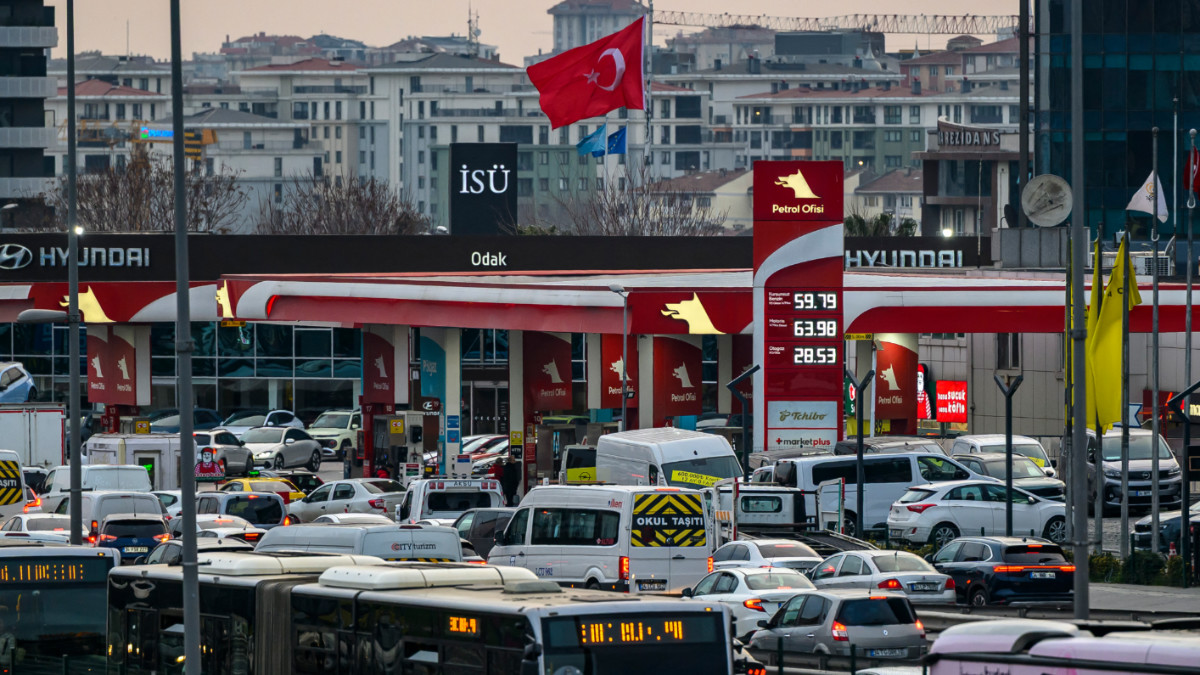
At 19:00 UTC on 13 July 2026, Saudi Arabia closed its airspace. Within twenty minutes, the same wire chatter that flagged the shutdown, the Telegram channel RN Intel, was reporting that Emirati social media circles were celebrating the Ansarullah attacks on the kingdom earlier the same day. By 21:09 UTC, Middle East Eye had filed a piece describing law firms and investors drawing up "contingency plans" for a Saudi-Emirati feud that, until this week, executives in the Gulf preferred to treat as a family argument kept off the public record.
The proximate cause is military: Yemen's Ansarullah movement, also known as the Houthis, struck Saudi Arabia earlier on 13 July, and Riyadh responded by grounding civilian traffic. But the operational layer sits on top of something quieter and older. Business executives in Dubai and Riyadh are now reorganising their counter-parties, their counsel, and in some cases their physical offices around the working assumption that the two Gulf petro-monarchies are no longer fully aligned, and that the assumption may outlast the current escalation.
A feud that boards had been told was over
For most of the post-2020 period, the official story inside Gulf capitals has been reconciliation. Saudi Arabia and the UAE patched up a years-long split centred on Qatar, oil policy, and the war in Yemen; a series of summits and signed accords through 2024 and 2025 made the public case that the two states were now pulling in harness under a coordinated regional posture. That story is the one law firms, sovereign-wealth vehicles, and regional conglomerates have spent three years pricing in.
The picture Middle East Eye paints from interviews with executives is more uncomfortable. Some law firms are actively selecting work to avoid antagonising either Riyadh or Abu Dhabi. Investors are routing deals through jurisdictions and counsel that would survive a sharper break. The detail matters because it is the behaviour of capital, not the language of foreign ministers, that reveals what insiders actually think is going on.
When the airspace goes dark
A full Saudi airspace closure is not a routine instrument. Saudi Arabia sits across the main east-west trunk routes between Europe and Asia; its FIR (flight information region) handles a large share of the daily commercial traffic that does not overfly Iran, Iraq, or the Red Sea's higher-risk corridors. A closure reroutes aircraft over Iran, the central Mediterranean, or the southern Red Sea, and each alternative carries its own fuel, insurance, and overflight-cost penalty. Airlines do not absorb those quietly; they pass them through, and pricing responds within hours.
The 19:00 UTC notice landed as Ansarullah attacks were still being processed by regional outlets. By 19:20 UTC, RN Intel's reporting on the Ansarullah strikes and the airspace closure was being read in the same breath as celebratory commentary inside UAE social channels. The juxtaposition does not prove official Emirati complicity; it does show that the optics of the moment are exactly those Riyadh least wants.
The structural frame: capital picks sides before governments do
The Gulf has long been a single market in the imagination of Western investors, with Riyadh and Abu Dhabi functioning as interchangeable anchors. That shorthand was always a simplification: the two states have distinct foreign-policy doctrines, distinct sovereign-wealth strategies, and, since 2024, visibly different appetites for engagement with Iran and with the post-7 October regional order. What is new is that the simplification is now being discarded, and the place it is being discarded first is the legal and financial plumbing that makes cross-Gulf deal-making possible.
Middle East Eye's reporting points to a familiar dynamic at work: when two regional powers with deep, integrated capital markets fall out, the first institutions to adjust are the ones whose bills are paid in fees, law firms, auditors, boutique advisers, followed by the family offices and conglomerates whose names appear on the masthead of regional projects. State institutions and foreign-ministry communiqués tend to lag, because acknowledging a rift formally carries a cost the principals would rather defer. The deferred cost is precisely what the contingency plans are designed to insure against.
What remains uncertain
The airspace closure is a fact, the Ansarullah attacks are reported, and the executive-level hedging is on the record. What the public sources do not yet establish is whether the Saudi-Emirati rift now being priced in is the same rift that surfaced during the Qatar dispute and the early-Yemen war, or whether it is a narrower disagreement over how to manage the current round of Yemeni strikes on Saudi territory. The Emirati social-media celebrations described by RN Intel are suggestive but not dispositive; Abu Dhabi's official posture is not yet on the wire. Ansarullah's own claim of responsibility, and the precise scale and targets of the strikes that triggered the airspace closure, are still being assembled from initial accounts; the picture may sharpen over the next 24 to 48 hours.
What is clear is the direction of travel. Capital moves first, communiqués catch up later. The boardrooms Monexus is reading about are doing what Gulf boards have done before in moments like this: preparing for the version of events that the foreign ministries have not yet been willing to name. The flight schedules will reopen; the underlying reorganisation of who trusts whom across the Gulf is the part that will take longer.
Desk note: Monexus framed this as a capital-mobility story first, because the executive behaviour described by Middle East Eye is the part of the picture with the highest signal-to-noise. Wire outlets have so far led with the airspace closure itself; the legal-and-investor layer is the second-day read that the rest of the regional press will catch up to.
Wire provenance
This editorial synthesis draws on the following public wire/social posts:
- https://t.me/s/rnintel
- https://x.com/sprinterpress/status/...
- https://t.me/s/rnintel